



Women's Health MRI
Latest News

Advertisement
Latest Videos
CME Content







Advertisement
More News

Circumferential aneurysm wall enhancement on MRI was associated with a 3.8-fold higher risk of intracranial aneurysm instability within a four-year period, according to a study involving over 1,350 patients.
Catch up on the top radiology content of the past week.
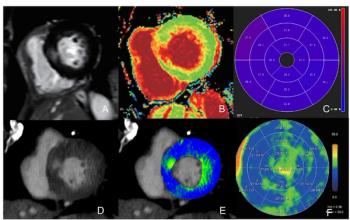
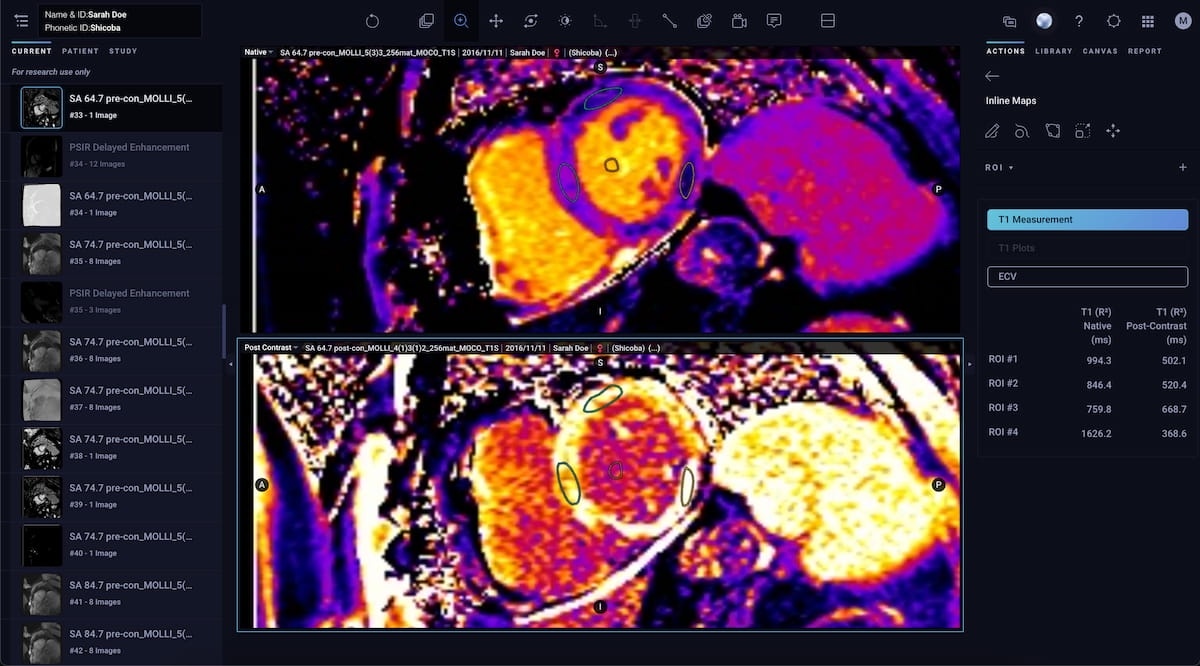
For myocardial extracellular volume quantification, single-phase and dual-phase photon-counting CT provided over 20 percent higher correlation with cardiac MRI in contrast to dual-phase energy-integrating detector CT, according to new research findings.
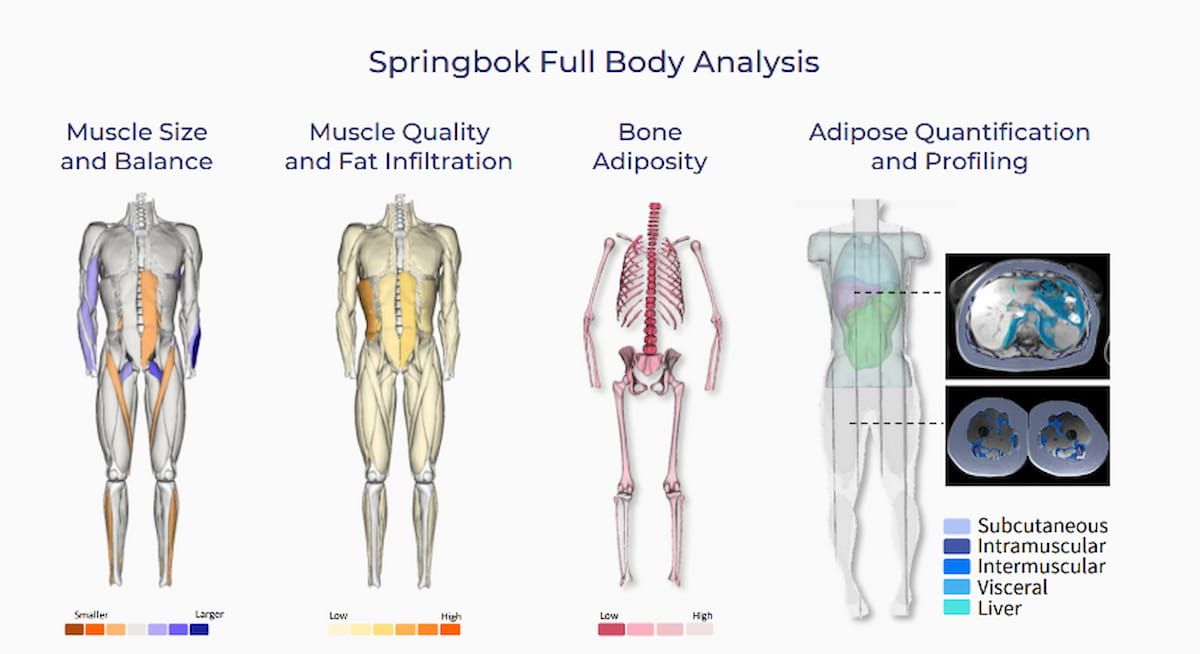
In a 10-study meta-analysis examining the use of whole-body MRI for asymptomatic individuals, researchers noted a pooled cancer detection rate of 1.57 percent.
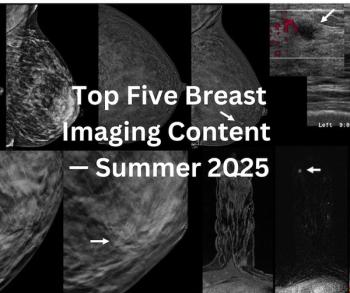
From emerging research on disparities in breast cancer screening to the promising combination of contrast-enhanced mammography with DBT and a three-part podcast on abbreviated breast MRI, here is a look back at the most well-reviewed breast imaging content of the summer.
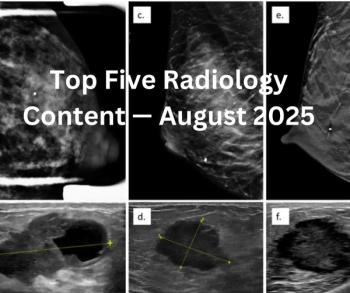
Catch up on the most-well viewed radiology content in August 2025.
Catch up on the top radiology content of the past week.
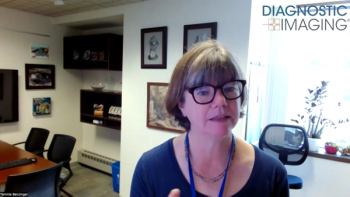
In the second part of a recent interview, Tammie Benzinger, M.D., Ph.D., discusses recently presented research from the Alzheimer’s Association International Conference (AAIC) that showed the ability of portable low-field MRI to detect mild and moderate amyloid-related imaging abnormalities (ARIAs).
Catch up on the latest news, research and insights in radiology with our Weekly Scan.
Catch up on the top radiology content of the past week.

Incorporating technology from Siemens Healthineers’ Magnetom Skyra Fit system, the Invision 3T Recharge Operating Suite offers AI-powrred protocols and automated image reconstruction capabilities.
In a recent interview, Tammie Benzinger, M.D., Ph.D., discussed the utility of portable low-field MRI to help identify patients in remote settings who may be viable candidates for subsequent MRI workup and consideration for new anti-amyloid therapies in treating Alzheimer’s disease.
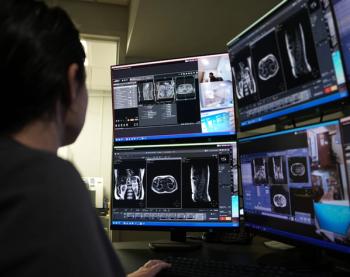
In addition to facilitating centralized scanning for a variety of imaging, the TechLive system may help ease the strain of technologist shortages and broaden access to advanced imaging exams.
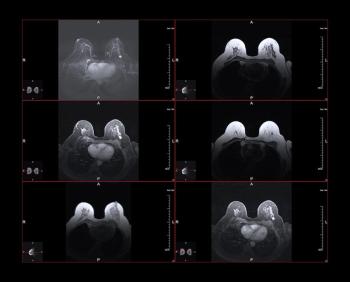
Lower proportions of extremely dense breasts and high BRCAT lifetime risk among Black women in comparison to White women may have resulted in a lower likelihood of eligibility for supplemental screening insurance coverage in Pennsylvania, according to new research.

The multimodality remote scanning modality uOmniscan and the recently FDA-cleared 3T uMR Ultra MRI system were unveiled at the Association for Medical Imaging Management (AHRA) conference in Las Vegas.
Catch up on the top radiology content of the past week.
In the last of a three-part podcast episode, Stamatia Destounis, MD, Emily Conant, MD and Habib Rahbar, MD, share additional insights on practical considerations and potential challenges in integrating abbreviated breast MRI into clinical practice, and offer their thoughts on future research directions.
In the third of a three-part podcast episode, Emanuel Kanal, M.D. and Tobias Gilk, MRSO, MRSE, discuss strategies for maintaining the integrity of time-out procedures and communication with remote MRI scanning.
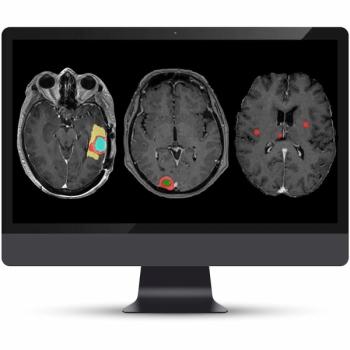
The addition of two new AI-enabled models for the latest version of the NeuroQuant Brain Tumor software facilitates automated tracking of the progression of brain tumors and meningiomas.
Catch up on the most-well viewed radiology content in July 2025.

Catch up on the top AI-related news and research in radiology over the past month.
Catch up on the top radiology content of the past week.
In the second of a multi-part podcast episode, Emanuel Kanal, M.D. and Tobias Gilk, MRSO, MRSE, share their perspectives on remote MRI safety protocols for ensuring screening accuracy and adherence to conditional implant guidelines as well as a rapid and effective response to adverse events.
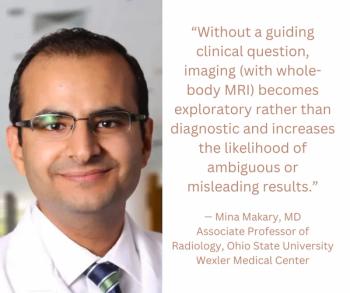
Beyond the hype, whole-body MRI offers limited clinical benefit in the general population with extraneous use potentially triggering a cycle of overdiagnosis, unnecessary treatment and financial strain.
In the second part of a multi-part podcast episode, Stamatia Destounis, MD, Emily Conant, MD and Habib Rahbar, MD, discuss key sequences for abbreviated breast MRI and how it stacks up to other breast cancer screening modalities.
Advertisement
Advertisement
Trending on Diagnostic Imaging
1
Emerging Research Insights and New Advances in Neuroradiology
2
MRI, CT or Ultrasound: Which Modality Offers the Most Utility for Imaging of Pancreatic Cancer?
3
FDA Grants Fast Track Designation for Pre-Biopsy Use of PSMA PET and MRI for Prostate Cancer Detection
4
Current Perspectives on Integrating AI into Radiology
5