



Women's Health MRI
Latest News
Advertisement
Latest Videos

CME Content





Advertisement
More News
Catch up on the top radiology content of the past week.
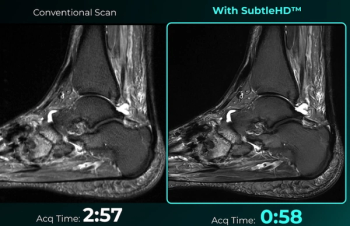
Enabling up to 80 percent faster MRI scan times, the SubtleHD software is included in the newly launched AI software suite Subtle-Elite.
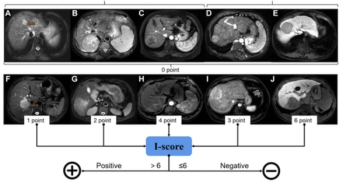
Preoperative use of the scoring system for gadoxetic acid-enhanced MRI demonstrated an average AUC of 85 percent and average specificity of 89 percent in external validation cohorts for pathologic features of hepatocellular carcinoma.
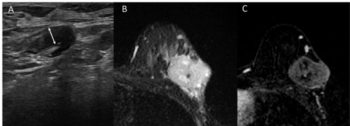
Anterior tumor location was over 14 times more likely to be associated with axillary metastasis after neoadjuvant treatment for breast cancer, according to new breast MRI and ultrasound research.
Catch up on the top radiology content of the past week.

Emphasizing the role of radiologists in facilitating timely diagnosis of Marfan syndrome, Alan Braverman, M.D. discussed the use of echocardiography, CT, and MRI in evaluating patients with this genetic aortic condition.
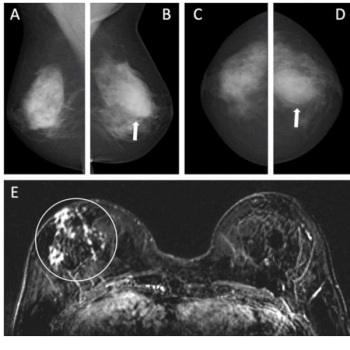
For women with intermediate risk and a personal history of breast cancer, an emerging AI system offered an 81 percent AUC for breast cancer detection, according to new research.
Catch up on the top radiology content of the past week.
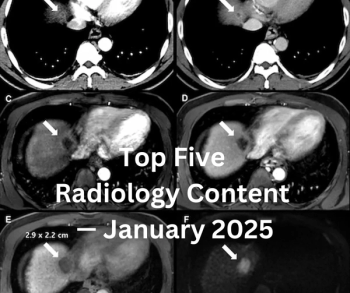
Catch up on the most-well viewed radiology content in January 2025.
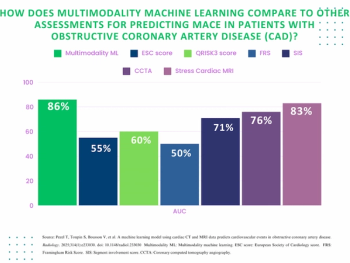
For patients with newly diagnosed obstructive coronary artery disease (CAD), a multimodal machine learning model offered an 86 percent AUC for predicting MACE, which was 10 percent higher than CCTA alone and over 35 percent higher than the Framingham Risk Score.
In a recent interview, Joshua Gowin, M.D., discussed emerging brain MRI research that showed a significant association between heavy lifetime use of cannabis and reduced brain activity for working memory tasks in young adults.
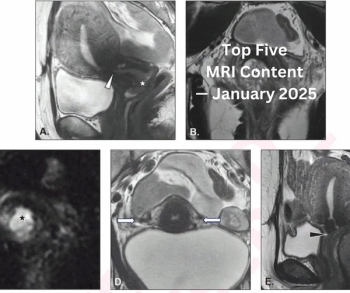
Catch up on the most-well viewed MRI content in January 2025.

Catch up on the top AI-related news and research in radiology over the past month.
Catch up on the top radiology content of the past week.
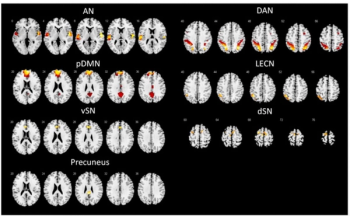
For patients with mild cognitive impairment (MCI), early changes with respect to decreased intra-network connectivity involving the default mode network or salience network may aid in differentiating between the development of Alzheimer’s disease and Parkinson’s disease, according to new MRI research.
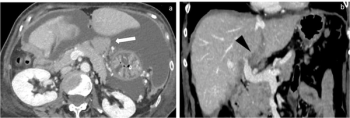
In an update of previous guidelines from the European Society of Urogenital Radiology published in 2010, a 21-expert panel offered consensus recommendations on the utility of CT, MRI and PET-CT in the staging and follow-up imaging for patients with ovarian cancer.
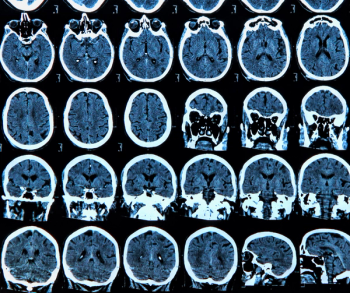
The CDM Insights software, which can be utilized with scans from 1.5T and 3T MRI, reportedly provides new measurements of cortical thickness and brain microstructure.
Catch up on the top radiology content of the past week.
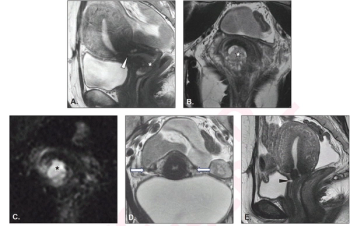
In a literature review that includes insights from recently issued guidelines from multiple European medical societies, researchers discuss the role of magnetic resonance imaging (MRI) in facilitating appropriate patient selection for fertility-sparing treatments to address early-stage endometrial and cervical cancer.
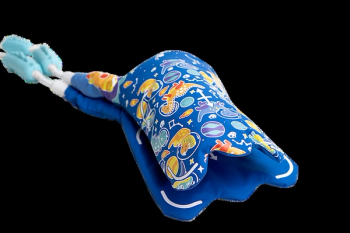
InkSpace Imaging’s 24-channel MRI coil, which will be included in Magnetom 1.5T scanners from Siemens Healthineers, reportedly facilitates quicker set-ups for technologists and enhanced spatial resolution.
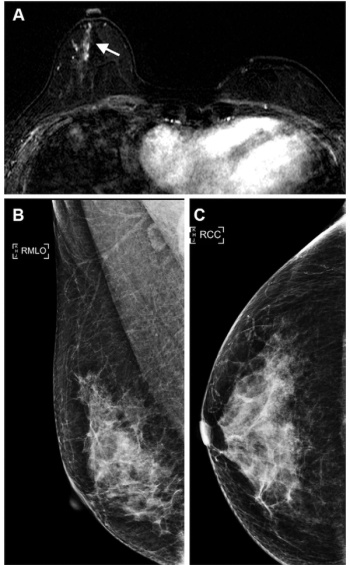
After propensity score matching in a study of over 3,000 women with a personal history of breast cancer, researchers found that surveillance breast MRI facilitated a 59 percent lower risk in advanced presentations of second breast cancers.
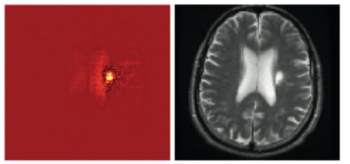
Survey results revealed that 71 percent of clinicians preferred adjunctive AI in facilitating triage of brain MRI scans and 58 percent were comfortable utilizing AI triage without input from radiologists.
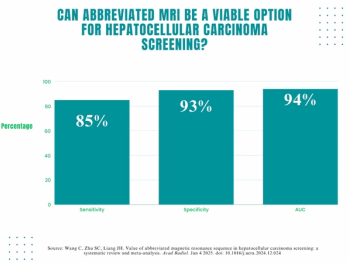
For hepatocellular carcinoma screening, a 19-study meta-analysis found the abbreviated MRI sequencing protocol of T2-weighted MRI, diffusion-weighted imaging (DWI) and hepatobiliary phase (HBP) imaging offered 88 percent sensitivity and 93 percent specificity.
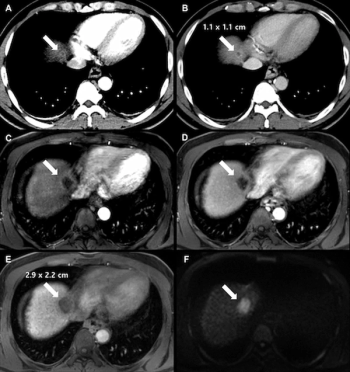
Seventy percent of LR-M hepatocellular carcinoma (HCC) cases were associated with rapid growth in comparison to 12.5 percent of LR-4 HCCs and 28.5 percent of LR-4 HCCs, according to a new study.
Touching on a variety of topics in radiology, here are the top five most well-viewed content from Diagnostic Imaging in 2024.
Advertisement
Advertisement
Trending on Diagnostic Imaging
1
Emerging Research Insights and New Advances in Neuroradiology
2
MRI, CT or Ultrasound: Which Modality Offers the Most Utility for Imaging of Pancreatic Cancer?
3
FDA Grants Fast Track Designation for Pre-Biopsy Use of PSMA PET and MRI for Prostate Cancer Detection
4
Current Perspectives on Integrating AI into Radiology
5