



Women's Health MRI
Latest News
Advertisement
Latest Videos


Shorts

0:48
Can AI Improve Triage and Yield for Breast MRI?
3 days ago
by
Wendie Berg, MD, PhD

0:34
Could Diabetes Be a Key Trigger for Bone Loss and Cognitive Decline?
5 days ago
by
Shadpour Demehri, MD
0:50
Five Takeaways for Breast Radiologists from Guidelines on Proliferative Breast Lesions with Atypia and LCIS
13 days ago
by
Manisha Bahl, MD
0:39
A 'Wake-Up Call' for BI-RADS 3 Audits
20 days ago
by
Stamatia Destounis, MD, FACR

0:38
How AI Triage Efficiency Gains in Neuroradiology May Facilitate Improved Work-Life Balance
2 months ago
by
Vivek Singh, MD

0:30
How Brain fMRI and DWI MRI May Help Pinpoint the Cause of Urinary Incontinence in Stroke Survivors
2 months ago
by
Kay Jann, PhD

0:50
How AI Can Provide 'Life Saving Information' Beyond MRI for Aneurysm Monitoring
2 months ago
by
Vivek Singh, MD

0:47
Self-Policing and MRI Safety
4 months ago
by
Tobias Gilk, MRSO, MRSE

0:59
A Call for Regulation of MRI Safety
4 months ago
by
Emanuel Kanal, MD

0:52
The Good News and Bad News About MRI Safety
4 months ago
by
Tobias Gilk, MRSO, MRSE
Podcasts
CME Content





Advertisement
More News
For patients with small cell lung cancer (SCLC), there was a 40 percent improvement in cognitive failure-free survival (CFFS) with brain MRI alone in comparison to the combination of brain MRI and prophylactic cranial irradiation (PCI), according to research presented at the ASTRO conference.

Catch up on the top AI-related news and research in radiology over the past month.
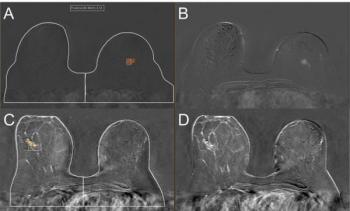
A deep learning model developed for predicting BI-RADS assessments from dynamic contrast-enhanced (DCE) breast MRI had over a 14 percent lower AUC than radiologist evaluation in external validation testing.

In a study involving over 700 participants who had chest CT and brain MRI, those with diabetes and lower vertebral bone mineral density (vBMD) had a nearly five percent faster total accumulation of white matter hyperintensity (WMH) in comparison to those without diabetes.
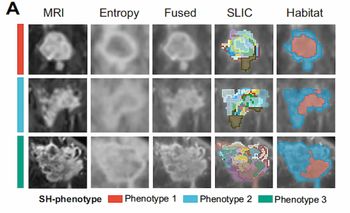
Can MRI-Derived Tumor Habitat Subregions Bolster Recurrence Risk Stratification in Stage 2 and 3 Breast Cancer Cases?
Published: | Updated:
In multivariable external testing, tumor structure habitat phenotypes from pre-treatment MRI revealed more than a doubling of recurrence risk for women with stage 2 and stage 3 breast cancer.
Catch up on a variety of FDA news in radiology from the past week.
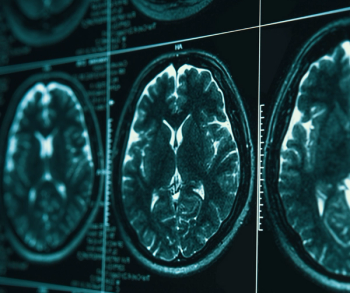
In a study involving over 2,800 people who had brain MRI scans, researchers found that people in the most disadvantaged neighborhoods had 37 percent higher white matter hyperintensity volume (WMHV) on average in comparison to people in the least disadvantaged areas.

The presence of vascular hyperintensity on T2 FLAIR MRI was associated with nearly double the odds of cerebral edema, according to newly published research involving 855 patients with acute ischemic stroke.

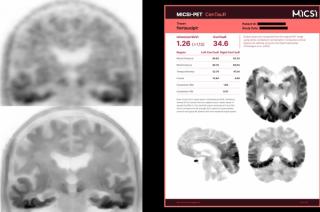
New research demonstrates significantly higher specificity and inter-reader agreement with MRI-guided reconstruction in comparison to standard ordered-subset expectation-maximization (OSEM) reconstruction of PET imaging for amyloid assessment.
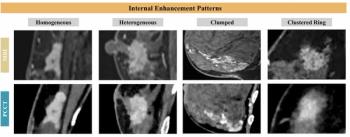
New research suggests that photon-counting CT provides comparable sensitivity to breast MRI for lesion characterization, higher accuracy than MRI for nodal metastasis and lower detection of microcalcifications in comparison to full-field digital mammography.
Catch up on the most-well viewed radiology content in August 2026.
This summer's breast imaging research spanned digital breast tomosynthesis (DBT) efficiency gains, AI models that flag cancer risk years before diagnosis, a cautionary study on automation bias, and advances in ultrasound, MRI, and contrast-enhanced mammography (CEM). Here is a look back at the most well-viewed breast imaging content of the summer.
Catch up on the top AI-related news and research in radiology over the past month.
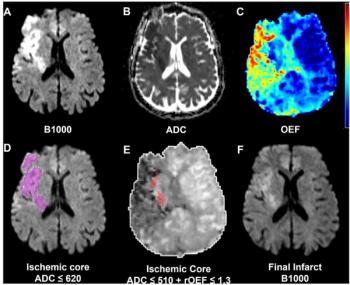
For patients who had successful reperfusion after acute ischemic stroke, new research demonstrated an 80 percent AUC for predicting infarct with the combination of apparent diffusion coefficient (ADC) mapping and relative oxygen ejection fraction (rOEF).
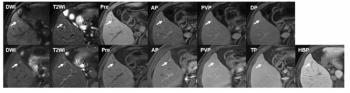
New research revealed that risk-stratified MRI surveillance in patients with cirrhosis led to over a 10 percent increase in early detection and over a 44 percent decrease in surveillance exams in comparison to reported results with semiannual ultrasound monitoring.
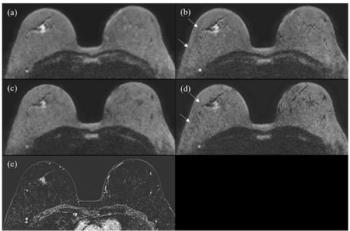
In comparison to standard readout-segmented echo-planar imaging, the combination of deep learning reconstruction and multi-shot diffusion-weighted imaging (DWI) offered significantly higher SNR, CNR and lesion contrast with a greater than a two-minute reduction in scan time.

Catch up on the top radiology content of the past week.
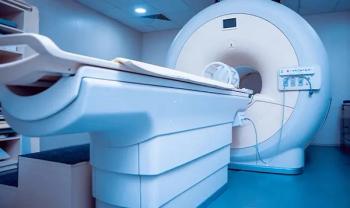
Noting the rising imaging volume and dearth of MRI scanner availability, the authors of a new literature review explore the utility and impact of workflow redesign, staff training, scheduling improvements and AI advances for enhancing MRI workflows.
Smaller voxel size may offer insights into biology we could never access with conventional resolution.
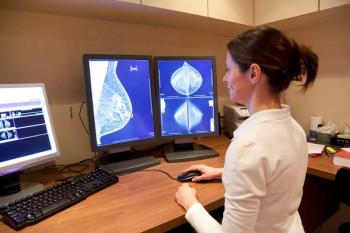
In a recently published review of the BI-RADS v2025 manual, leading breast radiologists offered pertinent insights on key changes for reporting of mammogram, breast ultrasound and breast MRI interpretation and assessment.
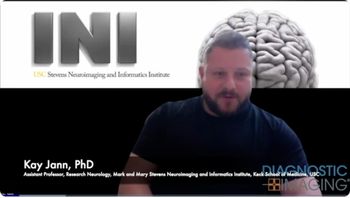
In a recent interview, Kay Jann, PhD, discussed challenges with urinary continence in stroke survivors and a forthcoming NIH-funded study examining the use of brain MRI to help identify those who may benefit from transcutaneous spinal cord stimulation (TSCS).
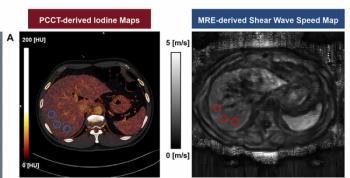
Extracellular volume fraction (ECV) assessment with photon-counting CT offered higher sensitivity and comparable specificity and AUC to magnetic resonance elastography (MRE)-derived liver stiffness measurement (LSM) for evaluating patients with stage 2 or higher fibrosis, according to a recent study.

Catch up on the most well-viewed video interviews from Diagnostic Imaging in July 2026.
Catch up on the top radiology content of the past week.
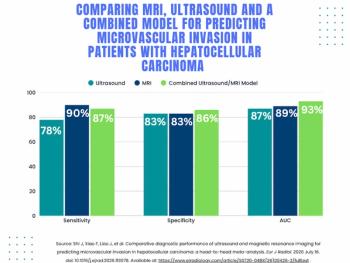
A model combining MRI and ultrasound findings yielded a 93 percent AUC for predicting microvascular invasion in hepatocellular carcinoma.
Advertisement
Advertisement
Trending on Diagnostic Imaging
1
Emerging Research Insights and New Advances in Neuroradiology
2
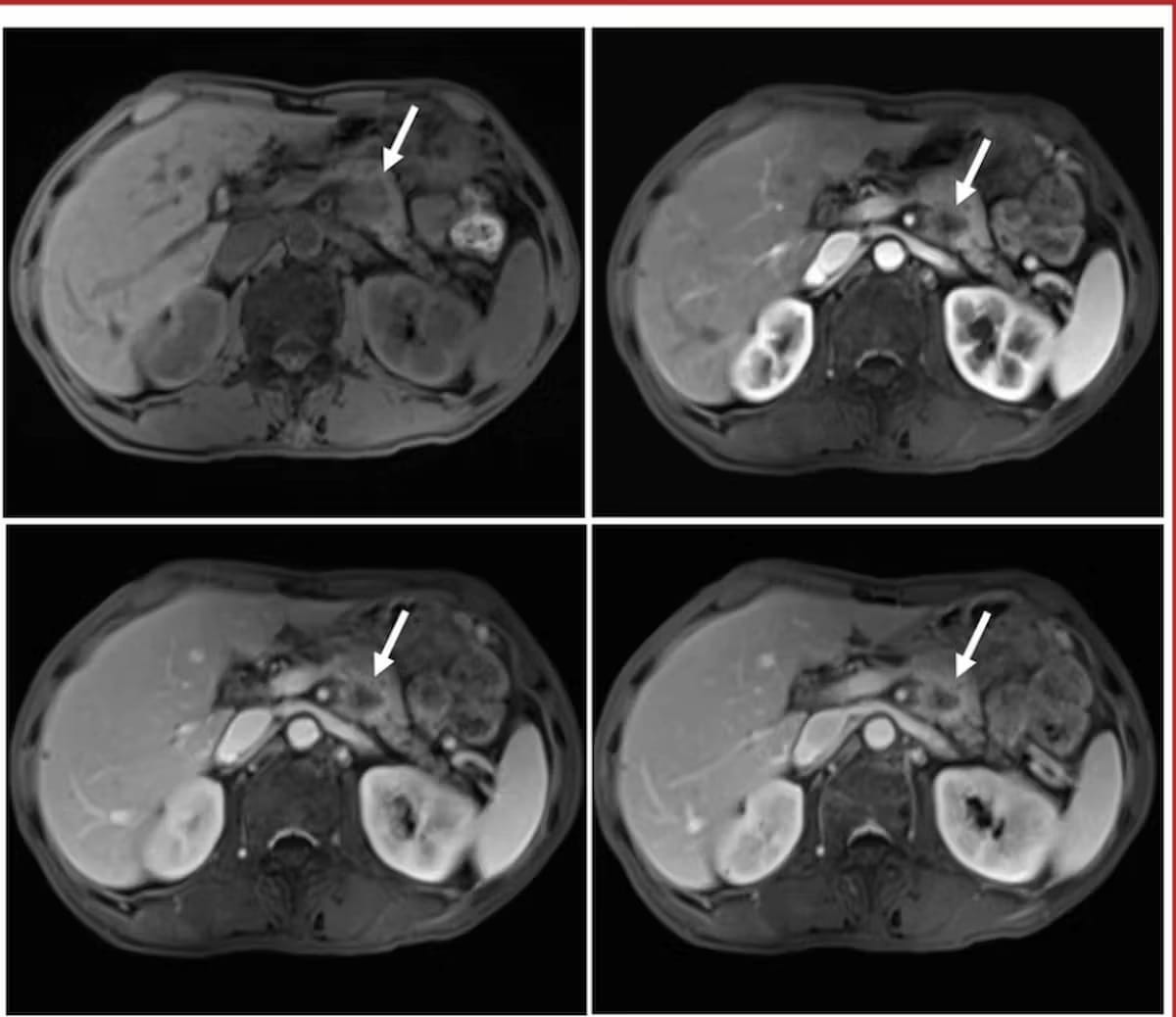
MRI, CT or Ultrasound: Which Modality Offers the Most Utility for Imaging of Pancreatic Cancer?
3
FDA Grants Fast Track Designation for Pre-Biopsy Use of PSMA PET and MRI for Prostate Cancer Detection
4
Current Perspectives on Integrating AI into Radiology
5