Catch up on the top radiology content of the past week.
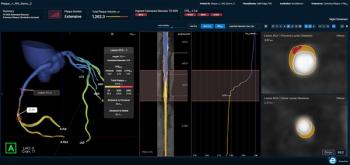
In a recent interview, Ron Blankstein, M.D., discussed insights from a recent consensus statement from the American College of Cardiology on AI-enabled plaque quantification with coronary computed tomography angiography (CCTA) exams, and other pertinent considerations with the emerging technology.
With the increased use of coronary computed tomography angiography (CCTA) in recent years, Ron Blankstein, M.D., said there was a shift that the amount of plaque was a “strong, if not a stronger, predictor of future (cardiovascular) events” than stenosis. More recently, there has been an increased interest in artificial intelligence (AI) quantification of coronary plaque on CCTA scans but a fair amount of certainly as well regarding use of this new technology.
Accordingly, the American College of Cardiology (ACC) recently issued a
“I think the key message there is that we can use plaque analysis to refine risk assessment to tell us which patients have a larger burden of plaque than maybe we anticipated otherwise, and therefore we would treat those patients more aggressively,” noted Dr. Blankstein, the director of cardiac CT and associate director of the cardiovascular imaging program at Brigham and Women’s Hospital in Boston.
While there has been increasing interest in the possibility of serial plaque analysis to assess the impact of treatment, Dr. Blankstein emphasized that this is not ready for prime time. In addition to limited evidence for serial plaque analysis thus far, he said this is “a very technical analysis” that requires utilizing the same scanner, tube voltage, reconstruction parameters and the same algorithm.
“When we use plaque analysis in the research world, we pay a lot of attention to this. But in the clinical world, if plaque analysis is ever going to be used serially, it's really important to pay attention to those details,” maintained Dr. Blankstein, a professor of medicine at Harvard Medical School.
(Editor’s note: For related content, see “
For more insights from Dr. Blankstein, watch the video below.