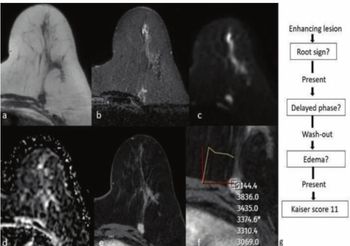
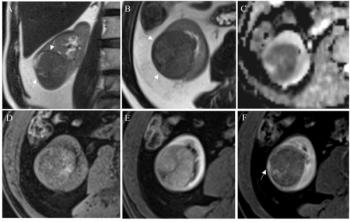
“This suggests that peritumoral edema may have prognostic value and could contribute to risk stratification in young women with breast cancer,” noted lead study author Murat Tabar, M.D., who is affiliated with the Department of Radiology and the Faculty of Medicine at Bezmialem Vakif University in Istanbul, Turkey, and colleagues.
While noting that peritumoral edema was rare in women with Luminal A breast tumors, the researchers said it was evident in 31 percent of MRI scans for women with the Luminal B molecular subtype, 38 percent of those with the HER-2 subtype and 62 percent of women with triple-negative breast cancer.
Three Key Takeaways
• Prognostic MRI biomarker. Peritumoral edema on preoperative breast MRI was independently associated with worse outcomes, conferring a 3.6-fold higher risk of reduced disease-free survival in women under 40 with breast cancer.
• Subtype-specific risk signal. Peritumoral edema was uncommon in Luminal A tumors but increasingly prevalent in biologically aggressive subtypes — Luminal B (31 percent), HER2-positive (38 percent), and especially triple-negative breast cancer (62 percent) — suggesting alignment with tumor aggressiveness.
• Potential role in risk stratification. When present, peritumoral edema may add incremental prognostic information beyond standard imaging findings and could help guide closer surveillance or treatment intensity in young women, pending validation in larger prospective studies.
“These findings suggest that peritumoral edema may reflect the biological aggressiveness associated with certain molecular subtypes,” posited Tabar and colleagues.
The researchers added that peritumoral edema may result from a variety of mechanisms including blocking of lymphatic drainage due to tumor cells or tumor emboli, proteolytic degradation of extracellular matrix or increased vascular permeability due to neoangiogenesis.
(Editor’s note: For related content, see “RSNA: Study Suggests Incidence of Invasive Breast Cancer in Young Women,” “Leading Breast Radiologists Discuss Rise of Breast Cancer Incidence in Women Under 40” and “Study: MRI May Help Predict Outcomes in Treatment for Triple-Negative Breast Cancer.”)
Beyond the inherent limitations of a single-center retrospective study, the authors acknowledged the potential impact of treatment heterogeneity upon disease-free survival, a relatively small number of recurrence events and the possible confounding effect of breast edema due to biopsy.