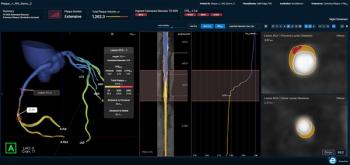
The FFR-IQ software recently demonstrated a 92.2 percent sensitivity for non-invasive estimation of fractional flow reserve (FFRC) based on coronary CT angiography (CCTA) scans.
In a recent interview, Manisha Bahl, M.D., discussed recent research demonstrating a significant decline in the sensitivity of digital breast tomosynthesis (DBT) with increasing breast density as well as challenges in the utilization of supplemental imaging for women with dense breasts.
While the combination of digital breast tomosynthesis (DBT) and 2D mammography offers stronger breast cancer detection than conventional mammography alone,
In a recent interview with Diagnostic Imaging, study co-author Manisha Bahl, M.D., noted a DBT sensitivity rate of approximately 62 percent for women with extremely dense breasts (BI-RADS category D) in contrast to nearly 93 percent for those with entirely fatty breast presentations (BI-RADS category A).
“We found that increasing breast density is associated with significantly reduced sensitivity and higher false negative rates,” noted Dr. Bahl, an associate professor at Harvard Medical School and breast imaging radiologist at Massachusetts General Hospital in Boston.
One anomaly from the study was the unexpected finding of higher specificity and lower recall rates with DBT in women with BI-RADS category D breast density in comparison to those with heterogeneously dense breasts (BI-RADS category C).
“These findings may reflect the way in which tissue appears on tomosynthesis. Extremely dense tissue may appear uniform and therefore generate fewer false positive findings,” pointed out Dr. Bahl. “Our results also highlight that the breast density categories are not linear in their effects, and that multiple factors interact to influence the performance of screening tomosynthesis, not only density, but also the presence of prior mammograms and reader experience.”
(Editor’s note: For related content, see “
In light of the study findings, Dr. Bahl emphasized that supplemental imaging can play an important role in facilitating diagnostic clarity in patients with dense breasts. However, she acknowledged that variability with insurance coverage and uncertainty among referring physicians and patients about optimal supplemental imaging modalities have contributed to low utilization in this patient population.
“Density is a risk factor for breast cancer, but dense tissue alone doesn't automatically place a woman into the high-risk category, which we define as 20 percent or higher lifetime risk of breast cancer,” maintained Dr. Bahl. “With a recent FDA mandate requiring that women be notified about their breast density, there's increased interest in supplemental imaging, but improving utilization will require clearer guidance from the breast imaging community and better risk assessment tools.”