Catch up on the top radiology content of the past week.
Catch up on the top radiology content of the past week.
Welcome to Diagnostic Imaging’s Weekly Scan, which offers an opportunity to catch up on the most well-viewed radiology content of the past week.
Emerging research, published in the Radiology journal earlier this week, suggests that
In a recent episode of our Molecular Imaging in Focus series,
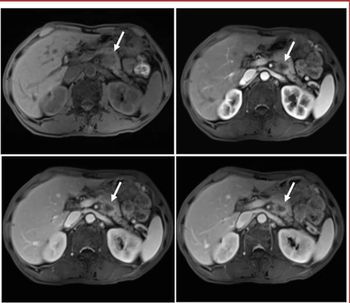
The FDA approved the low-dose MRI contrast agent gadoquatrane earlier this week. Indicated for the detection and visualization of abnormal vascularity in the central nervous system (CNS) and non-CNS body regions,
In a recent interview with Diagnostic Imaging, Mary L. Bouxsein, PhD, a past president of the American Society for Bone and Mineral Research, discussed challenges with access to dual-energy X-ray absorptiometry (DEXA) screening for osteoporosis, the emergence of biomechanical CT (BCT) and the
For patients with advanced melanoma, the melanin-targeted PET radiotracer (¹⁸F)DMPY2 offered
Thank you for checking out the latest edition of Diagnostic Imaging’s Weekly Scan.