
News|Articles|October 6, 2025
FDA Grants De Novo Approval for Cryoablation Treatment of Breast Cancer
Author(s)Jeff Hall
In a multicenter trial, researchers found 96.3 percent of women with low-risk, early-stage breast cancer had no local recurrence after being treated with a combination of ProSense cryoablation and hormone therapy.
Advertisement
The Food and Drug Administration (FDA) has granted De Novo approval of the ProSense cryoablation system for the local treatment of low-risk, early-stage breast cancer in women > 70 years of age.
The De Novo indication enables the use of minimally invasive cryoablation with the
Estimating that this patient population may be comprised of 46,000 women annually in the United States, IceCure Medical said the De Novo approval includes treatment of women who cannot undergo surgery for breast cancer treatment.
In an ICE3 multicenter trial examining the use of the ProSense cryoablation system for low-risk, early-stage breast cancer, researchers found that 96.3 percent of participants had no local recurrence after being treated with a combination of ProSense cryoablation and hormone therapy.
"As proven in the ICE3 study, cryoablation with ProSense is a safe, minimally invasive ablative procedure with results similar to that of lumpectomy patients who took endocrine therapy, with the benefit of being an office-based, non-surgical treatment,” noted Richard Fine, M.D., FACS, an investigator on the ICE3 trial. “Further data coming out of the post-market study should continue to support and confirm that cryoablation with ProSense is a successful alternative to surgical excision in appropriately selected patients."
Advertisement
Related to this article
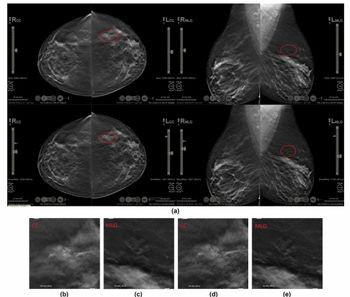
Use of the AI-enabled slab technology from reconstructed DBT imaging led to a 7.4-second mean reduction in reading time in a new study involving 391 cases and 15 reviewing radiologists.

Catch up on the top AI-related news and research in radiology over the past month.
Are there certain strategies that facilitate an alter ego-esque laser focus undeterred by distraction?
Catch up on a variety of FDA news in radiology from the past week.

Catch up on the top radiology content of the past week.
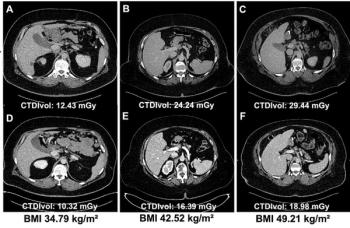
In addition to providing higher SNRs in vascular structures and parenchymal organs than energy-integrating detector CT, photon-counting CT enabled an approximately 30 percent reduction in volume CT dose index (CTDIvol) for patients with obesity, according to a new study.
Facilitating enhanced 3D visualization of skeletal anatomy, the BoneEnhance machine learning module reportedly provides automated segmentation of bone and surrounding tissues for the Accuro XV ultrasound system.

Newly published preclinical research signals a substantial conceptual shift with a potential role of photon-counting CT in targeting specific biological processes.
Advertisement
Advertisement
Trending on Diagnostic Imaging
1
What’s Next for AI in Radiology?: Facilitating Data Orchestration Over Fragmentation
2
Distraction-Free Discipline for Staying in the Zone in Radiology
3
Advances in AI — October 2026
4
Study Shows PCCT Offers Higher Image Quality and Reduced Radiation Dosing than EID-CT in Obese Patients
5