Catch up on the latest imaging research presented at the recent American Society for Radiation Oncology (ASTRO) Annual Meeting.
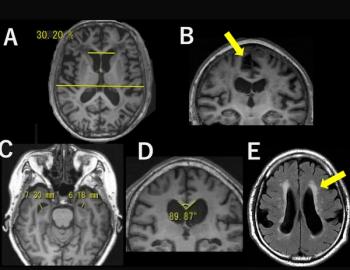
Functional MRI studies involving the precuneus, a region in the posterior of the brain, reveal what may be a new way to distinguish patients with mild cognitive impairment (MCI) from those with Alzheimer’s disease.
Functional MRI studies involving the precuneus, a region in the posterior of the brain, reveal what may be a new way to distinguish patients with mild cognitive impairment (MCI) from those with Alzheimer’s disease.
Previous research has
The French researchers based their study on a visual score of signal gradient, which they call K2, correlated by relating it to signals of antero-posterior enlargement of the cingular sulcus. They tested 105 patients with early or prodromal Alzheimer’s on the K2 scale, and found at least two patterns relating to the precuneus atrophy. When signal is more prominent in the frontal area, clearly the patient has frontotemporal dementia; absence of microangiopathy and stronger signal in the posterior, they suggest, indicates Alzheimer’s. Although more work is needed to quantify the clinical parameters, radiologist Alexandre Krainik said, the new scale should allow “better characterization of morphological subgroups” relevant to early dementia.
In related work at the University of Genoble, researchers evaluated cerebral vasoreactivity in dementia patients using BOLD fMRI after CO2 challenge, following up on studies in a transgenic mouse model of Alzheimer’s that found abnormalities in basal perfusion and vasoreactivity in the brain. Comparing BOLD and perfusion imaging, they found that the signal is delayed and the amperage lower in regions of interest for patients with Alzheimer’s and MCI. Cerebral vasoreactivitiy impairments were “diffuse,” they found, but seemed to predominate in posterior areas of the brain.
A technical problem may hinder interpretation of these results, commented Roland Wiest with the Institute of Diagnostic and Interventional Radiology of Bern, Switzerland. BOLD sequences are susceptible to air and signal deterioration coming from bone at the area of the mesotemporal lobe, he pointed out. Also he was concerned about the fact that the signal in relevant areas of the brain was diffuse. “One would have expected more specific patterns in MCI patients,” he said, “not diffusion.”
Still, the issue of volume loss in the precuneus, where the brain keeps vigilance, is very important, he said. “A lot of work remains to be done still,” he added, “but they’re going in a reasonable direction.”