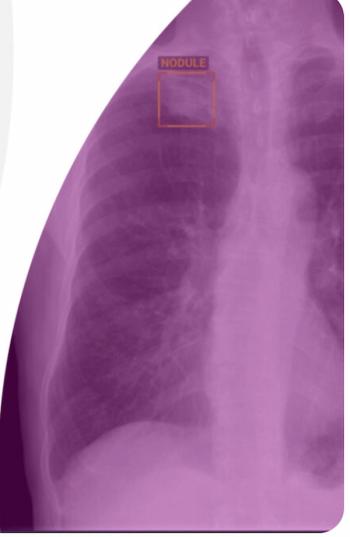
Reportedly one of the first FDA-cleared chest X-ray AI software platforms derived from a foundation model, the Chest Xray software facilitates detection and localization of lung nodules, pneumothorax, mediastinal abnormalities and other thoracic abnormalities.
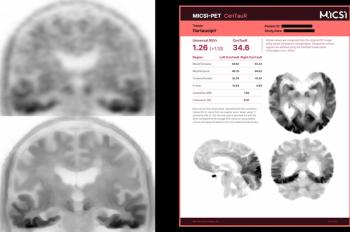
Incorporating structural MRI to improve PET imaging resolution, the MICSI-PET software also offers automated Centiloid quantification from amyloid PET scans.
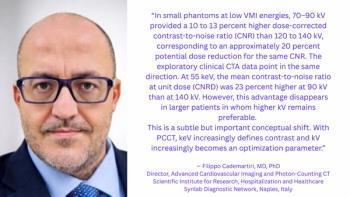
Emerging research demonstrates the increasing stability of attenuation on clinically relevant VMIs with photon-counting CT and a redefined role of kV that may have implications for longitudinal quantitative CT.
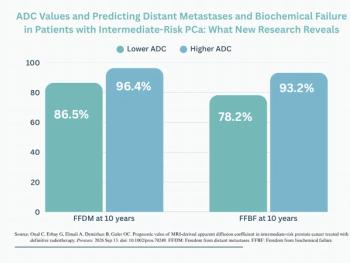
For patients with intermediate-risk prostate cancer, those with lower apparent diffusion coefficient (ADC) values on pre-treatment DWI MRI had a fourfold higher prevalence of distant metastasis in a study with a 10.3-year median follow-up.
In the second of a two-part podcast episode, Lauren Nicola, MD, Christoph Wald, MD, PhD, MBA, and Peter Shen discuss challenges with evaluating value and ROI for AI software, the physician time required to do so, and possible solutions to facilitate improved clarity and consistency with AI reimbursement.
In the latest episode of her “Breast Imaging in Focus” series, Manisha Bahl, MD, MPH, FSBI, offer pertinent takeaways for breast radiologists from recently issued guidelines for addressing proliferative breast lesions with atypia and lobular carcinoma in situ (LCIS).
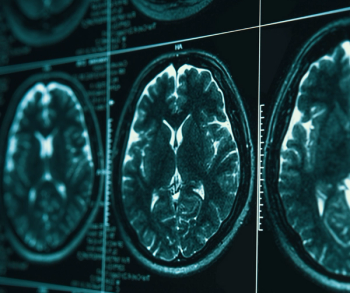
In a study involving over 2,800 people who had brain MRI scans, researchers found that people in the most disadvantaged neighborhoods had 37 percent higher white matter hyperintensity volume (WMHV) on average in comparison to people in the least disadvantaged areas.