

Commentary|Articles|March 22, 2026
Emerging Concepts in Detecting and Treating Prostate Cancer: An Interview with Daniel George, MD
Author(s)Jeff Hall
Can the radioligand therapy 177Lu-PSMA-617 have an impact in older taxane-naïve men with mCRPC? Could we see the development of more combination therapies for patients with prostate cancer? Will emerging theranostics be effective in other targets beyond PSMA? Daniel George, M.D., addressed these topics and more in a recent interview.
Advertisement
In a recent interview with Diagnostic Imaging, Daniel George, M.D., the director of genitourinary oncology at the Duke Cancer Institute and a professor of medicine at the Duke University School of Medicine, discussed new research on the use of Pluvicto and offered insights on future directions with theranostics and molecular imaging in patients with prostate cancer.
Q: Can you talk about the impetus behind the recent study on Pluvicto that you presented at the ASCO-GU symposium?
Daniel George, MD: Pluvicto or 177Lu-PSMA-617, as it's more formally known, is a radioligand therapy that is really a first in class for prostate cancer. It was FDA approved initially for patients with (metastatic) castration-resistant prostate cancer … in patients who have already progressed on both hormonal therapies and chemotherapy.
But in March of 2025, just about a year ago, the label (for Pluvicto) expanded to include patients who were chemotherapy naive or untreated. This was really important because it's a much broader patient population that that represents, and many of whom are just not candidates for chemotherapy because of age or comorbidities offrailty but might not have been included in those clinical trials.
So we wanted to look at real-world evidence to see how patients were being treated in practice, broadly, which again includes a much diverse patient population, and to see what their outcomes were. Typically, when we look at real-world evidence because of factors like that, we'll see therapies maybe with not as good a performance or clinical benefit. But that wasn't the case here, and we used a broad platform called the precision platform, which included databases from urology, from medical oncology, from community and academic practices.
So it was a really broad representation of practices, and we were able to demonstrate that (in) this sort of on label, pre-chemotherapy setting that treatment with Pluvicto resulted in the same length of progression-free survival as what we saw in our clinical trials. That was really remarkable to us given the much greater diversity of patient population that we see in practice.
Q: In addition to the overall observations of the study, what were the key findings from your perspective?
Dr. George: There were several key findings in this study. We did see the patient population was older than in our clinical trials, and the patients were, you know, representative from a broad spectrum of practices, mostly urology, but also community oncology as well as academic oncology.
Then the other interesting aspect of this was not only was the time to disease progression the same, but the amount of treatment that patients were able to tolerate. In most cases, the full six cycles were similar to what we saw in our clinical trials, which really suggests that they also tolerated the drug.
Well, in real-world evidence, we don't have as much details as we do in our clinical trials to parse out individual side effect profiles, but maintaining drug treatment is a proxy, if you will, for tolerance and we met that criteria as well.
Q: Is there anything that surprised you about the study findings?
Dr. George: Well, to be honest with you, I was surprised that this drug was as well tolerated as it as it was. You know, (Pluvicto) is cytotoxic radiotherapy. It is targeted using a PSMA PET scan to identify patients and then using a PSMA targeted radioligand to deliver the therapy. But, nonetheless, this is a whole body exposure to patients, and many of these patients may have underlying comorbidities, either conditions in their bone marrow that predisposed to leukemias or myelodysplastic syndromes, or other comorbidities like dementia or Parkinson's disease or other issues some of these patients may have. There may be varying degrees of renal failure. This drug is cleared through the renal system, and that radiation has the potential to be toxic there.
All of these things, I think, could really mitigate the benefits we see in clinical trials and yet we didn't see that. I think it's remarkable.
It suggests to me two things. One is that the drug is maybe better tolerated than we initially recognized, at least in these patients that have not had chemotherapy and that probably helps in terms of the bone marrow tolerance.
I think the second thing is that … you know we dose this relatively based on body weight and six doses, and there's not a lot of dose adjustments made for this. Yet it's well tolerated in the population. This suggests to me that there is a wide, we'll call it, therapeutic index, and we're not at the maximum dose for these patients.
Q: What about future directions for research? What would you like to see moving forward?
Dr. George: That is already happening. There's another phase three study to move this therapy up even earlier, out of this hormone-resistant disease state and into the hormone-sensitive state, what we call androgen pathway modulatory sensitive disease, and combining it with hormonal therapy.
This offers two real benefits. One is the ability to add or synergize with the benefits of standard hormonal therapy on prostate cancer, and two (is) to potentially treat to a much lower tumor burden by killing the cells by a different mechanism. We may be able to take tumors that were already reduced to a small burden of metastatic disease and knock it down even further. I think the long-term benefits of that are unknown but could be really substantial for some patients. I'm very excited about that direction.
I think in the future, we're getting into more precision medicine, and I think how this drug combines with other precision-targeted therapies (like) PARP inhibitors for patients with HR (homologous recombinant) defects in their tumors to other proliferative signals like AKT (protein kinase B) and other targeted approaches andimmunotherapies that are being developed. This becomes a new standard of care platform to build additional treatments onto. The fact that (Pluvicto) well tolerated in the general prostate cancer population bodes well for future combinations.
Q: This leads into my next question. From your perspective, what are a couple of key trends in molecular imaging that are helping to advance precision medicine for patients with prostate cancer?
Dr. George: There are two key trends with precision imaging. One is what you're seeing today with PSMA PET as helping us to target who should get these therapies. I think it'll also help us understand when it is a good time to stop the therapy. As those images show the target resolving, there may be less need to give the systemic exposure, and maybe some more targeted radiation or therapeutic approaches could be used.
I think the other point is to recognize that these imaging forms could also be useful in helping us identify patients with minimal residual disease. Patients may have had a really good treatment response, but there's still a little bit of target left and to be able to keep going. The six doses (are) arbitrary. There may be patients who can tolerate 12 doses, maybe not all at once, but in sequence with breaks. There is a lot more work to be done, and imaging is going to be really critical in helping us to understand that.
Lastly, I think there are other imaging targets that could be really helpful in this field as well. There is copper imaging but there could be other biologic targets (such as) STEAP1 (six-transmembrane epithelial antigen of the prostate 1), or KLK2 (human kallikrein 2), or other targets (like) B7-H3 (CD276). These are all targets preferentially expressed in prostate cancer that could help us understand cells that may be residual after we've treated the PSMA component of disease. Imaging is going to be really critical biomarker for us as we go forward in this field, both in terms of treatment development but also in terms of practice.
(Editor’s note: This interview is also available as a video at:
Advertisement
Related to this article

The BiPASS program, which combines 68Ga PSMA PET imaging with prostate MRI prior to the use of prostate biopsy, is slated to be evaluated in an impending phase 3 trial.

Catch up on the top radiology content of the past week.

Catch up on key neuroradiology news and research from the past month, including recently published studies involving white matter hyperintensity findings on brain MRI, MRI-enhanced amyloid PET and the newly FDA-approved PET agent floretyrosine F18 for glioma imaging.

Catch up on the most-well viewed radiology content in September 2026.
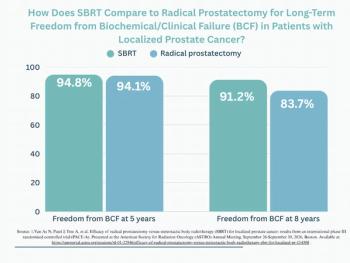
For patients with localized prostate cancer, stereotactic body radiotherapy (SBRT) offered comparable freedom from biochemical/clinical failure at eight years and nearly 40 percent lower urinary incontinence in comparison to radical prostatectomy, according to research presented at the ASTRO conference.

Catch up on the most well-viewed video interviews from Diagnostic Imaging in September 2026.
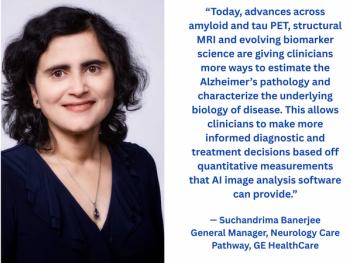
Given the increasing prevalence of Alzheimer’s disease and a staggering number of people with dementia who are undiagnosed, this author discusses five essential keys for radiologists and their colleagues to facilitate earlier detection, precision care treatment and monitoring to help ensure timely care and intervention.

Catch up on a variety of FDA news in radiology from the past week.
Advertisement
Advertisement
Trending on Diagnostic Imaging
1
FDA Clears MRI-Based AI Software for Body Composition Analysis
2
Interventional Radiology in Focus: A Closer Look at Prostatic Artery Embolization for Benign Prostatic Hyperplasia
3
Tumor Margin Marker on Contrast-Enhanced Ultrasound May Predict Worse Outcomes in Patients with HCC
4
Diagnostic Imaging's Weekly Scan: September 27 — October 3
5