|Articles|January 20, 1999

Lunar warns of lower Q2 earnings

Bone densitometry manufacturer Lunar issued a profit warning on Jan. 14, notifying investors that its financial results for the second fiscal quarter (end-December) will be below analysts’ expectations. The Madison, WI, firm said that U.S. sales

Bone densitometry manufacturer Lunar issued a profit warning on Jan. 14, notifying investors that its financial results for the second fiscal quarter (end-December) will be below analysts’ expectations. The Madison, WI, firm said that U.S. sales have been below the company’s targets, and that the firm’s new Prodigy fan-beam densitometer has not had a chance to impact the company’s results. Lunar introduced Prodigy at the RSNA conference last month (see story, page 3).

Lunar expects to report revenues of $23.4 million, an increase of 8% compared with $21.6 million in the same period a year ago. Net income swooned, however: Lunar expects to post a profit of $730,000, compared with net income of $2.7 million in the second quarter of 1998. The news prompted investors to sell Lunar’s stock, and shares of the company were trading at $9.13 on Jan. 15, a drop of 12%.

Related to this article

Foundation Model-Based Chest X-Ray AI Software Gets FDA Nod
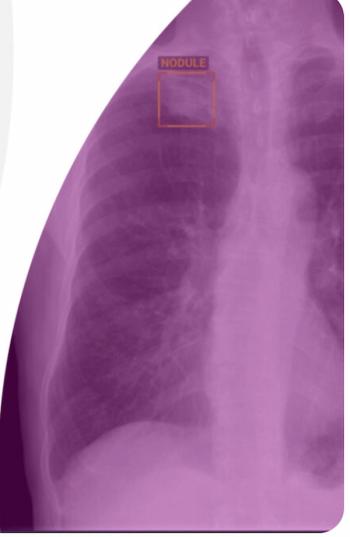
Reportedly one of the first FDA-cleared chest X-ray AI software platforms derived from a foundation model, the Chest Xray software facilitates detection and localization of lung nodules, pneumothorax, mediastinal abnormalities and other thoracic abnormalities.
Does kV Still Matter in Photon-Counting CT?
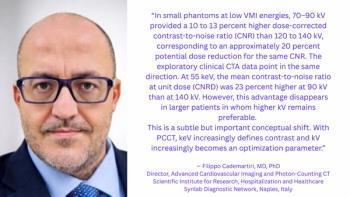
Emerging research demonstrates the increasing stability of attenuation on clinically relevant VMIs with photon-counting CT and a redefined role of kV that may have implications for longitudinal quantitative CT.
CT Radiation Dosing: Where Things Stand, Part 2
In the second of a two-part interview, Kalpana Kanal, PhD, and Mahadevappa Mahesh, MS, PhD, FAPPM, FACR, discussed future directions for research on CT radiation dosing, including the potential of indication-specific diagnostic reference levels (DRLs).