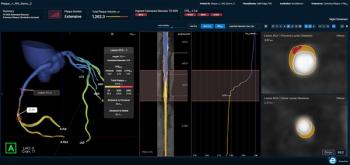
The FFR-IQ software recently demonstrated a 92.2 percent sensitivity for non-invasive estimation of fractional flow reserve (FFRC) based on coronary CT angiography (CCTA) scans.
In a recent interview, David Yankelevitz, M.D., discussed the recent FDA clearance of the AI-CVD multisystem screening software and the ongoing evolution of incorporating computed tomography into personalized screening and risk assessments.
While the recently FDA-cleared AI-CVD software for computed tomography (CT) is primarily focused on cardiovascular risk, the inclusion of lung, liver and muscle fat assessments within
“It's not just looking at coronary calcium. It's not just looking at chamber size. I think the idea that there's an interaction here with all of these things is very important, and I think it will yield much better results. We can't think of everything in isolation. It's kind of allowing us to, through one imaging test, get a much more comprehensive phenotype of the person. This is something that really hasn't been done before, so I think that's the real value here,” explained Dr. Yankelevitz, a professor of radiology at the Icahn School of Medicine and Mount Sinai Hospital in New York.
In a recent interview with Diagnostic Imaging, Dr. Yankelevitz acknowledged there will be a learning curve for radiologists and other clinicians in processing and reporting the information gleaned from the AI-CVD software (HeartLung). However, Dr. Yankelevitz said the potential with such software to improve long-term risk stratification beyond common blood tests and facilitate earlier intervention for those at risk for conditions including atrial fibrillation, incipient diabetes and aortic stenosis is undeniable.
“These phenotypical representations of a person are more predictive even than these blood tests, and they're eventually not going to be used in isolation. We're going to figure out how to put this together, and we're going to figure out how to put this together with genetic information. But the idea that you can make these phenotypic characterizations of a person in a comprehensive way, I think that's fantastic,” maintained Dr. Yankelevitz.
(Editor’s note: For related content, see “
For more insights from Dr. Yankelevitz, watch the video below.