What’s Coming Down the Pike in Radiology in 2026?
In recent interviews, Rajesh Bhayana, M.D., Manisha Bahl, M.D., and Jeremie Calais, M.D., Ph.D., shared their thoughts on agentic AI, key directions in breast imaging research and emerging trends with prostate cancer theranostics in 2026.
What kind of impact will agentic AI have in 2026? Will we see new developments with risk-based screening in breast cancer research? Could we see the continued emergence of alpha-emitting theranostics for patients with prostate cancer?

Answering these questions and more in recent interviews with Diagnostic Imaging, Rajesh Bhayana, M.D., Manisha Bahl, M.D., and Jeremie Calais, M.D., Ph.D., shared their perspectives on emerging trends in radiology for 2026.
Agentic AI was one of the topics that was buzzed about at the
“ … Maturing of some of those agentic (AI) offerings is going to be the name of the game in 2026 workflow optimizations. … Many companies are working on the entire radiology workflow and optimizing at multiple steps, both in the clinical side with radiologists but also on the back end and all the operations that goes behind imaging. I think a lot of these narrow applications lend themselves well to be working together, or at least even agentic workflows to automate and improve what we do,” maintained Dr. Bhayana.
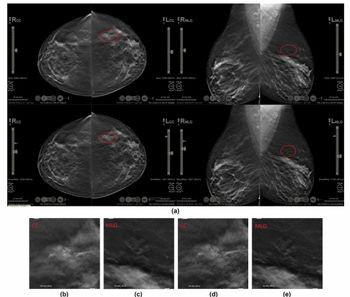
Dr. Bahl said exploring the impact of AI and supplemental imaging to help enhance breast cancer detection and risk stratification will be a primary focus in breast imaging research in 2026.
“Future research should focus on defining the most effective screening strategies for women with dense tissue, including how best to incorporate supplemental imaging and risk-based approaches,” posited Dr. Bahl, an associate professor at Harvard Medical School and breast imaging radiologist at Massachusetts General Hospital in Boston.
In the realm of prostate cancer theranostics, Dr. Calais foresees “expanding indications (and an) expanding portfolio of different radiopharmaceutical agents.” Nuclear medicine physicians may also see the emergence of agents with improved biodistribution properties and a shift in radioisotope focus from beta emitters to alpha emitters, according to Dr. Calais, the director of the clinical research program for nuclear medicine and theranostics at the University of California, Los Angeles (UCLA).
(Editor’s note: For related content, see “
Newsletter
Stay at the forefront of radiology with the Diagnostic Imaging newsletter, delivering the latest news, clinical insights, and imaging advancements for today’s radiologists.