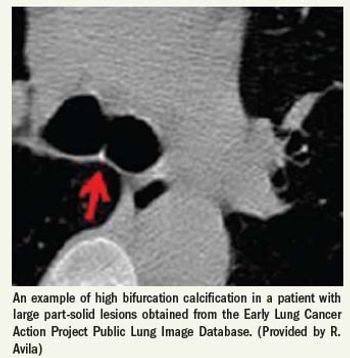
Researchers have found a potential new imaging biomarker for lung cancer.
Researchers have found a potential new imaging biomarker for lung cancer.
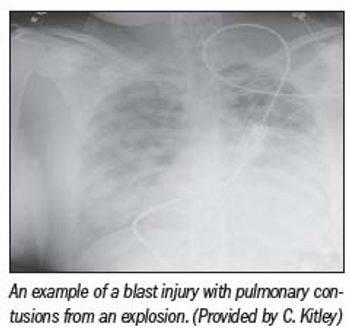
You’re enjoying a Sunday afternoon with the family and your spouse pulls you aside and in hushed tones tells you there’s been a terrorist attack.
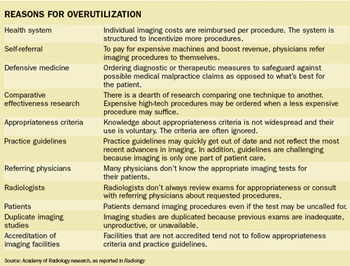
Nothing gets a radiologist's blood boiling quicker than the word “overutilization.
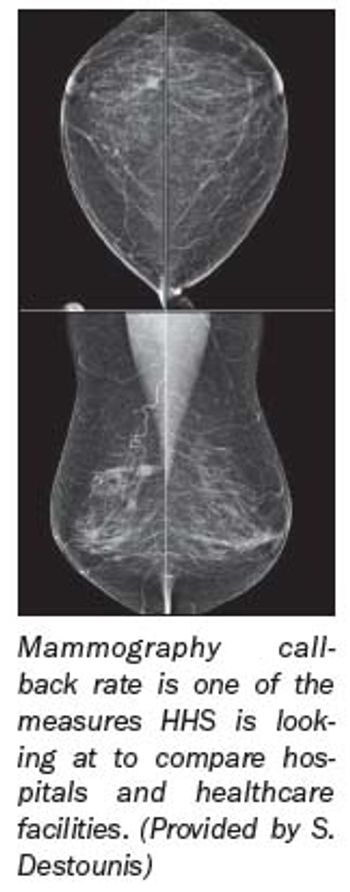
If you were to look at the Department of Health and Human Services' Hospital Compare website, you might think Lifecare Medical Center in Roseau, MN, uses MRI too frequently, especially when it comes to imaging patients for low back pain.

Launch of the new fourth-generation network from cellular wireless companies will enable radiologists to upload and download images more than 10 times faster than they have been able to in the past. While wireless mobile applications for imaging are still a distinct minority, the faster speeds could open the door for preliminary reads or image demonstrations on smartphones and iPads.
When hospitals transition from a contract with an independent radiology practice to an in-house model or a multispecialty group, they can expect some growing pains in the form of technological issues and human resources quandaries, as well as general headaches while trying to get the new practice up to speed. Sutter Health in Sacramento, CA, offers an example.
California radiologists will be required to incorporate radiation dose levels in their reports under a measure signed into law Thursday by Gov. Arnold Schwarzenegger. The measure requires that radiologists include in their reports the dose length product or the CT dose index if the machine is able to calculate it.
Virtual Radiologic announced Sept. 27 it will acquire NightHawk, a publicly traded national teleradiology practice, making Virtual Radiologic the largest radiology practice in the country. However, radiologists aren’t too worried about the deal because Virtual Radiologic still has to compete with thousands of other practices.
Now there’s proof after a day of interpreting images radiologists are less accurate, more tired, unable to focus, and experience eyestrain compared to earlier in the day. A study in the Journal of the American College of Radiology compared the ability of radiologists and residents to read bone exams earlier in the day to later in the day.
The biggest player in the imaging center market announced on Monday a technology purchase that will enhance its efficiency as well as expand its reach into the teleradiology field. RadNet also said its acquisition of Image Medical Corporation, the parent of eRAD, for $10.75 million will qualify RadNet for federal stimulus money geared toward adoption of electronic medical records.
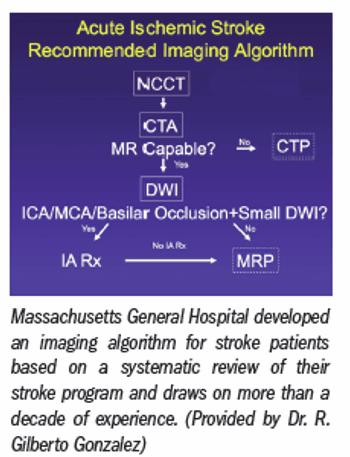
The American Academy of Neurology’s new guidelines on using MRI for stroke may represent best practice, but practical issues remain, interviews with several experts revealed.
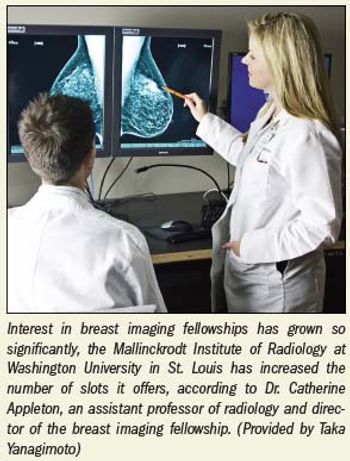
With all the doom and gloom surrounding mammography-lower reimbursement, high threat of malpractice lawsuits-it's easy to assume residents would shy away from the field.
A growing body of evidence supports the use of CT colonography for colon cancer screening and a U.S. panel should reverse its decision to not endorse the procedure, according to the CT Colonography Coalition.
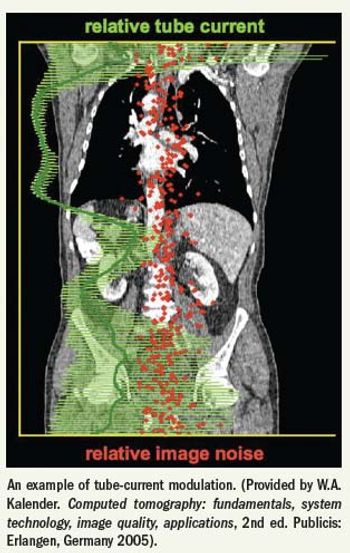
The scanner could be brand new, but there is a good chance it’s operating with old protocols imported from a previous unit and not optimized for best imaging at the reduced dose levels possible today, a researcher suggests.
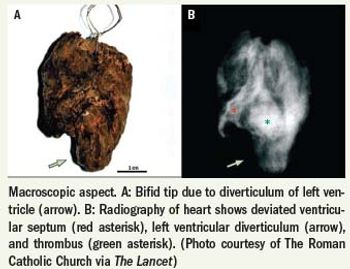
An x-ray taken centuries after her death proves a well-known saint died from a cardiac embolism instead of tuberculosis, as was previously thought.
It may be possible to use ultrasound as a reliable, low-cost form of male contraception, according to ongoing research at the University of North Carolina at Chapel Hill in the U.S.
What is billed as an alliance may become the first step in a move that could position Virtual Radiologic as a national radiology group practice. The alliance will bring that company and S&D Medical into a workflow and technology partnership beginning Oct. 1.
States across the country are reducing funding for their breast cancer screening programs or tightening eligibility requirements, leaving many women without their annual screening mammograms. In all, 17 states have cut back on the programs to help balance their budgets.
Insight Health Services Holdings (Insight Imaging) has completed its previously announced acquisition of eight imaging centers in the Phoenix, El Paso, TX, and Las Cruces, NM, areas from subsidiaries of MedQuest and Novant Health.
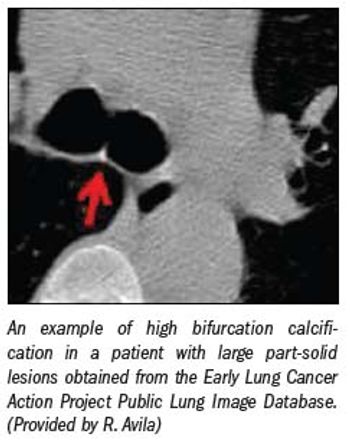
Researchers have found a potential new imaging biomarker for lung cancer. By combining data gleaned from thin-slice CT scans at the tracheal bifurcation with results of spirometry, they have developed a lung cancer risk index.
Breast screening habits for transsexual women shouldn’t differ from those of biological women, according to a recent European study. However, a human sexuality expert disagrees, saying screening for transsexual women should depend on when the patient started estrogen therapy and not age alone.
Because of all the attention currently focused on radiation dose, a California imaging bill addressing radiation exposure has the potential to spread like wildfire to other states. California is a state that doesn’t wait for others to address a problem, so it’s possible similar bills could pop up around the country. The bill has passed the California senate and is now in the California Assembly Appropriations Committee with a hearing set for Aug. 4. Sen. Alex Padilla (D-Pacoima) is lead sponsor of the bill.
Good news radiologists! There’s a new place to set up that MRI machine: the guidance counselor’s office. Researchers are starting to use MRI to document an individual’s ability to perform on vocational guidance tests.
The American Academy of Neurology has weighed in heavily on the side of MR as opposed to noncontrast CT for the diagnosis of stroke patients in its newly published practice guidelines. However, the practice may not be feasible in the real world, according to a neuroradiology expert.
Recruitment for radiologists has shifted from private radiology groups to hospitals and big teleradiology groups, according to national physician search firm Merritt Hawkins, an AMN Healthcare Company.
Nighthawk remains poised for growth despite a recent announcement that it is closing some offices and cutting jobs, according to a financial analyst who follows the company.
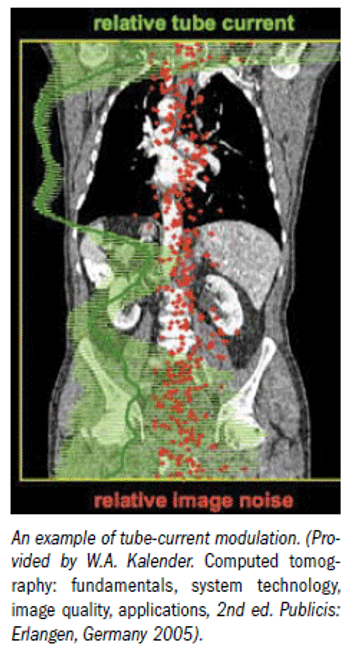
The scanner could be brand new, but there is a good chance it's operating with old protocols imported from a previous unit and not optimized for best imaging at the reduced dose levels possible today, a researcher suggests.
If radiologists don't start addressing cumulative radiation history, someone else will do it for them and radiologists won't like the results, according to a speaker at the International Society for Computed Tomography meeting.
Radiologists must get used to the idea of competing with nontraditional companies such as teleradiology provider Radisphere if they hope to survive, according to a radiology practice expert. In particular they must provide subspecialty coverage, otherwise it’s all too easy to replace them.
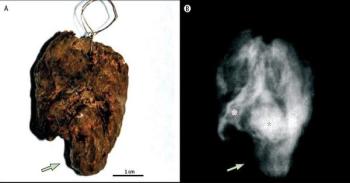
An x-ray taken centuries after her death proves a well-known saint died from a cardiac embolism instead of tuberculosis, as was previously thought. The body of Santa Rosa, an 18- or 19-year old girl, was naturally mummified in the 13th century.