

Mammography
Latest News
Advertisement
Latest Videos

Shorts
0:47
Should Breast Radiologists Save AI Output In PACS?
20 hours ago
by
Wendie Berg, MD, PhD
0:38
How the COVID-19 Pandemic Led to Updated BI-RADS Guidance on Addressing Axillary Lymphadenopathy
14 days ago
by
Stamatia Destounis, MD, FACR
0:50
Five Takeaways for Breast Radiologists from Guidelines on Proliferative Breast Lesions with Atypia and LCIS
17 days ago
by
Manisha Bahl, MD
0:39
A 'Wake-Up Call' for BI-RADS 3 Audits
24 days ago
by
Stamatia Destounis, MD, FACR
0:37
Contrast-Enhanced Mammography Study Shows High Sensitivity and Increased Specificity in Incidence Screening for Breast Cancer
2 months ago
by
Manisha Bahl, MD
0:34
Could a Dynamic Risk Score for Mammography Help Move Radiology Beyond a Diagnostic Role?
3 months ago
by
Constance Lehman, MD, PhD
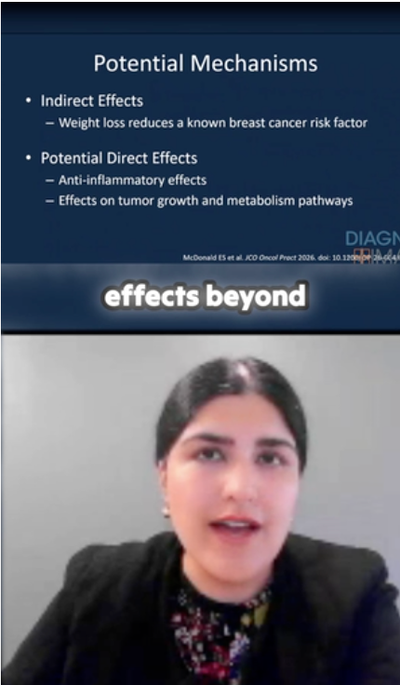
0:47
GLP-1 Receptor Agonists and Reduced Breast Cancer Risk: Is There More to the Story?
4 months ago
by
Manisha Bahl, MD
0:43
Next Steps in Research for Adjunctive AI in DBT Detection of Invasive Lobular Carcinoma
5 months ago
by
Leslie Lamb, MD, MSc
0:36
Three Key Clinical Implications from New Mammography Study on Breast Arterial Calcification
5 months ago
by
Manisha Bahl, MD

0:40
Improving DBT Detection of Invasive Lobular Cancer with Adjunctive AI
5 months ago
by
Leslie Lamb, MD, MSc
Podcasts










Advertisement
More News
Catch up on a variety of FDA news in radiology from the past week.

Catch up on the top radiology content of the past week.
Catch up on the latest episodes of our Breast Imaging in Focus series with Manisha Bahl, MD, MPH, FSBI, discussing research on a variety of topics including breast arterial calcification on mammograms, automated breast ultrasound, AI and GLP-1 receptor agonists.
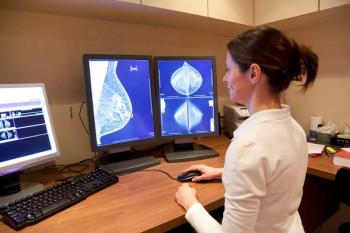
In a recently published review of the BI-RADS v2025 manual, leading breast radiologists offered pertinent insights on key changes for reporting of mammogram, breast ultrasound and breast MRI interpretation and assessment.
Catch up on the most-well viewed radiology content in July 2026.
Catch up on the top radiology content of the past week.
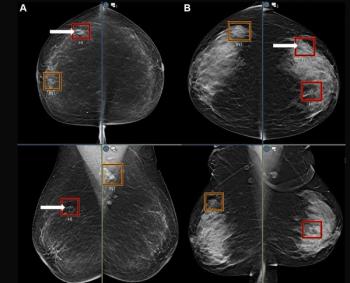
General radiologist assessment of mammograms with adjunctive AI led to a significant increase in cancer detection rate akin to that of breast imaging specialists, according to new research.
Catch up on the top radiology content of the past week.
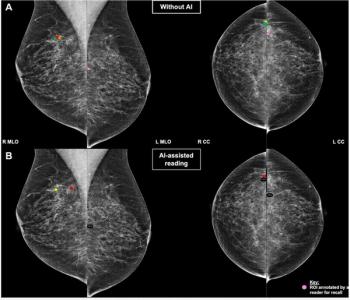
In cases involving false negative suggestions from adjunctive AI for screening mammogram review, researchers found that unassisted radiologists had a 32 percent higher sensitivity rate than those who utilized AI.
Catch up on the top radiology content of the past week.
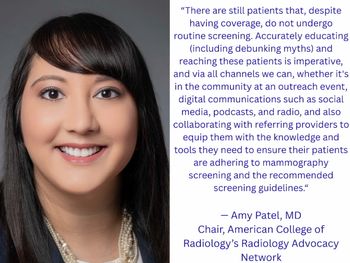
In a recent interview, Amy Patel, MD, discussed recent research on breast cancer screening, pertinent obstacles and keys to facilitating improved adherence with mammography screening.
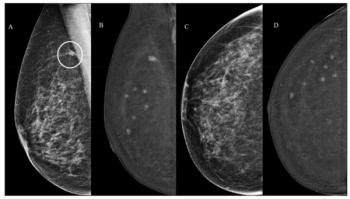
While acknowledging key limitations, the authors of a new literature review noted that contrast-enhanced mammography offers a viable alternative to conventional imaging and breast MRI for preoperative tumor evaluation and may have a significant impact on surgical management.
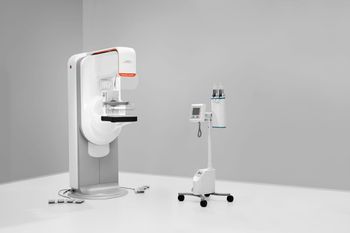
The Mammomat B.brilliant’s ClearCEM image reconstruction technique reportedly utilizes advanced algorithms to facilitate improved noise reduction and lesion enhancement.
Catch up on the most well-viewed video interviews from Diagnostic Imaging in June 2026.
Catch up on the top radiology content of the past week.
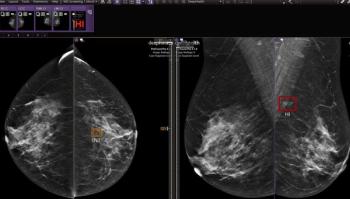
The new functionalities for the AI-enabled Breast Suite software include automated identification of breast arterial calcifications and integration of prior mammograms.
Catch up on the top AI-related news and research in radiology over the past month.
In a recent interview, Constance Lehman, MD, PhD, discussed newly published research demonstrating the dynamic capability of AI-based risk scores, drawn from screening mammograms, to facilitate risk-adaptive screening.
Catch up on the top radiology content of the past week.
In the latest episode of her “Breast Imaging in Focus” series, Manisha Bahl, MD, MPH, FSBI, discusses new research findings from a study involving over 111,000 women that suggest the potential utility of GLP-1 receptor agonists for reducing breast cancer risk.
David Gruen, MD, MBA, FACR, of Advanced Radiology Consultants, shares how leading programs turned clinical evidence into operational reality.
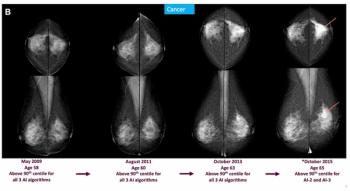
The proportion of breast cancer potentially flagged by three different AI algorithms 10 years prior to diagnosis ranged between 12.7 to 17 percent, according to newly published retrospective research.
Catch up on the top radiology content of the past week.
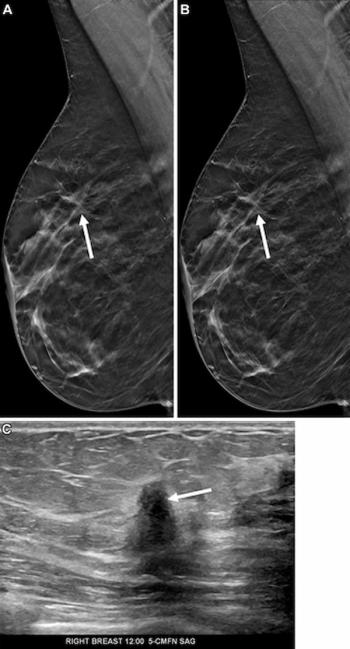
Noting the potential for workload efficiencies in interpreting screening digital breast tomosynthesis (DBT) images, researchers found the use of slab reconstruction technology improved specificity without any impact on sensitivity or cancer detection rate.
Catch up on the top radiology content of the past week.
Advertisement
Advertisement
Trending on Diagnostic Imaging
1
FDA Clears AI-Powered Platform for Converting Spine MRIs to 3D Visualizations
2
Study Shows Impact of Key mpMRI Features for Enhancing Assessment of Renal Masses
3
FDA Clears MRI-Based AI Software for Body Composition Analysis
4
Tumor Margin Marker on Contrast-Enhanced Ultrasound May Predict Worse Outcomes in Patients with HCC
5