
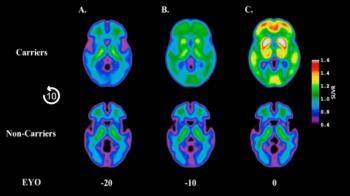
In an address at the recent SNMMI conference, neuroradiologist Tammie Benzinger, MD, PhD, discussed key studies in the evolution of amyloid and tau PET, and their continued emergence in detection, staging and monitoring of people with dementia.
In an address at the recent SNMMI conference, neuroradiologist Tammie Benzinger, MD, PhD, discussed key studies in the evolution of amyloid and tau PET, and their continued emergence in detection, staging and monitoring of people with dementia.
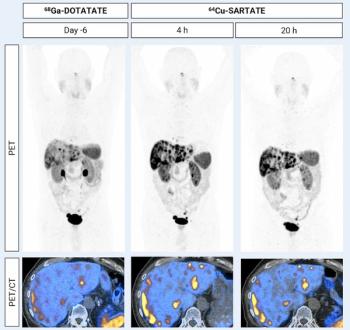
For patients with known or suspected neuroendocrine tumors, the radiopharmaceutical 64Cu-SARTATE offered over 50 percent higher average detection of liver foci than 68Ga-DOTATATE at four hours and 20 hours post-injection, according to research presented at the recent SNMMI conference.

In recent interviews with Diagnostic Imaging, Jeremie Calais, MD, PhD, Michael Hofman, MBBS, FRACP, Heather Jacene, MD, Phillip Kuo, MD, and more shared their thoughts about the potential impact of theranostics and what excites them about the future of nuclear medicine.

Catch up on recent interviews with Michael Hofman, MBBS, FRACP, Heather Jacene, MD, Phillip Kuo, MD, and more discussing new research and advances presented at the Society of Nuclear Medicine and Molecular Imaging (SNMMI) 2026 conference.
In a recent interview discussing the SNMMI conference, Jeremie Calais, MD, PhD, shared his thoughts on emerging advances. a key mentor in nuclear medicine and combination therapy for prostate cancer.

In a recent episode of our “Molecular Imaging in Focus” series, Surekha Yadav, MBBS, MD, discussed research presented at the SNMMI conference that showed significant advantages of PSMA PET over conventional imaging for detection of osseous oligometastatic prostate cancer (PCa).
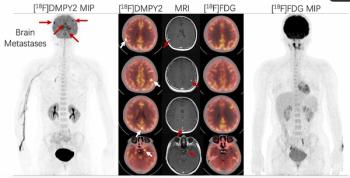
For patients with advanced melanoma, the melanin-targeted PET radiotracer (¹⁸F)DMPY2 offered superior detection of metastatic foci in the brain and liver in comparison to (¹⁸F)FDG, according to preliminary comparative research presented at the recent SNMMI conference.
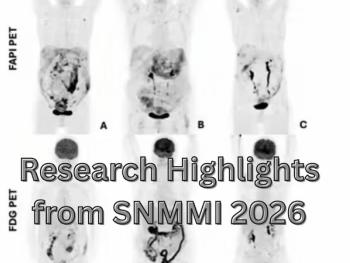
Catch up on the latest imaging research from the recent SNMMI conference.
In the latest episode of the Molecular Imaging in Focus series, Michael Hofman, MBBS, FRACP, discussed the potential of an emerging PET radiotracer for DVT detection spotlighted in SNMMI’s “Image of the Year,” a new advance in total body PET/CT and other highlights from the SNMMI conference.
In a recent interview, new SNMMI president Heather Jacene, MD, discussed key goals for bolstering workforce development in nuclear medicine, improving infrastructure equity and optimizing emerging advances to facilitate precision treatments in oncology.
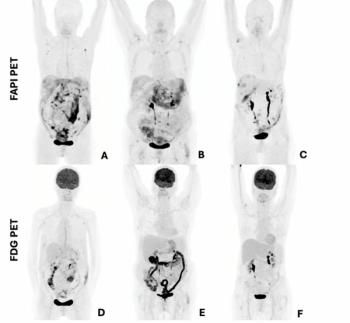
Preoperative use of (68Ga)Ga-FAPI-46 PET/CT demonstrated an 81 percent intraclass correlation coefficient (ICC) with the intraoperative peritoneal cancer index (PCI) in comparison to 76 percent for MRI and 54 percent for (18F)FDG PET/CT (FDG PET), according to new research presented at the SNMMI conference.
In comparison to short-axial field of view PET/CT scanners, a total body PET/CT imaging platform with a long axis field of view detected more lesions in 68 percent of patients while reducing scan times by 83 percent, according to new research presented at the SNMMI conference.
In a recent interview, Phillip Kuo, MD, discussed new comparative multicenter prospective research, presented at the SNMMI conference, examining the urinary radioactivity of two PSMA PET radiotracers 18F-piflufolastat and 18F-flotufolastat.
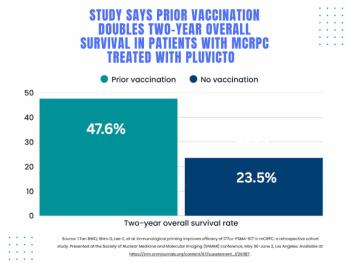
Prior vaccination for prostate cancer-specific antigens was associated with more than double the rate of two-year overall survival in patients with mCRPC who were treated with 177Lu-PSMA-617, according to new research presented at the SNMMI conference.

Preliminary research findings, presented at the SNMMI conference, suggest that the alpha-emitting radioconjugate ATNM-400 may be a viable alternative for treating PCa that is resistant to androgen receptor pathway inhibitors (ARPIs).
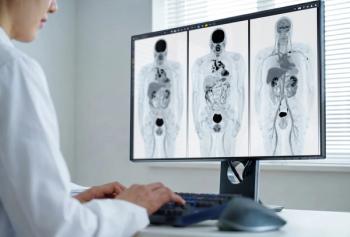
Emphasizing the capability to evaluate the spatiotemporal distribution of PET radiotracers, the MIM KineticID software may provide greater quantitative insights into oncologic, cardiovascular and neurological disease management.
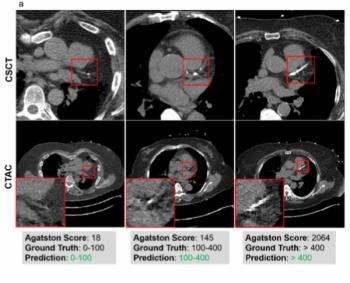
For patients undergoing myocardial perfusion PET/CT, a deep learning model demonstrated greater than 83 percent AUCs for classifying those with low- and high-risk coronary artery calcium (CAC) burden, according to new research presented at the SNMMI conference.
In the latest episode of the Molecular Imaging in Focus series, Isabelle Boileau, PhD, discussed preliminary research, presented at the SNMMI conference, which suggests the utility of a novel tau PET imaging agent that may help detect chronic traumatic encephalopathy (CTE) in living patients.
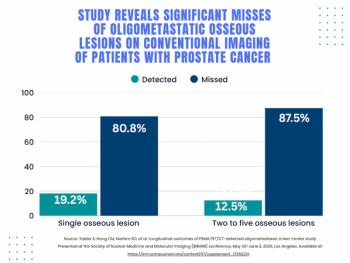
For patients with oligometastatic prostate cancer detected with PSMA PET, researchers found that nearly 78 percent of these patients had negative findings on conventional imaging, according to a study presented at the Society for Nuclear Medicine and Molecular Imaging (SNMMI) conference.

In a recent interview, Shannon Youngblood, EdD, MSRS, CNMT, RT(CT)(ARRT, shared her perspectives on advocacy for nuclear medicine technologists, scope of practice challenges, theranostics and improving access to PET imaging in rural communities.

In a recent interview, Josh Gurewitz and Ajit Shankaranarayanan, PhD, discussed the utility of AI-powered software, including the recently FDA-cleared SubtleHD(PET), for bolstering efficiency and quality with PET imaging.
Catch up on recent interviews with Jean-Luc C. Urbain, M.D., Amir Iravani, M.D., Liza Lindenberg, M.D., and more faculty from the Society of Nuclear Medicine and Molecular Imaging (SNMMI) 2025 conference.
In a recent interview at the SNMMI conference, Ryota Satoh, Ph.D., discussed new positron emission tomography (PET research examining the role of neuroinflammation in differentiating between progressive apraxia of speech (PAOS) and Parkinson-plus syndrome.
In a recent interview, Jean-Luc C. Urbain, M.D., Ph.D., the new president of the Society for Nuclear Medicine and Molecular Imaging, discussed current challenges in nuclear medicine and key goals, including improved access to nuclear medicine for people in underserved communities.
In a recent interview at the SNMMI conference Amir Iravani, M.D., discussed a new sub-analysis from the CONDOR study, which revealed consistently high positive predictive value for 18F-piflufolastat PSMA PET/CT in the detection of local prostate cancer recurrence.
In a recent interview at the SNMMI conference, Liza Lindenberg, M.D., discussed preliminary research findings that suggest the potential of the 18F-fluciclovine PET/CT for detection of multiple myeloma.
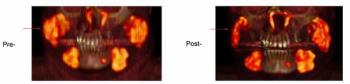
For patients being treated with radiopharmaceutical agents for metastatic prostate cancer, the combination of botulinum toxin and an anti-nausea patch led to a 30 percent reduction in PSMA uptake in the salivary glands, according to preliminary research findings presented at the SNMMI conference.
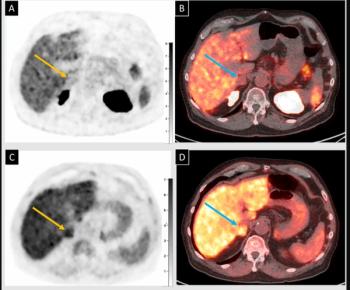
In an ongoing prospective study of patients with biochemical recurrence of PCa and an initial negative PSMA PET/CT, preliminary findings revealed positive 18F-fluciclovine PET/CT scans in over 54 percent of the cohort, according to a recent poster presentation at the SNMMI conference.
In a recent interview at SNMMI conference, Merle Hoenig, Ph.D., discussed new tau PET research examining genetic and modifiable risk factors that contribute to the progression of Alzheimer’s disease.
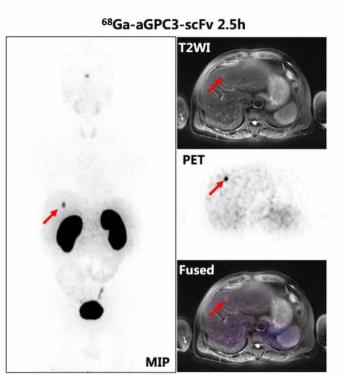
In addition to over 90 percent sensitivity in detecting hepatocellular carcinoma (HCC), the glypican-3 (GPC3) targeted PET tracer 68Ga-aGPC3-scFv appeared to be advantageous in identifying HCC tumors smaller than one centimeter, according to pilot study findings presented at the SNMMI conference.