Catch up on the top radiology content of the past week.
Catch up on the top radiology content of the past week.
Welcome to Diagnostic Imaging’s Weekly Scan, which offers an opportunity to catch up on the most well-viewed radiology content of the past week.
In a new prospective multicenter comparison study, researchers found that the
In a recent interview, Manisha Bahl, M.D., discussed recent research demonstrating a
Here is a clip from the interview.
A prospective research comparison of ultra-low-dose (ULD) PCCT and low-dose (LD) PCCT protocols yielded comparable image quality and strong agreement on
In another recent interview with Diagnostic Imaging, David Yankelevitz, M.D., discussed the recent FDA clearance of the AI-CVD multisystem screening software and the
Here is a clip from the interview.
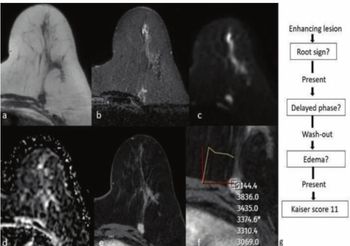
In a new seven-study meta-analysis with a total of 493 cases involving high-risk breast lesions, researchers found that
Thank you for checking out the latest edition of Diagnostic Imaging’s Weekly Scan.