News|Videos|May 9, 2026

Diagnostic Imaging's Weekly Scan: May 3 — May 9

Author(s)Jeff Hall

Catch up on the top radiology content of the past week.

Welcome to Diagnostic Imaging’s Weekly Scan, which offers an opportunity to catch up on the most well-viewed radiology content of the past week.

Can AI Interpretation of Mammograms Offer More Accurate Five-Year Risk Stratification than Breast Density?

Researchers found that deep learning assessment of mammograms had an 18 percent higher accuracy than breast density in predicting future breast cancer within five years, according to a new study, published in JAMA Network Open, that involved over 67,000 women.

Does the Evidence Support Supplemental Imaging in Women with Dense Breasts?

In a recent interview with Diagnostic Imaging, Wendie Berg, MD, PhD, shared her perspective on various aspects of the controversial breast cancer screening guidance issued by the American College of Physicians (ACP), including the use of supplemental imaging in women with dense breasts.

Can the PET/CT Agent (89Zr)Girentuximab Improve Detection for All Renal Cancers?

While previous research has demonstrated the capability of the PET/CT agent (89Zr)girentuximab for detecting clear cell renal cell carcinoma (ccRCC), a new analysis in European Urology reveals a 98 percent positive predictive value (PPV) for detecting non-ccRCC renal cancers.

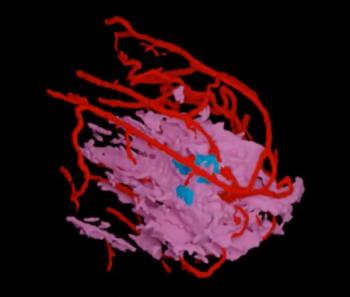
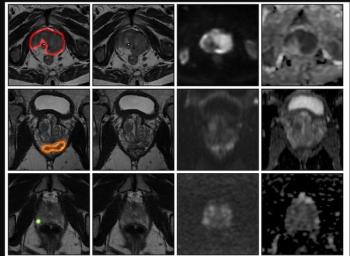
Can 3D Visualization with MRI-Based AI Improve Outcomes in Prostate Cancer Treatment?

In an interview with Diagnostic Imaging, Soroush Adam Ramin, MD, discussed the enhanced 3D visualization and prognostic capability of Unfold AI, an MRI-based software platform that was recently added to Medicare Physician Fee Schedules for the West Coast and Mountain West regions.
What May Whole-Body MRI Reveal About Hypertension Risk in Healthy People?

Increased paraspinal intermuscular adipose tissue (IMAT) on whole-body MRI was associated with a 67 percent higher likelihood of hypertension, according to new research published in Radiology, that involving over 11,300 participants without preexisting conditions.


Latest CME