Evaluation of paraspinal intermuscular adipose tissue (IMAT) and lean muscle mass (LMM) on whole-body MRI may provide insights into risk stratification for the development of dysglycemia, hypertension and atherogenic dyslipidemia in people without preexisting conditions, according to new research.
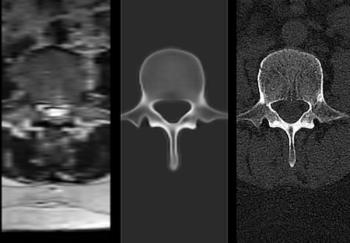
For the prospective multicenter study, recently published in Radiology, researchers employed a deep learning model to obtain quantified assessments of LMM and IMAT based on whole-body MRI views and reviewed data from laboratory test results and clinical exams as well. The cohort was comprised of 11,348 participants (approximately 57 percent were men) who had a median age of 43 and no known preexisting conditions, according to the study.
The study authors found that increased IMAT was associated with significantly higher likelihoods of atherogenic dyslipidemia (82 percent), hypertension (67 percent) and dysglycemia (49 percent).
“IMAT was strongly associated with hypertension, dysglycemia, and dyslipidemia, a pattern consistent with previous work linking intermuscular fat accumulation to metabolic dysfunction. … By demonstrating these associations in a large asymptomatic sample, this study strengthens the relevance of IMAT as a measurable marker of cardiometabolic vulnerability and underscores the need for prospective confirmation,” noted lead study author Sebastian Ziegelmayer, MD, who is affiliated with the Department of Diagnostic and Interventional Radiology at the Technical University of Munich School of Medicine and Health in Munich, Germany, and colleagues.
The researchers pointed out that increased LMM was associated with a 66 percent reduction in the likelihood of hypertension, a 51 percent reduction in risk for atherogenic dyslipidemia and a 49 percent reduction in the likelihood of dysglycemia. However, these reductions were only statistically significant in men, according to the study authors.
“These sex-specific patterns may reflect differences in muscle distribution, hormonal influences, or metabolic responses to muscle mass, but the mechanisms remain unclear. The observed differences indicate that the protective effects of muscle quantity are not uniform across populations and highlight the need for studies examining underlying pathways and the potential differential benefits of LMM-targeted interventions,” posited Ziegelmayer and colleagues.
Three Key Takeaways
• IMAT as a cardiometabolic risk marker. Higher intermuscular adipose tissue (IMAT) on whole-body MRI is strongly associated with increased risk of atherogenic dyslipidemia (↑82 percent), hypertension (↑67 percent), and dysglycemia (↑49 percent), supporting IMAT as a potential early imaging biomarker of metabolic dysfunction in asymptomatic individuals.
• Protective role of lean muscle mass (sex-specific). Greater lean muscle mass (LMM) is associated with substantially lower risks of hypertension (−66 percent), dyslipidemia (−51 percent), and dysglycemia (−49 percent), but these protective effects were statistically significant only in men, highlighting important sex-based differences.
• Age- and physiology-related body composition changes. IMAT increases steadily with age in both sexes while women experience a notable decline in LMM (≈15 percent between ages 40–60), suggesting a potential link between menopausal changes and worsening metabolic risk profiles.

While the researchers noted continuously increasing IMAT with age in both men and women, they noted an approximate 15 percent decline in LLM for women that occurs between the ages of 40 to 60,
“(This) may reflect menopausal transition and estrogen reduction observed at these ages. This observation may indicate that muscle composition changes coincide with this physiologic transition, potentially providing context for evaluating metabolic risk,” added Ziegelmayer and colleagues.
(Editor’s note: For related content, see “AI-Powered MRI Software Gets Expanded FDA Clearance for Use with Deep Learning Reconstruction Modalities,” “MRI Study Reveals Potentially Severe Impact of NAC Upon Heart and Brain Function in Breast Cancer Patients” and “Can Cardiac MRI-Based AI Enhance Long-Term Risk Stratification in Acute STEMI Cases?”)
In regard to study limitations, the authors noted that the cohort of young asymptomatic adults and predominantly European participants thwarts extrapolation of study findings to broader populations. They also noted self-reporting of physical activity in the cohort. The researchers conceded that region-specific effects may have affected IMAT and LMM assessments that were derived from paraspinal muscle imaging.