

News|Videos|August 14, 2026
FDA Approves New Tau PET Imaging Agent for Alzheimer’s Disease
Author(s)Jeff Hall
Recent positron emission tomography (PET) studies with florquinitau F 18 injection (Tauklarify) demonstrated inter-reader agreement ranging between 86 to 92 percent in evaluating patients for Alzheimer’s disease.
Advertisement
The Food and Drug Administration (FDA) has approved the tau positron emission tomography (PET) imaging agent florquinitau F 18 injection (Tauklarify, Lantheus) for identifying tau neurofibrillary tangle pathology in adults with cognitive impairment being evaluated for Alzheimer’s disease.
In two recent blinded studies, use of the
The company also noted the safety profile of florquinitau F 18 injection. In a study involving 1,734 people who had florquinitau F 18 injection, Lantheus pointed out that the three most common adverse reactions were headache (0.7 percent), nausea (0.2 percent) and injection site reaction (0.1 percent).
“For clinicians and researchers, tau PET imaging is an important tool for identifying tau pathology in the brain and advancing our understanding of Alzheimer’s disease,” said Keith Johnson, MD, a professor of neurology and radiology at Harvard Medical School and Massachusetts General Hospital. “The use of sensitive quantitative tau PET imaging is essential for increasing our understanding of potential disease impacts and moving novel treatments forward.”
Advertisement
Related to this article

In a recent interview, Amir Iravani, MD, FRACP, discussed the radiotherapeutic agent 177Lu-edotreotide and new dosimetry data from the COMPETE trial that was recently presented at the ASTRO conference.

In a recent episode of our Molecular Imaging in Focus series, Jack Andrews, MD, discussed pertinent findings from a recent intra-patient comparative study of PSMA PET agents in men with recurrent prostate cancer presented at the recent ASTRO conference.

Catch up on the top radiology content of the past week.
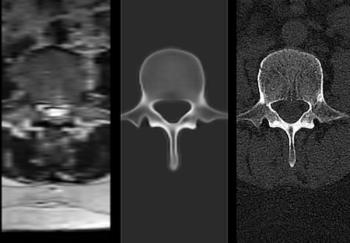
The cloud-based NextMR platform reportedly provides automated 3D bone images of conventional spine MRI images in less than 60 seconds.

In the latest episode of his “Interventional Radiology in Focus” series, Mina Makary, MD, discusses the utility of prostatic artery embolization for treating benign prostatic hyperplasia, key imaging considerations and pertinent technique pearls to help facilitate optimal outcomes.
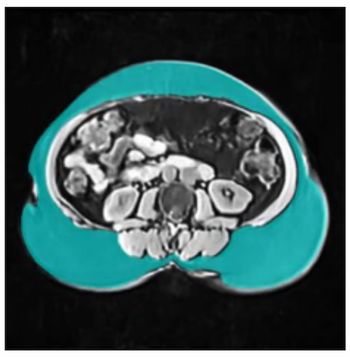
The AI-powered SwiftSight Body Composition software reportedly provides automated quantification of muscle and adipose tissue after a brief MRI scan.
Catch up on the top radiology content of the past week.

Catch up on key neuroradiology news and research from the past month, including recently published studies involving white matter hyperintensity findings on brain MRI, MRI-enhanced amyloid PET and the newly FDA-approved PET agent floretyrosine F18 for glioma imaging.
Advertisement
Advertisement
Trending on Diagnostic Imaging
1
Breast Imaging in Focus: Can AI Models for Breast Cancer Detection and Risk Prediction Be Used Interchangeably?
2
Molecular Imaging in Focus: Comparative PSMA PET Study Offers Insights for Men with Recurrent PCa and Low PSA Values
3
What a Large Prostate MRI Study Reveals About AI and Unassisted Radiologist Assessment
4
Can CT Bone Reading Software Enhance Detection of Metastatic Rib Lesions in Women with Breast Cancer?
5