

News|Videos|October 9, 2026
What New Dosimetry Data Reveals About 177Lu-Edotreotide for GEP-NET Treatment
Author(s)Jeff Hall
In a recent interview, Amir Iravani, MD, FRACP, discussed the radiotherapeutic agent 177Lu-edotreotide and new dosimetry data from the COMPETE trial that was recently presented at the ASTRO conference.
Advertisement
Recently published findings from the phase 3 COMPETE trial demonstrated that177Lu-edotreotide, apeptide receptor radionuclide therapy, provided a
New subanalysis research from the COMPETE trial, involving abdominal single-photon emission computed tomography (SPECT), shows intriguing dosimetry data for 177Lu-edotreotide in this patient population.
For the sub-analysis, recently presented at the American Society for Radiation Oncology (ASTRO) conference, researchers reviewed multiple whole-body planar imaging obtained up to 96 hours post-dose and abdominal SPECT imaging obtained 24 hours after administration of each of the four cycles of treatment with 177Lu-edotreotide. The study authors assessed dosimetry data for healthy organs in 17 patients and tumor dosimetry in nine patients, according to the sub-analysis.1
In a recent interview with Diagnostic Imaging, lead study author Amir Iravani, MD, FRACP, noted that the median kidney absorbed dose coefficients (ADC) remained relatively consistent across the four treatment cycles (ranging from 0.44 to 0.47 Gy/GBq) with a 14 percent intra-patient variability. Dr. Iravani also noted the consistency of a favorable tumor-to-kidney ADC across each treatment cycle with 177Lu-edotreotide.1
“This is very important because … if we do dosimetry at cycle one, we may not necessarily need to do that comprehensive dosimetry to kind of project what is going to be the cumulative absorbed dose within each patient after receiving all four cycles of treatment. Although all patients may need to have the dosimetry (as the) absorbed dose might be different, within each patient, we could basically project and predict what would be the cumulative dose to the kidney, and I think this was the first and most important finding of this study,” explained Dr. Iravani, an associate professor and vice chair of clinical research and theranostics within the Department of Nuclear Medicine and Theranostics at the David Geffen School of Medicine at the University of California, Los Angeles (UCLA).
Future research with 177Lu-edotreotide may reveal further insights on facilitating more personalized targeted treatment in patients with GEP-NETs, according to Dr. Iravani.
“The future direction would be personalizing this treatment and modifying and modulating the treatment based on the absorption dose to the normal organs and the tumors in the future with the hope that that approach would even improve upon what has been achieved from this agent in this trial,” posited Dr. Iravani.
Reference
- Iravani A, Deshayes E, de Mestier L, et al. 177Lu-edotreotide absorbed dose in patients with gastroenteropancreatic neuroendocrine tumors dosimetry results from COMPETE.Presented at the American Society for Radiation Oncology (ASTRO) Annual Meeting, September 26-September 30, 2026, Boston. Available at:
https://www.astro.org/meetings-and-education/micro-sites/2026/annual-meeting .
Advertisement
Related to this article
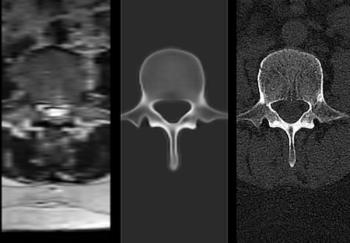
The cloud-based NextMR platform reportedly provides automated 3D bone images of conventional spine MRI images in less than 60 seconds.

In the latest episode of his “Interventional Radiology in Focus” series, Mina Makary, MD, discusses the utility of prostatic artery embolization for treating benign prostatic hyperplasia, key imaging considerations and pertinent technique pearls to help facilitate optimal outcomes.
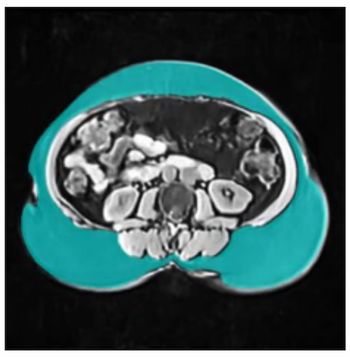
The AI-powered SwiftSight Body Composition software reportedly provides automated quantification of muscle and adipose tissue after a brief MRI scan.

Catch up on the top radiology content of the past week.

Catch up on key neuroradiology news and research from the past month, including recently published studies involving white matter hyperintensity findings on brain MRI, MRI-enhanced amyloid PET and the newly FDA-approved PET agent floretyrosine F18 for glioma imaging.

In a recent interview with Diagnostic Imaging, Joseph Cavallo, MD, MBA, offered insights on post-deployment monitoring with AI, the potential for improved workflow efficiency and the ongoing challenge of balancing essential clinical skills and AI literacy in the training of radiology residents and fellows.
Catch up on the most-well viewed radiology content in September 2026.
The BiPASS program, which combines 68Ga PSMA PET imaging with prostate MRI prior to the use of prostate biopsy, is slated to be evaluated in an impending phase 3 trial.
Advertisement
Advertisement
Trending on Diagnostic Imaging
1
The Responsibility of Authorship in the AI Era
2
FDA Clears AI-Powered Platform for Converting Spine MRIs to 3D Visualizations
3
FDA Clears MRI-Based AI Software for Body Composition Analysis
4
Interventional Radiology in Focus: A Closer Look at Prostatic Artery Embolization for Benign Prostatic Hyperplasia
5