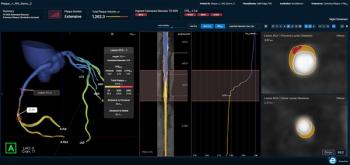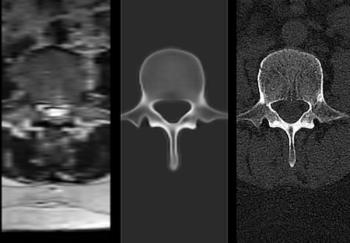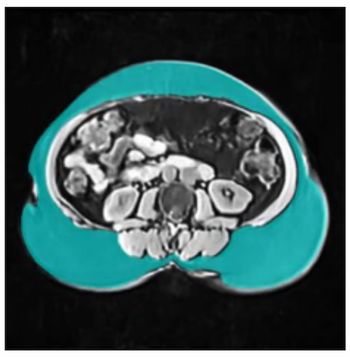
Facilitating enhanced 3D visualization of skeletal anatomy, the BoneEnhance machine learning module reportedly provides automated segmentation of bone and surrounding tissues for the Accuro XV ultrasound system.
In the latest episode of his “Interventional Radiology in Focus” series, Mina Makary, MD, discusses the utility of prostatic artery embolization for treating benign prostatic hyperplasia, key imaging considerations and pertinent technique pearls to help facilitate optimal outcomes.
Prostatic artery embolization (PAE) is an established, minimally invasive treatment for benign prostatic hyperplasia (BPH) that can be offered as a first-line option for appropriately selected patients.
Benign prostatic hyperplasia affects about 20 percent of men aged 40 to 50 and more than 80 percent of men over 70, causing irritative and obstructive lower urinary tract symptoms (LUTS). Surgical options for BPH include transurethral resection of the prostate (TURP), prostatic urethral lift (UroLift) and aquablation that are performed through the urethra while PAE is performed via radial or femoral access. Bleeding and sexual dysfunction, major patient concerns with urologic procedures, are essentially non-existent with PAE.
Ensuring appropriate patient selection is essential. Patients with bladder dysfunction, neurological conditions, trauma, peripheral arterial disease (PAD), major vessel occlusions or contrast contraindications may not be good candidates for PAE.
While a preprocedural computed tomography angiography (CTA) is not required, it can be helpful in identifying anatomic variants for procedure planning. Cone-beam CT helps confirm vessel selection and exclude non-target vessels and may be particularly beneficial during one’s first 50 to 100 cases. Knowledge of variant prostatic and internal iliac anatomy is paramount, and non-target vessels can be managed by selecting distally, coiling or adjusting particle size.
The prostatic artery space is a very exciting space. There are multiple ongoing studies and recently published research showing the efficacy of PAE. There is more data coming out on technique and long-term outcomes. One of the things that is of interest to me are the agents that we use to embolize the prostate. Traditionally, interventional radiologists use particles and there are different debates on different sizes, the amount, endpoints and safety. The application of glue in this space is a pretty exciting development because it gives us another option in our toolbox to improve outcomes. All of these agents have different performance profiles, safety profiles, technical limitations and abilities so it is good to have multiple options for our patients.
It takes a few months to shrink the prostate, and we quantify that with the International Prostate Symptom Score (IPSS) and other scoring systems to understand quality of life before and after the procedure. Prostate artery embolization is very effective, even if we are able to treat only one side of the prostate because of variant anatomy or safety or occlusions or inability to select both vessels. There has been data showing that even with treatment of one side, patients have improvement and it is very safe. There are minimal risks involved and we can really do our patients a big service by offering PAE as a treatment option.
Dr. Makary is a vascular and interventional radiologist. He is an associate professor of radiology at the Ohio State University Wexner Medical Center.