
News|Videos|June 23, 2026
Mammography Study Shows Dynamic Changes of AI Risk Scores Years Before Breast Cancer Diagnosis
Author(s)Jeff Hall
In a recent interview, Constance Lehman, MD, PhD, discussed newly published research demonstrating the dynamic capability of AI-based risk scores, drawn from screening mammograms, to facilitate risk-adaptive screening.
Advertisement
A large multicenter retrospective cohort study published in Radiology has found that AI-derived risk scores from screening mammograms diverge significantly between women who go on to develop breast cancer and those who remain cancer-free — and this divergence is detectable years before diagnosis.
For the
The study authors found that over a six-year period, the median AI risk score for breast cancer with the Mirai model rose from 2.1 at baseline to 6.6 at the index examination for those with breast cancer. The median AI risk score ranged between 1.8 to 2.2 for women who remained cancer-free during the study period, according to the study.
In a recent interview with Diagnostic Imaging, lead study author Constance Lehman, MD, PhD, emphasized the ability of AI to help “realize the full promise” of screening mammograms in facilitating dynamic risk stratification. While
“Technically, they're under that threshold of 1.7 percent five-year risk (threshold) … adopted by the NCCN and the USPSTF. But if those two women, if one of them was 1.1 last year and the other was 1.6 last year, I know that's different as far as predicting what is (their) risk in the coming five years,” posited Dr. Lehman, the founder/CEO of Clairity and a professor of radiology currently on leave from Harvard Medical School.
In subgroup analyses, the researchers also found that the divergent trajectories of risk scores between those who developed breast cancer and those who did not remained statistically significant regardless of differences in age or breast density.
"We found that the findings overall were very robust in our subgroups, and so this is really something that we can use throughout the cycle of the woman's life, while she's in that phase of screening with screening mammography," noted Dr. Lehman.
Dr. Lehman suggested that a dynamic risk score for screening mammography may lead to other possibilities, including an increased role for radiologists in disease prevention.
“I think the world is going to open up to how we can reduce women's risk with much greater precision than when we've been able to do before, and that's where it's really exciting to think of the imaging scientists and radiologists moving outside and beyond their really important role of detecting and diagnosing disease but actually playing a critical role in health promotion and disease prevention. That's where I get really excited,” emphasized Dr. Lehman.
Advertisement
Related to this article
In the third of a three-part podcast episode, Wendie Berg, MD, PhD, FACR, FSBI, Manisha Bahl, MD, and Amy Patel, MD discuss recent developments with autonomous AI in breast imaging and share their perspective on the overall potential of AI to help mitigate the radiologist shortage.
In the second of a three-part podcast episode, Wendie Berg, MD, PhD, FACR, FSBI, Manisha Bahl, MD, and Amy Patel, MD discuss how to handle disagreements with adjunctive AI in breast imaging, whether to include AI assessments in PACS, and whether patients should pay for the use of adjunctive AI.
In the latest episode of her Breast Imaging in Focus series, Manisha Bahl, MD, MPH, FSBI, discusses new research comparing mammography-based AI models for breast cancer detection and short-term risk prediction.

Catch up on the top radiology content of the past week.
The future of AI in radiology lies in its potential capability to forge connections and enhance efficiencies for enterprise-wide workflows.
In a new podcast episode, Joseph Cavallo, MD, MBA, offered his perspective on AI integration, potential efficiency gains, navigating post-deployment monitoring and how to incorporate AI literacy into radiology resident training.
Catch up on the top radiology content of the past week.
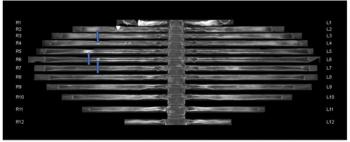
The use of adjunctive CT bone reading software in women with breast cancer detected between 8 to 22 percent more metastatic lesions for reviewing radiologists and reduced CT interpretation time by 50 percent or more, according to a new study.
Advertisement
Advertisement
Trending on Diagnostic Imaging
1
FDA Clears Machine Learning Module for Emerging Musculoskeletal Ultrasound Platform
2
Could Photon-Counting CT Have an Impact as a Platform for Molecular Imaging?
3
What’s Next for AI in Radiology?: Facilitating Data Orchestration Over Fragmentation
4
Can MRI-Based AI Have an Impact in Reducing Unnecessary Prostate Biopsies?
5