
News|Articles|August 1, 2026
FDA Expands Approval of Pluvicto in Combination with ARPI for PSMA-Positive mAPMN/S Prostate Cancer
Author(s)Jeff Hall
Based on results from the phase III PSMAddition trial, the expanded approval may nearly double the number of patients with prostate cancer who can be treated with Pluvicto.
Advertisement
The Food and Drug Administration (FDA) has issued an expanded approval of lutetium LU 177 vipivotide tetraxetan (Pluvicto, Novartis). Pluvicto may now be utilized in combination with an androgen receptor pathway inhibitor (ARPI) for the treatment of PSMA-positive metastatic androgen pathway modulation-naïve/sensitive (mAPMN/S) prostate cancer (PCa).
Novartis emphasized that
"Pluvicto is now approved across PSMA-positive metastatic prostate cancer, nearly doubling the number of patients who may benefit from this targeted approach," noted Victor Bultó, the president of Novartis in the United States. "Patients with metastatic
What the PSMAddition Trial Revealed About the Potential Of Pluvicto In Reducing Mortality Risk in Patients with Prostate Cancer
The expanded indication was based on findings from the
In comparison to the ARPI/ADT combination for patients with PSMA-positive mAPMN/S prostate cancer, researchers found that the combination of Pluvicto and ARPI led to a 28 percent reduction in the risk of radiographic progression or death.
Subsequent analysis of the PSMAddition trial found a 33 percent reduction in the risk of progression or death and trending data suggesting a 20 percent in overall survival, according to Novartis.
(Editor’s note: For additional content on prostate cancer imaging, click
Scott T. Tagawa, M.D., the lead author of the PSMAddition trial, previously noted the favorable safety profile of the Pluvicto/ARPI combination in this patient population.
“These findings suggest that combining 177Lu-PSMA-617 with standard of care hormonal therapy offers patients more time without disease progression, a safety profile with adverse events that are most often low grade and managed with supportive care, and an encouraging trend in overall survival,” said Dr. Tagawa, a professor of medicine at Weill Cornell Medicine and a medical oncologist at New York-Presbyterian/Weill Cornell Medical Center.
Could the Expanded Approval of Pluvicto Enhance Early Intervention for Patients with Prostate Cancer?
Michael Morris, MD, a principal investigator of the PSMAddition trial, said the expanded indication for Pluvicto represents a significant advance in facilitating earlier intervention for patients with PSMA-positive mAPMN/S PCa.
“The treatment landscape for mHSPC is evolving, and this approval reflects a growing recognition that earlier treatment intensification matters. Having a radioligand therapy available at this stage meaningfully expands the options for physicians and represents real progress for patients,” emphasized Dr. Morris, the prostate cancer section head of genitourinary oncology at Memorial Sloan Kettering Cancer Center in New York City.
Advertisement
Related to this article

In a recent episode of our Molecular Imaging in Focus series, Jack Andrews, MD, discussed pertinent findings from a recent intra-patient comparative study of PSMA PET agents in men with recurrent prostate cancer presented at the recent ASTRO conference.

Newly published preclinical research signals a substantial conceptual shift with a potential role of photon-counting CT in targeting specific biological processes.

In a recent interview, Francesco Giganti, MD, PhD, discussed findings from a recent multicenter study demonstrating the ability of an AI software to provide significant clarity to initial PI-RADS 3 assessments on MRI and facilitate a nearly 19 percent reduction in unnecessary prostate biopsies.

In a new podcast episode, Amir Iravani, MD, FRACP, discusses emerging dosimetry data from the COMPETE trial for 177Lu-edotreotide and how it may help facilitate more personalized treatment for patients with gastroenteropancreatic neuroendocrine tumors (GEP-NETs).

Catch up on the top radiology content of the past week.
Catch up on the latest imaging research presented at the recent American Society for Radiation Oncology (ASTRO) Annual Meeting.
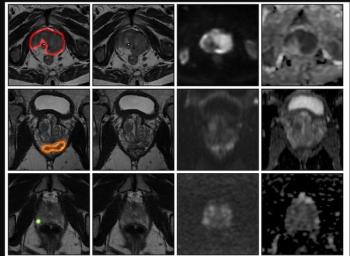
An AI model for prostate MRI offered an 89 percent AUC for prostate cancer detection in external validation testing, according to a newly published international multicenter study.
Catch up on the top radiology content of the past week.
Advertisement
Advertisement
Trending on Diagnostic Imaging
1
FDA Clears MRI-Based AI Software for Prognostic Evaluation of Patients with Mild Cognitive Impairment
2
What’s Next for AI in Radiology?: Facilitating Data Orchestration Over Fragmentation
3
How AI, Theranostics and More Empowered Patients Have Led to Significant Changes in Radiology
4
FDA Clears AI-Enabled FFR-IQ Software for Estimating Fractional Flow Reserve from CCTA
5