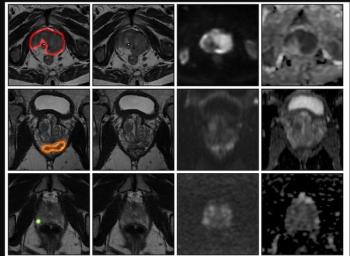
“Patients with radiological progression (PRECISE 4–5) had significantly increased odds of biopsy progression compared to those with stable or regressing MRI findings (PRECISE 1–3). Their 2- and 5-year progression-free survival rates were 49% and 35%, respectively, highlighting the clinical significance of radiological progression,” noted lead study author Francesco Giganti, MD, an associate professor of radiology at University College in London, U.K., and colleagues.
The researchers noted the possible implications for more judicious biopsy use, citing consistently high negative predictive values (NPVs) for different biopsy thresholds (PRECISE > 4, PRECISE > 3(V), PRECISE > 3), ranging from 85 to 91 percent for Gleason grade (GG) > 2 progression and 97-98 percent for GG > 3 progression.
Three Key Takeaways
• PRECISE scoring strongly predicts biopsy progression risk. Patients with PRECISE 4–5 (radiologic progression) had a 4.5× higher likelihood of biopsy-confirmed progression compared to those with PRECISE 1–3 (stable/regressing disease).
• Clear stratification of long-term outcomes. Higher PRECISE scores correlated with worse prognosis. PRECISE 4–5 patients had markedly lower 2- and 5-year progression-free survival (49 percent and 35 percent) versus substantially better outcomes in PRECISE 3 or lower groups.
• Potential to significantly reduce unnecessary biopsies. Using MRI progression (PRECISE-based thresholds) to guide repeat biopsy decisions could avoid up to 70 percent of biopsies, while maintaining high negative predictive value (up to 97–98 percent for higher-grade disease), supporting more selective and efficient surveillance strategies.
“If an AS protocol mandated a repeat biopsy based only on signs of MRI progression, 70% of patients would avoid biopsy, and the risk of GG ≥ 2 would be 15% (CI: 12–27%) at first follow-up scan,” explained Giganti and colleagues. “If a repeat biopsy of visible disease had been performed in all patients with stable findings (i.e., PI-RADS ≥ 4 at baseline and follow-up MRIs), as well as those with progression, slightly more than 30% of patients would avoid a biopsy, and 9–18% of progressions would be missed.”
The study authors also pointed out that prognostic sensitivity at the first follow-up MRI was lower with the PRECISE > 4 threshold (57-62 percent) in comparison to the PRECISE > 3(V) (87 percent) and PRECISE > 3 thresholds (95-96 percent).
(Editor’s note: For related content, see “Can AI Have an Impact in Detecting and Classifying Prostate Lesions on bpMRI?,” “Meta-Analysis Shows Prognostic Impact of Prostate MRI Prior to Radical Prostatectomy” and “Can AI Bolster Prostate Biopsy Efficiency? What a Multicenter MRI Study Reveals”)
In regard to study limitations, the authors conceded the lack of a standard protocol for assessing radiologic progression for the participating facilities and subjective calls by local radiologist to exclude low-quality MRI scans.