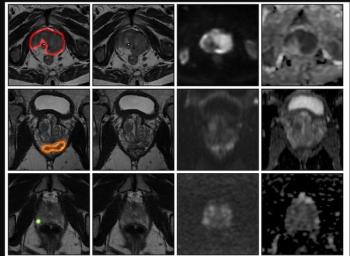
“Our findings demonstrate the potential of AI-DSS to deliver tangible improvements in biopsy decision-making by identifying more patients unlikely to (harbor) benign or GG1 pathology. Avoiding biopsies in these men could substantially improve the pathway in terms of grade selectivity, biopsy efficiency, and selective biopsy avoidance, metrics designed to evaluate the efficiency of MRI-based PCa screening strategies,” noted lead study author Nikita Sushentsev, M.D., who is affiliated with the Department of Radiology at Addenbrooke’s Hospital and the University of Cambridge in Cambridge, United Kingdom, and colleagues.
Three Key Takeaways
• AI improves detection of clinically significant prostate cancer.
Adjunctive use of the Prostate Intelligence™ AI-DSS increased grade selectivity for ≥GG2 cancers compared with unaided MRI interpretation (7.8 vs. 4.6), helping better distinguish clinically significant disease from GG1 cancers.
• AI enhances biopsy efficiency and reduces unnecessary procedures. The AI tool improved biopsy efficiency by 79 percent (2.5 vs. 1.4) and increased selective biopsy avoidance by 143 percent (6.8 vs. 2.8), suggesting fewer benign or low-grade biopsies without compromising detection of higher-grade disease.
• AI may standardize MRI-based biopsy decision-making across centers. By integrating PI-RADS scoring, automated PSA density calculation, and deep learning risk assessment, the AI-DSS could reduce variability related to reader experience, improve triage, and support more consistent and equitable prostate cancer screening pathways.
Trained on 770 cases drawn from multiple facilities and employed with various MRI scanner models, the AI software offers a combination of integrated PI-RADS scoring, automated prostate-specific antigen density (PSAd) assessment and deep-learning risk scores based on MRI, according to the study authors. The researchers maintained that the AI software may increase consistency, efficiency and appropriate triage in evaluating MRI scans for possible prostate cancer.
“This could help (standardize) biopsy recommendations across institutions, mitigating the impact of reader experience and potentially improving equity of access to expert-level interpretation. Furthermore, by automating prostate volume and PSAd calculation, the AI-DSS could reduce manual workload and improve consistency. In a screening scenario, the AI-DSS could function as a triage tool, ranking cases based on their probability of (harboring) ≥ GG2 disease,” pointed out Sushentsev and colleagues.
(Editor’s note: For related content, see “5T Prostate MRI Study Reveals Enhanced Image Quality and Detection,” “Should PSMA PET/CT Supplant MRI for Staging of Patients with High-Risk PCa?” and “Is bpMRI Sufficient for Assessing PI-RADS 3 Lesions?”)
In regard to study limitations, the authors acknowledged the assumption that those with negative MRI findings and no biopsy did not have > GG2 disease.