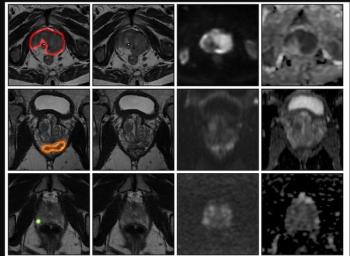
“These associations consistently persisted across multivariable models adjusting for established clinical and pathological prognostic factors, most commonly PSA, biopsy, or International Society of Urological Pathology grade groups,” noted lead study author Georgios Agrotis, MD, PhD, who is affiliated with the Department of Radiology at the Netherlands Cancer Institute in Amsterdam, the Netherlands, and colleagues.
The study authors also noted that PI-RADS scores > 4 and tumor diameter > 20 mm were also associated with double the likelihood for BCR.
“The prognostic relevance of a high PI-RADS category likely reflects the composite nature of the tumor. … This aggregation of morphological and quantitative-based features on MRI explains why the PI-RADS category retains independent prognostic value across multivariable analyses,” added Agrotis and colleagues.
Three Key Takeaways
• Pre-op MRI features strongly predict adverse oncologic outcomes. Detection of extraprostatic extension (EPE) on MRI was associated with >2× higher likelihood of biochemical recurrence (BCR), >3× higher likelihood of metastatic failure, and >10× higher likelihood of prostate cancer–specific mortality, underscoring EPE as a high-risk imaging biomarker.
• Seminal vesicle invasion (SVI) confers substantial additional risk. MRI evidence of SVI was linked to significantly worse outcomes, including a 2.74 hazard ratio for BCR and a 5.58 hazard ratio for metastatic failure, reinforcing its role in preoperative risk stratification.
• MRI-derived tumor characteristics add independent prognostic value. High PI-RADS scores (>4) and tumor diameter >20 mm were associated with ~2× increased BCR risk with prognostic significance persisting after adjustment for PSA, biopsy findings, and grade group, supporting MRI’s role in guiding surgical planning and postoperative surveillance intensity.
In an accompanying editorial, Nicholas A. Pickersgill, MD, said the evidence presented in the study should urge clinicians to reevaluate the prognostic utility of prostate MRI.
“Preoperative MRI informs nerve-sparing, pelvic lymph node dissection templates, and, in the era of early salvage therapy, identification of patients who may warrant intensified surveillance after treatment. The data synthesized by Agrotis (and colleagues) provide the strongest evidence, to date, that these clinical intuitions have some prognostic basis,” maintained Dr. Pickersgill, a urologic oncology fellow at the Memorial Sloan-Kettering Cancer Center in New York, N,Y.
(Editor’s note: For related content, see “Can AI Bolster Prostate Biopsy Efficiency?: What a Multicenter MRI Study Reveals,” “Comparative Study Shows Merits of PSMA PET/CT for Local Staging of Intermediate and High-Risk PCa” and “5T Prostate MRI Study Reveals Enhanced Image Quality and Detection.”)
In regard to limitations with the meta-analysis, the authors acknowledged that that the majority of the studies assessed biochemical recurrence as the primary end point with fewer studies considering metastatic failure or prostate cancer-specific mortality. The researchers also pointed out that all of the reviewed studies were retrospective and only six studies involved multicenter research.