
Commentary|Podcasts|October 31, 2026
The Reading Room Podcast: Current Challenges and Emerging Directions in Glioma Imaging
Author(s)Jeff Hall
In a new podcast episode, Thomas Hope, MD, shares his insights on glioma imaging and the potential impact of the recently FDA-approved PET agent floretyrosine (18F-FET),
Advertisement
Is it recurrent tumor?
Is it residual tumor?
Is it post-treatment granulation tissue and inflammation?
These are common questions that arise when reviewing post-op MRIs after patients have undergone surgery or radiation treatment for brain tumors as these findings can look similar, noted Thomas Hope, MD, in a
“The biggest conundrum in glioma imaging is to distinguish between residual tumor and treatment-related effects,” noted Dr. Hope, the director of theranostics and vice chair of clinical operations and strategy in the Department of Radiology at the University of California, San Francisco (UCSF).
Dr. Hope is bullish aboutthe potential of the PET amino acid radiotracer floretyrosine F18 (18F-FET), which recently became the first PET radiopharmaceutical to garner FDA approval for the evaluation of glioblastoma multiforme (GBM). While noting that future studies will provide increased clarity on the use of 18F-FET (Pixclara, Telix Pharmaceuticals), Dr. Hope suggested the PET radiotracer will “ … improve dramatically molecular imaging of brain tumors moving forward.”
In the
“ … FET does not have those limitations,” maintained Dr. Hope.
Dr. Hope always suggested the potential utility of 18F-FET in serial PET imaging to differentiate between residual tumor and the effects of glioma treatment.
“It's that change over time that's going to become much more important and more accurate in distinguishing these very important clinical factors,” emphasized Dr. Hope.
For more insights from Dr. Hope, listen below or
(Editor’s note: This podcast was originally published as an episode of our Molecular Imaging in Focus series at the following link:
Advertisement
Related to this article
In a new podcast episode, Sharmila Dorbala, MD, MPH, shares her insights on recently published phase 3 research examining the use of the PET/CT radiotracer 124I-evuzamitide for bolstering detection of cardiac amyloidosis.

Catch up on the most well-viewed radiology video interviews from Diagnostic Imaging in September 2026.
Catch up on the top AI-related news and research in radiology over the past month.
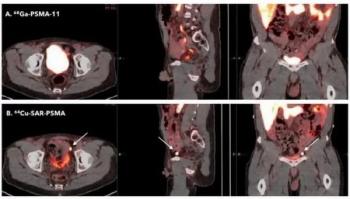
The PSMA PET radiopharmaceutical 64Cu-SAR-bisPSMA, which previously garnered two FDA fast track designations, more than doubled the detection of PCa lesions in comparison to 68Ga-PSMA-11 in the phase II Co-PSMA trial.
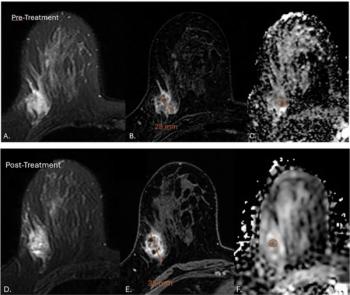
In comparison to the RECIST 1.1 criteria, use of the mpMRI-based NacBI-RADS system for evaluating response to neoadjuvant chemotherapy (NAC) for breast cancer offered an 8 percent higher sensitivity and over 26 percent higher specificity.
In a new podcast episode, Manisha Bahl, MD, MPH, FSBI, offers pertinent insights into a recent study assessing whether AI models for breast cancer detection and short-term risk prediction can be used interchangeably.
Catch up on the most-well viewed radiology content in October 2026.
In a new podcast episode, Manisha Bahl, MD, MPH, FSBI, discusses recently published guidelines on proliferative breast lesions with atypia and lobular carcinoma in situ (LCIS).
Advertisement
Advertisement
Trending on Diagnostic Imaging
1
FDA Clears CTA-Based AI Software for Brain Aneurysm Detection and Follow-Up
2
Will PCCT Lead the Next Revolution in Interventional Cardiology?
3
FDA Issues Breakthrough Therapy Designation for Emerging PSMA PET Agent in Men with Suspected PCa Recurrence
4
Agfa Radiology to Introduce AI-Powered DR 100s Pro X-Ray Platform at RSNA
5