News|Videos|November 14, 2026

Diagnostic Imaging’s Weekly Scan: November 8 — November 14

Author(s)Jeff Hall

Catch up on the top radiology content of the past week.

Welcome to Diagnostic Imaging’s Weekly Scan, which offers an opportunity to catch up on the most well-viewed radiology content of the past week.

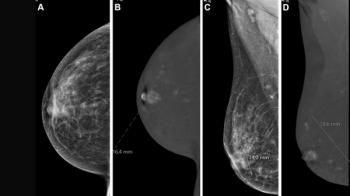
A high glandular tissue component on pre-op breast ultrasound may significantly elevate the risk of recurrence for ipsilateral or contralateral breast cancer, according to a recently published study in Radiology.

In a recent interview with Diagnostic Imaging, Carolynn DeBenedectis, MD, discussed the utility of AI-enabled slab reconstruction for interpretation of digital breast tomosynthesis (DBT) and new research showing a 13 percent reduction in reading time.

The PSMA PET radiopharmaceutical 64Cu-SAR-bisPSMA received a breakthrough therapy designation from the Food and Drug Administration (FDA) for treatment of men with suspected recurrence of prostate cancer (PCa). The PSMA PET agent, which previously garnered two FDA fast track designations, more than doubled the detection of PCa lesions in comparison to 68Ga-PSMA-11 in the phase II Co-PSMA trial.

In the latest episode of her Breast Imaging in Focus series, Manisha Bahl, MD, MPH, FSBI, discussed new research demonstrating that cancer detection rate, sensitivity and positive predictive value (PPV) for digital breast tomosynthesis (DBT) all improved with age.

In comparison to the RECIST 1.1 criteria, use of the mpMRI-based NacBI-RADS system for evaluating response to neoadjuvant chemotherapy (NAC) for breast cancer offered an 8 percent higher sensitivity and over 26 percent higher specificity, according to a new study in European Radiology.

Related to this article