Catch up on the top radiology content of the past week.
Catch up on the top radiology content of the past week.
Welcome to Diagnostic Imaging’s Weekly Scan, which offers an opportunity to catch up on the most well-viewed radiology content of the past week.
New research, published earlier this week in Radiology, suggests that digital breast tomosynthesis (DBT) offers significantly higher detection rates than digital mammography for radial sclerosing lesions, lobular carcinoma in situ and atypical lobular hyperplasia.
In comparison to digital mammography, researchers found that
The study authors also determined that DBT offered 37 percent higher detection of lobular carcinoma in situ, 45 percent higher detection of atypical lobular hyperplasia and more than double the detection rate for radial sclerosing lesions.
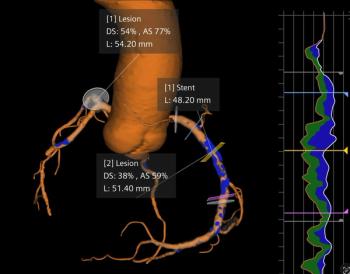
The Food and Drug Administration (FDA) granted 510(k) clearance for Syngo.CT Coronary Cockpit, an AI-powered software that may enhance coronary plaque assessment on coronary computed tomography angiography (CCTA) scans and provide adjunctive support for planning of percutaneous coronary intervention (PCI) procedures.
Through a combination of AI-based segmentation and labeling, Siemens Healthineers said the Syngo.CT Coronary Cockpit software bolsters
In a recent episode of our Molecular Imaging in Focus series, Christopher Rowe, MD, BMBS, FRACP, FAANMS, discussed pertinent phase 3 study findings for florquinitau F 18 that were presented at the recent Clinical Trials on Alzheimer’s Disease conference.
The researchers found that florquinitau F 18 demonstrated sensitivity rates between 79.9 percent to 88.5 percent for one study and 68.2 percent to 82.4 percent for the second study.
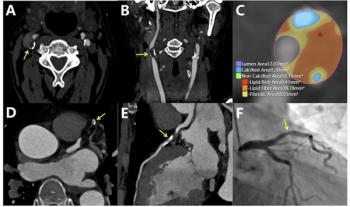
Greater calcified plaque volume, quantified with AI assessment of carotid CTA, was associated
The plaque quantification model demonstrated a 15.3 percent higher AUC, 8.3 percent higher sensitivity, 14.4 percent higher specificity and 12.1 percent higher accuracy in comparison to the clinical model.
The Food and Drug Administration (FDA) issued 510(k) clearance for a2z-Omni-Triage software, an
A2z Radiology AI, the developer of a2Z-Omni-Triage, said the software flags findings that are suspicious for the following: pneumothorax, moderate or large layering pleural effusion, complex pleural collection, bowel perforation, non-sacral pelvic fracture, sacral or coccygeal fracture, soft tissue abscess, moderate or severe hydronephrosis, and large aortic aneurysm (5 cm or larger).