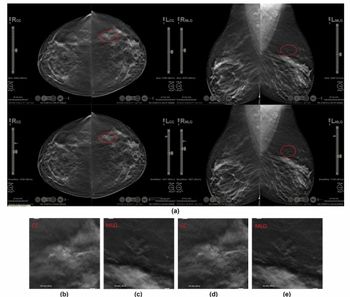
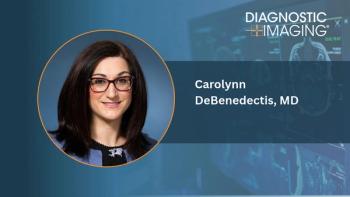
In a recent interview, Carolynn DeBenedectis, MD, discussed the utility of AI-enabled slab reconstruction for interpretation of digital breast tomosynthesis (DBT) and new research showing a 13 percent reduction in reading time.
In a new podcast episode, Manisha Bahl, MD, MPH, FSBI, offers pertinent insights into a recent study assessing whether AI models for breast cancer detection and short-term risk prediction can be used interchangeably.
Artificial intelligence models built to detect breast cancer on mammography and those built to predict short-term breast cancer risk are related but should not be used interchangeably.
That is the key finding from a recently published study in
For the retrospective study, researchers evaluated the utility of two detection models (RSNA Detection and Transpara Detection) and two risk models (Mirai Risk and Transpara Risk) in a detection setting and in a short-term risk setting focused on interval cancers after negative mammography screens. The cohort included 7,430 Swedish women and a total of 20,187 screening mammograms obtained between 2008 and 2016. The study authors noted that 741 exams were associated with breast cancer (524 screen-detected and 217 interval cancers) within a two-year period.1
All of the models demonstrated high AUCs, ranging between 88 to 92 percent, for breast cancer detection, For radiologist double reading, Transpara Detection had a specificity of 97.1 percent versus 94 percent for Transpara Risk. In the short-term risk setting, Transpara Risk had the highest AUC (0.81), followed by Transpara Detection and Mirai Risk (0.76 each) and RSNA Detection (0.72), according to the study.1
"At 90 percent specificity, Transpara Risk identified 49.8 percent of interval cancers compared with 41 percent for Transpara Detection. These findings suggest that models optimized for risk prediction may be better suited to identifying women who subsequently develop interval cancer," pointed out Dr. Bahl, an associate professor at Harvard Medical School.
However, at the aforementioned threshold, Dr. Bahl noted that only 11.1 percent of interval cancers were identified by the risk model alone, and 47.9 percent were missed by both Transpara models.
Dr. Bahl cautioned that the study was retrospective, had a Swedish population, used a single mammography vendor, evaluated models without radiologists, and measured model performance rather than clinical outcomes.
She noted a few pertinent takeaways from the research.
"First, AI detection and risk prediction models should not be considered interchangeable even when their performance overlaps. Second, AI-based risk prediction models could help identify women who would benefit from supplemental screening, but whether this approach improves cancer detection or reduces interval cancers remains uncertain," explained Dr. Bahl, a breast radiologist at Massachusetts General Hospital in Boston.
"The key takeaway is that AI-based breast cancer detection and risk prediction models are related but distinct applications. Models should be selected and validated based on their intended clinical purpose. Future prospective studies are needed to determine whether integrating these models into screening workflows improves patient outcomes.”
For more insights from Dr. Bahl, listen below or
Reference