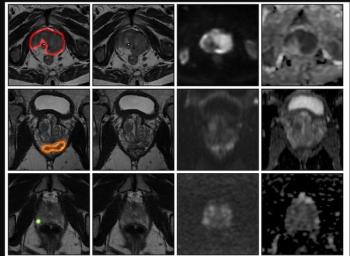
“In this trial, omitting prostate biopsy in men with negative MRI results, and thereby delaying a potential cancer diagnosis, was associated with a substantial reduction in the detection of clinically insignificant cancer and a very low risk of detecting incurable cancers at repeat screening rounds or as interval cancers,” wrote lead study author Jonas Hugosson, M.D., Ph.D., a professor and chief physician in the Department of Urology with the Institution of Clinical Sciences at the University of Gothenburg in Goteborg, Sweden, and colleagues.
The researchers added that there was no significant difference between the cohorts in regard to very high-risk presentations, advanced metastatic cancer, or interval cancer detection. They noted only five of these cases in the MRI-targeted biopsy group and seven cases in the systematic biopsy group.
“This trial showed no increased risk of detecting prostate cancer too late if the diagnosis waited until MRI showed suspicious lesions,” maintained Hugosson and colleagues.
Three Key Takeaways
1. MRI-targeted biopsy reduces overdiagnosis. The study showed that MRI-targeted biopsy significantly reduced the detection of clinically insignificant prostate cancer (PCa) by 57 percent compared to systematic biopsy. This suggests that MRI can help avoid unnecessary treatments and interventions associated with overdiagnosis.
2. Low risk of missed high-risk cancers. There was no significant difference in the detection of high-risk or advanced prostate cancers between the MRI-targeted and systematic biopsy groups, indicating that using MRI to guide biopsies does not increase the risk of missing aggressive cancers.
3. PSA cutoff may need reevaluation. The study found that some men with potentially incurable cancers had PSA levels below 3 ng/ml in prior screenings. This raises questions about whether the current PSA cutoff should be revised to improve early detection in such cases.
The study authors also noted that of the five very-high risk presentations in the MRI-targeted biopsy group, four men had an initial PSA level below 3 ng/ml at a prior screening.
“The finding that most men with potentially incurable cancer detected were men who either received the diagnosis at the first screening round or had the cancer detected at a repeat screening visit after having had a PSA level of less than 3 ng per milliliter measured at the previous screening visit raises the question of whether the PSA cutoff of 3 ng per milliliter should be revised,” posited Hugosson and colleagues.
(Editor’s note: For related content, see “Study: mpMRI-Targeted Biopsies Offer Better Detection of Cribriform and Intraductal PCa than Systematic Biopsies,” “MRI Study Suggests Deep Learning Model Offers Equivalent Detection of csPCa as Experienced Radiologists” and “Should MRI be Mandatory Prior to Active Surveillance Decisions for Patients with Intermediate Risk Prostate Cancer?”)
Beyond the inherent limitations of a single center study, the authors conceded a limited age span for the cohort and noted the cohort was largely comprised of White men.