
Commentary|Articles|November 19, 2026
Radiology Reflections on AI, Theranostics and Empowered Patients: An Interview with Phillip Koo, MD
Author(s)Jeff Hall
In a recent interview, Phillip Koo, MD, shared his thoughts on the impact of AI in radiology and nuclear medicine, the emergence and potential with theranostics, and how patient empowerment has changed radiology reporting.
Advertisement
The ongoing development and utilization of AI and theranostics as well as increasing patient empowerment via the 21st Century Cures Act have marked significant shifts in radiology and nuclear medicine. Phillip Koo, MD, shared his perspective on these seismic changes in a recent interview with Diagnostic Imaging.
Q: What sparked your interest in lecturing at the HLTH USA conference?
Phillip Koo, MD: As a nuclear radiologist physician and also as someone who works for the Prostate Cancer Foundation, I always find it very important that when we have opportunities to speak to other groups outside of our typical areas, that we really take advantage of those opportunities. HLTH (USA)is one of those meetings where we really focus on health-care innovation, and they bring together multiple different stakeholders. I think it's important for those important decision makers or policymakers or whoever they might be to understand what the health-care team is thinking — what the providers are thinking, what the physicians are thinking, what the radiologist, nuclear medicine physician, the entire care team, what they're thinking — what are their challenges, what are the opportunities just to bring a different perspective to a lot of (these) conversations.
Q:You spoke at a HLTH USA session on empowered patients. While radiologists and nuclear medicine docs traditionally are not patient facing, can you talk about why this is pertinent for them, perhaps even from a reporting perspective, given the increased access to radiology reports?
Dr. Koo: There are so many different layers to that question, and I think in general (that) radiologists (and) nuclear medicine physicians … need to take every opportunity to be more patient facing, if possible. I think nuclear medicine, with the rise of theranostics, has a really amazing opportunity to participate in longitudinal care and be that patient-facing physician (who) really adds value to the health-care delivery team.
Obviously, radiologists and nuclear medicine physicians, we interact more with referring physicians than we do patients. That being said, the 21st Century Cures Act really changed a lot of the dynamic. It gave patients access to the radiology reports many times before the referring physicians would read this, and that we all know has created certain changes in workflow and changes in the dynamic. It’s important for us to think about that and understand how patients are interacting with information. Although it may not be a direct physical interaction, we are interacting with them daily. We need to keep that in mind and figure out how can we better practice our specialties, knowing that the patients are seeing these reports pretty quickly and have questions. They might be referring to the referring physicians. Maybe there's a model in which they start referring to the radiologist directly as well.
These are all new questions that we need to deal with. But in the end, even though we may not be as face to face with the patients, we need to practice like we are, whether it's virtually and perhaps even physically in the future.
How Have Patient Perspectives Changed on the Use of AI in Health Care?
Q: In your role at the Prostate Cancer Foundation, what are you seeing or hearing from patients with respect to AI in health care?
Dr. Koo: I will say when AI was first introduced, there was there were more concerns, questions about privacy, about accuracy, what data are they using? I will say it's pretty amazing at how quickly that narrative has changed. Now start using this in these LLMs or these agents in different parts of their lives, and they start thinking, "Oh, why should I not be using this for my health care, and the answer to that is they should be. You know, it's a great resource.
So I will say the adoption in the patient community has grown pretty quickly, but I still think there's a lot more that will be done, and a lot more people that would be using it. And it's important for all of us to make sure no patient is left behind. Every patient has access to it. They're utilizing it appropriately, and they're being open and honest with the entire care team about how they're interacting with AI. They bring those questions to their visits, and they also understand the limitations. This is a huge opportunity for everyone on the physician side, the care team side, to figure out how we're guiding this entire process so it's working synergistically to improve patient care.
How Has AI Changed Radiology and Nuclear Medicine?
Q: What is your take overall on the impact of AI in radiology and nuclear medicine?
Dr. Koo: Let us sort of break this down into multiple different areas. I think number one, to my knowledge, AI applications in radiology far exceed any applications in other specialties, and that makes sense. It's a digital technology. We live in PACS. We have digital images. From that perspective, we're going to continue seeing growth of the tool to help identify abnormalities and whatnot.
We've seen a growth in using AI to help with the reporting, and that's been a wonderful advancement. I will say there are opportunities to take that even further, understanding that patients are seeing their reports quickly. Maybe we need to do (some) sort of lay language model summaries that you know go to the top of these reports. I think we need to start thinking about standardization more, and I think AI tools will help us standardize the reporting more.
I think we need to take a deeper dive into the imaging as well. Just because something can detect something is great, but how do we then figure out how that can improve outcomes in the end. This is where, from a research perspective, we need to take the radiology nuclear medicine piece to another level, where we tie our ability to detect and measure disease and responses, and tie that to an outcome. Then clinically, we need to be able to tie that with the electronic medical records, the clinical histories, what's going on in other areas. Put that all together to be able to build predictive models on how patients might respond.
This is a challenge to all imaging specialists out there. We cannot think of imaging in a vacuum. It's really about how it intersects and interplays, and how we harness that for the future. It still is really, really sad that when we have clinical trials, we still use RECIST. We still just measure target lesions in two dimensions, and that's how we assess response or progression. We need to do better, and there's clearly a need for this. With all these tools out there, we can do it.
How Have Theranostics Impacted Care Delivery for Patients with Prostate Cancer?
Q: What excites you about the increasing emergence of theranostics in prostate cancer?
Dr. Koo: Theranostics, I would argue, this is probably the biggest advancement in our generation when it comes to oncology. It is in many ways the ultimate precision medicine type of tool. It targets a protein on the cell. We know how the protein sort of overexpresses or increases or decreases. We can image it (and) then we could target it with the treatment. So, this platform and seeing commercial success of therapeutics in this space is wonderful, but we're only just beginning, and that's where the excitement is.
Number one, if we think about what we do today in prostate cancer, there are opportunities to take it to a deeper level to understand. (This is) kind of tying back to what we talked about earlier, understanding the imaging, analyzing the imaging to a deeper level, so that we can build prognostic, but more importantly, predictive models on how patients will respond. Maybe we need to start looking at adaptive dosing strategies to a greater degree.
There is still a lot more that we need to get done. What's even more exciting is this technology. Today, it's been great for prostate cancer and neuroendocrine malignancies of the GI (gastrointestinal) tract, but I think there's so much more potential in the other disease sites too: lung cancer, pancreatic, breast, and this is where continued research and investment in these areas will help build this modality, this tool, to greater heights.
Being able to have this unique mechanism of action obviously lends itself to future combination therapies, and that's another area that that creates a lot of excitement. Radiology and nuclear medicine are at the forefront of this. We're really at the center of this, and there's a huge opportunity for us to harness that expertise, that knowledge, to help make that future a reality.
Could Emerging Isotopes Have an Impact in Treating Prostate Cancer?
Q: What does the future hold with respect to technological advances in detection and treatment for patients with prostate cancer?
Dr. Koo: I think that the future is bright. We have great imaging tools, but we also need to understand their limitations. PSMA PET has been revolutionary. It has changed how we diagnose and then subsequently manage disease. But we also know it's not perfect. What's exciting is innovation allows different groups to continue trying to make things better. Even though it's great, there's still room for improvement, and hopefully we'll continue seeing that improvement because I think that'll unlock even better treatments that could lead to lead to more durable responses.
From the therapeutic side, you know we've talked a lot about you know a specific isotope called (177Lu)Lu-PSMA-617 (Pluvicto, Novartis) and that drug's ability to target disease. It's now approved for multiple different disease states and prostate cancer. What's even more exciting is now we have different isotopes that are being studied. We have alpha particles. Alpha particles are heavier in mass. They carry a greater energy. They travel shorter distance. So the theoretical benefit is maybe it has a better cancer control effect and perhaps less adverse events. Again, that needs to be studied and tested. But if that's true, then all of a sudden, we start having multiple different ways to target disease. Whether it's in sequence, whether it's in combination, these are all questions that need to be answered.
But the fact that we're having these conversations with different isotopes like actinium-225, terbium-161, lead-212, this to me is sending a very bright signal that the capital markets, the innovators, everyone is very excited about this new platform.
Why Radiologists and Nuclear Medicine Physicians Should ‘Actively Embrace’ AI
Q: Is there anything else you would like to add?
Dr. Koo: You know, the one thing I'd like to add is in radiology and nuclear medicine, there's always talk about AI (being) the doom and gloom for our specialty. (As a) proud card-carrying radiologist and nuclear medicine physician, I think back to the days of when PACS came out and teleradiology, and people (were) telling a lot of people in training, ‘Oh, you're not going to have jobs; you're all going to get out.’ That didn't happen. Volumes continue to go up. The shortage of radiologists and nuclear medicine physicians continues to this day.
I think we need to sort of change our mindset. Instead of fearing technology, let's actively embrace it. Figure out where the gaps are, where the unmet needs, and let's start investing in the research. This is my call to action to all of the radiologists, nuclear medicine physicians out there, and also the equipment makers who provide the technology, Let's continue investing in research because we need to innovate. We need to stay ahead of the curve. There's always going to be ways that we can improve all of this so that patients can live longer and live better.
Dr. Koo is the executive vice president and chief medical officer for the Prostate Cancer Foundation.
(Editor’s note: This article was adapted from a video interview that was originally published at the following link:
Advertisement
Related to this article
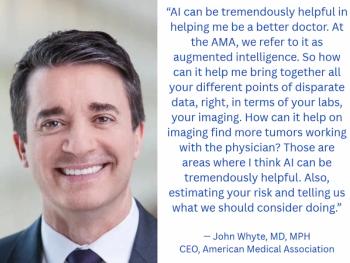
In a recent interview at the HLTH USA conference, John Whyte, MD, MPH, shared his thoughts on the promise and limits of AI in health care.
In a recent interview, Collin Bower, BS, RT(R)(CT), discussed how advances in workflow orchestration through enterprise imaging can bolster efficiencies and optimize clinical focus for radiologists.
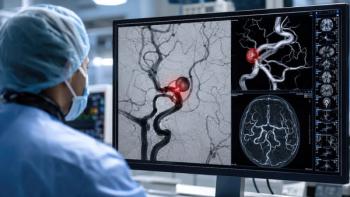
Uptunity | Aneurysm reportedly identifies suspected saccular brain aneurysms larger than 3 mm on head CTA and provides quantitative comparison between exams to assess changes in known aneurysms over time.
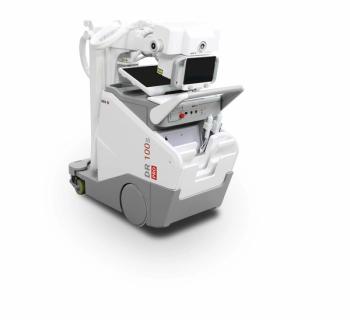
The mobile X-Ray unit DR 100s Pro reportedly offers an array of attributes to facilitate workflow efficiencies and quality imaging.
In a recent interview, Gadi Lalazar, MD, discussed new research demonstrating the capability of natural language processing (NLP) to enhance recognition of incidental hepatic steatosis in ultrasound reports.
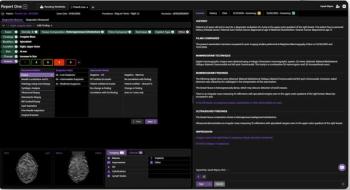
Report One, reportedly the first agentic reporting tool specifically geared to breast imaging, is one of three new products that will be showcased by MagView at the upcoming RSNA conference.
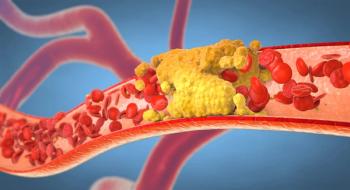
Artificial intelligence plaque analysis of CCTA scans showed that 27 percent of former NFL players had severe or extensive total plaque volume, according to a new study to be presented at the American Heart Association Scientific Sessions 2026 this week.
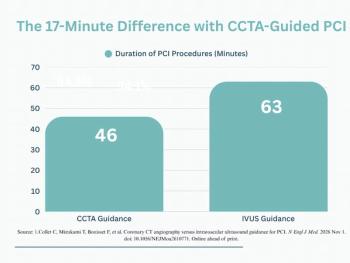
New research suggests CCTA may provide salient preoperative insights into planning for percutaneous coronary intervention (PCI) while facilitating similar outcomes as intravascular ultrasound guidance for target-vessel failure.
Advertisement
Advertisement
Trending on Diagnostic Imaging
1
DBT Associated with 36 Percent Higher Detection Rate for High-Risk Benign Breast Disease than Digital Mammography
2
Why PCCT Requires a Different Approach to Imaging
3
Can AI Quantification of Carotid Plaque on CTA Bolster Detection of Obstructive CAD?
4
What the AMA CEO Said About AI at the HLTH USA Conference
5