
MR images show significant differences in the early brain development of high-risk infants who go on to develop autism.
MR images show significant differences in the early brain development of high-risk infants who go on to develop autism.
Six percent fewer American women in their 40s received preventive mammograms since the 2009 release of the controversial USPSTF recommendations.
Radiologists using an automated lung nodule matching program significantly improved diagnostic efficiency.
Lung cancer screening guidelines should be expanded, according to a multispecialty task force established by the American Association for Thoracic Surgery.
Cancer screening for patients with alcoholic liver damage may not be cost effective due to their low incidence of hepatocellular carcinoma deaths.
Accuracy in evaluating MRIs for acute appendicitis improves after training from more experienced radiologists, and the addition of diffuse weight images also improves reader sensitivity and decreases the amount of time needed to read each image.
Clinicians at Mount Sinai in New York are the first in the state to use a recently FDA-approved PET technique with florbetapir to detect Alzheimer’s disease.
Radiologists should be more active in delivering medical imaging test results to patients, so the public can be more aware of radiologists' role in health care.
Multiple PET scans only need one CT scan for accurate hybrid PET/CT imaging, which would significantly reduce the radiation exposure.
PET imaging with specific imaging agents shows beta amyloid in the brain may precede mild cognitive decline, allowing for earlier diagnosis of Alzheimer’s.
Myocardial perfusion imaging with PET scanning, followed by measurements of coronary flow reserve, can detect heart disease inside the coronary arteries.
PET imaging has demonstrated an unexpected link between low dopamine levels and aggression in young healthy adults.
Combining PET and CT with Gallium-68 pinpoints hormonally active tissues in the body that could change treatment plans for many neuroendocrine cancer patients.
ImmunoSPECT imaging shows that the effectiveness of a newly developed radioimmunotherapy for treating a resistant form of kidney cancer could be diminished when used after another anti-cancer therapy.
Functional MRI scans show sleep-deprived people have a stronger desire for junk food, researchers found.
PET scans can indicate the effectiveness of therapies for glioma, a malignant brain cancer, and for locally advanced rectal cancer.
A specific type of ultrasound called speckle-tracking echocardiography may detect heart disease complications from rheumatoid arthritis.
Using fMRI, researchers have found a strong association between post-stroke depression and functional brain impairment.
Nearly 94 percent of patients who undergo CT of the abdomen and pelvis in the emergency department are clinically complex.
Use of tablet devices, such as iPads, by radiology residents would enhance their education, allowing them to keep up with evolving technology.
Radiologists may be losing income through incomplete physician documentation in abdominal ultrasounds, according to a JACR study.
Malpractice cases against diagnostic radiologists are dismissed about half the time, a slightly lower rate than overall case dismissal among all specialties.
MRIs are superior to clinical examination in indicating breast tumor response to pre-surgical chemotherapy.
Low-dose CT screening for patients at high risk of lung cancer can find smaller nodules than X-ray, but concern remains about potential harm from the test.
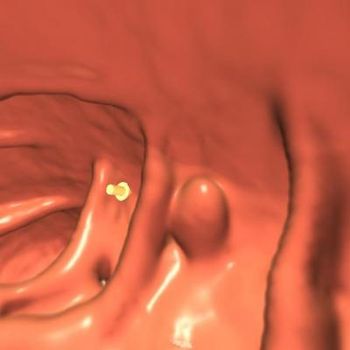
A no-prep virtual colonoscopy appears to be as effective as a standard colonoscopy in detecting larger polyps that are more likely to become cancers.
Contrast-enhanced ultrasounds are an effective complementary tool in following up patients who undergo endovascular repair for abdominal aortic aneurysm.
Breast Imaging and Reporting Data Systems terminology is useful in predicting malignancy in breast lesions that are detected by MRI.
Electronic medical records can track radiation exposure and reduce unnecessary CT scans in emergency room patients with abdominal pain.
Imaging the loss of nerve function in the heart may better identify patients who would benefit from receiving implantable cardiac defibrillators (ICD) than current testing methods.
The non-radiation based imaging modality is not a reliable breast cancer screening tool and mammography should remain the standard of care.