
Not everyone is convinced cumulative radiation dose exists, or even that repeat CT scans cause cancer.
Not everyone is convinced cumulative radiation dose exists, or even that repeat CT scans cause cancer.
If you're like most people, your medical history is probably scattered across multiple healthcare facilities and locked within the walls of each hospital.
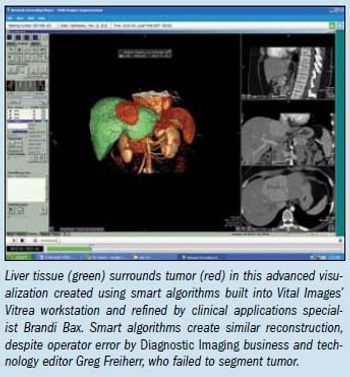
As convenient as it is remoting in takes equal parts technology, knowledge, and trust, as someone somewhere in the world takes control of your computer with the implied promise of giving it back. In my case it was Brandi Bax in Atlanta, who I trusted.
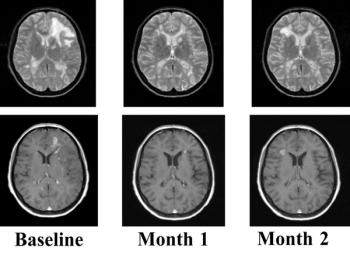
Innovative imaging techniques such as functional MRI or diffusion tensor imaging occupy an important place in modern neurology. With their help we can better understand such neurological disorders as multiple sclerosis, dementia, amyotrophic lateral sclerosis, or Alzheimer’s disease, according to Prof. Massimo Filippi, a member of the committee for the Annual Meeting of the European Neurological Society. ENS is taking place in Berlin between June 19 and 23. More than 3000 neurologists from around the world are meeting in Berlin.
The benefits of the Summary Care Record (SCR) scheme, introduced as part of the National Programme for IT (NPfIT), appear more modest than anticipated, according to a study published on bmj.com June 17.
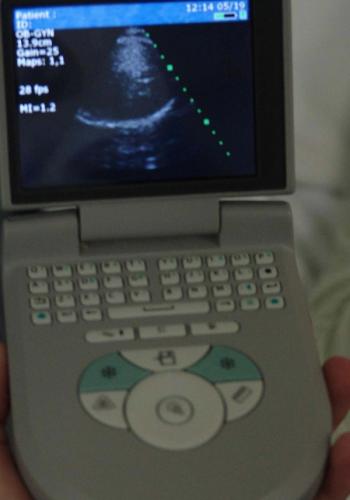
A pilot study involving eight community midwives from Royal Devon and Exeter NHS Foundation Trust suggests that portable ultrasound has the potential to reduce hospital admissions for predelivery scans. This would eliminate the need for patients in remote areas to travel to appointments.
The European Congress of Radiology has seen a steady rise in abstract submission in recent years, marking an increase in global interest that has also been reflected in the event’s attendance statistics. The European Society of Radiology now aims to boost active participation even further by providing radiologists with the opportunity to submit their work outside the confines of the usual schedule.
Synexus, a Manchester-based multinational company dedicated to the recruitment and running of clinical trials, has recently invested in Doppler ultrasound equipment for each of its seven U.K.-based dedicated research centers. After training for all Synexus’ doctors, the facilities are now being used as part of the drive to recruit patients to a new diabetes study.
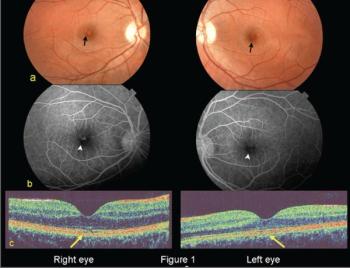
Doctors in this week’s British Medical Journal are warning about the use of high-powered handheld laser pointers after treating a young patient with serious eye injuries.
Greater regulation is needed to protect the public from misleading claims by companies advertising private tests and scans for well people, argues a senior doctor in an editorial published by BMJ Clinical Evidence June 3.
More than 300 speakers and over 2500 delegates met at the Taipei International Convention Center in Taipei, Taiwan, for the 13th Asian Oceanian Congress of Radiology (AOCR 2010). Hosted by the Chinese Taipei Society of Radiology in cooperation with the Asian Oceanian Society of Radiology (AOSR) and featuring the theme, “Radiology -– the Core of Healthcare,” the Congress invited top leaders to present lectures on a diverse range of topics in radiology.
As the potential cancer population increases, an effective long-term solution for early cancer detection needs to be found. In some areas of the world, cancer incidence is growing by 3% per annum, and the cost of cancer care is a ticking time bomb for global healthcare expenditure.
On Jan. 24, 2009, newly sworn in President Obama uttered a bold promise: “To lower healthcare costs, cut medical errors, and improve care, we'll computerize the nation's health records in five years, saving billions of dollars in healthcare costs and countless lives.
Ben Issitt of Enmore has become the first patient in the south west to be fitted with a brand new type of pacemaker.
Concord Medical Services Holdings Limited (NYSE: CCM), operator of the largest network of radiotherapy and diagnostic imaging centers in China, announced that its wholly owned subsidiary, Shenzhen Aohua Medical Device Leasing Co., Ltd., has entered into a definitive agreement to acquire 100% of the equity interest in Tianjin Kangmeng Radiology Equipment Management Co., Ltd., a company that manages four radiotherapy and diagnostic imaging centers in Hebei province.
At the request of the American College of Radiology, House Energy and Commerce chair Rep. Henry Waxman (D-CA), Ways & Means Committee chair Rep. Sandy Levin (D-MI), and Ways & Means Subcommittee on Health chair Rep. Pete Stark (D-CA) have called on the General Accountability Office to perform a study regarding the effects of physician self-referral of advanced medical imaging and radiation therapy treatments on Medicare spending.

The U.S. healthcare system is designed to facilitate freedom of choice by letting patients seek care from multiple providers.
A European Institute for Biomedical Imaging Research (EIBIR)/European Network for Cell Imaging and Tracking Expertise (ENCITE) educational workshop, called “Cells at work: Imaging in health and disease,” will take place May 18-19 at the University of Mons in Belgium.
In April 2009, the Chinese government announced guidelines for healthcare reform, with the core goal of providing universal healthcare services to the country’s 1.3 billion people. China will invest RMB850 billion ($124 billion) on healthcare from 2009 to 2011, further stimulating demand for medical devices, in what is already one of the world’s fastest growing markets for medical technology. One year later, a number of new regulations and guidelines are in place that are beginning to reshape the structure of the Chinese healthcare industry.
A new survey from InMedica revealed over half of cardiologists surveyed across Russia and Eastern Europe had not received training on how to get the best use of their ultrasound imaging equipment. The situation was only slightly better for those working in general imaging, where approximately 40% had not received training on how to get the best use of their equipment.
In addition to possible death and myocardial damage, acute heart attack patients routinely accept the additional risk of cardiovascular imaging exposing them to ionizing radiation, according to research presented Nov. 16 at the 2009 American Heart Association meeting in Orlando, FL.
PET imaging of non-small cell lung cancer prior to receiving radiation therapy should not be the basis for determining areas that may benefit from higher doses of radiation, according to research presented this week at the 2009 American Society of Radiation Oncology meeting.
From the Focused Ultrasound Surgery Foundation & Fibroid ReliefA new research center for MR-guided focused ultrasound ablation at the University of Virginia is aiming to become a leader in translational and clinical research for emerging interventional procedures.
In a time and age when complex studies can be interpreted remotely for dimes on the dollar and sent back to the source within minutes, teleradiology's appeal to hospitals is greater than ever.
A large, multicenter clinical trial involving several imaging modalities has found that plaque burden and plaques involving small lumen area are as likely as classically defined vulnerable plaques to trigger a myocardial infarction.
With the goal of tailoring cancer interventions for the individual, researchers at the Lombardi Comprehensive Cancer Center at Georgetown University have published the results of a prospective study that validates the use of a simple blood test to help doctors more reliably assess treatment effectiveness for patients with metastatic breast cancer.
Children’s hospitals in Cincinnati and Memphis have established the value of FDG-PET for depicting the extent of neuroblastoma in some patients, particularly for those in the early stages of the disease.
Buoyed by abundant cash and a profitable business formula, Alliance Healthcare is bucking the economic gloom that pervades the for-profit sector of medical imaging and implementing aggressive growth plans in 2009.
The governing boards of the American College of Radiology and the American Roentgen Ray Society have reached an agreement in principle for a strategic integration that would leverage the unique strengths of each organization and provide the potential for enhanced service to radiologists and medical physicists seeking continuing medical education, quality and safety programs, and a strong voice in Washington.
The University of Southern California will be the new central clearinghouse for an ambitious ongoing national project to collect and integrate a wide range of biomedical data to make them more accessible to physicians and researchers.