
Steven Kalkanis, MD, director of neurosurgical oncology at Henry Ford West Bloomfield Hospital, discusses how an MRI unit in the operating suite has transformed their approach to brain surgery.
Steven Kalkanis, MD, director of neurosurgical oncology at Henry Ford West Bloomfield Hospital, discusses how an MRI unit in the operating suite has transformed their approach to brain surgery.

Pamela Woodard, MD, of the Mallinckrodt Institute of Radiology at Washington University School of Medicine in St. Louis, discusses the challenges and benefits of being an early adopter of this technology.

In this podcast, Stephen Rose, MD, president and CEO of Houston Breast Imaging and a principal investigator of the 3-D tomosynthesis clinical trials in 2010, discusses the benefits of the new technology and what his practice learned when implementing the screening program.

Once limited to research and use by eye specialists, optical coherence tomography (OCT) is emerging as a major imaging modality. OCT is more sensitive than ultrasound, experts said, and now researchers and clinicians are now finding ways to use OCT to guide esophageal and cervical biopsies.
WellPoint’s decision earlier this month to cover CT scans for heavy smokers may encourage other insurers to follow suit, paving the way for imaging sites to set up screening programs. But, for now, payers and practices alike are waiting to see what happens next.
CHICAGO - Imagine, while you’re reading a study, being able to access records and images on similar findings and diagnoses - in seconds. Today, it’s a hunt that could take months, but with advanced data mining tools, experts at RSNA 2011 said, this kind of information could be as easy as a Google search.
CHICAGO - The radiology industry is buzzing with talk of analytics and data mining tools to help radiologists in decision making and utilization management. But even simple, organized reviews of your communications systems can help improve patient safety and quality as well.
CHICAGO - To be successful amid declining reimbursement and healthcare reform, radiology residents - and perhaps all practicing radiologists - must do more than perfect their study interpretation skills. Pressures from the industry will require them to do what Bibb Allen, MD, FACR, vice chair of the ACR Commission on Economics, calls “no-pay work.”
CHICAGO - Worried your private radiology practice will get swallowed up by a hospital? Perhaps there’s little need to fret. The hospital employment trend sweeping your primary care colleagues hasn’t - and likely won’t - hit radiology. That’s according to Shay Pratt, managing director with the Advisory Board Company, who spoke at an RSNA session Tuesday.
CHICAGO - Communicating urgent findings are critical to patient safety, but it’s those not-so-urgent findings that don’t always make it to the right physician at the right time for effective follow up. Paul Chang, MD, of the University of Chicago Medical Center, found radiologists were doing a pretty good job getting the urgent results to the referring physician but needed a solution for effectively communicating surveillance results.
CHICAGO - Imagine reading a CT scan of a liver tumor and being able to easily view similar scans, diagnoses, or tumors. It’s a vision of Sandy Napel, PhD, professor of radiology at Stanford School of Medicine, who has been working with his colleagues to develop an image analysis and decision support tool.
CHICAGO - Healthcare reform has put pressure on medical imaging spending and promises changes to radiologists’ reimbursements. That you know. But have you heard of the Independent Payment Advisory Board? It could have a serious impact on radiologists, according to one expert.
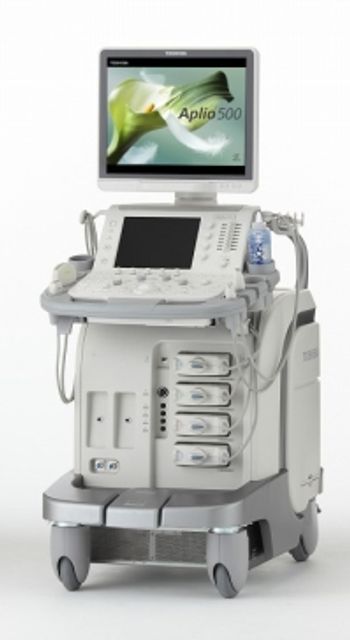
CHICAGO - Toshiba America Medical Systems Inc. launched two new ultrasound systems at RSNA 2011, which the company said will give clinicians an entirely unique perspective during the scan.
Radiologists could have a greater role in patient care through Accountable Care Organizations, but now’s the time to get involved, according to consultant Claudia Murray, president of CMC LLC.
CHICAGO - From cuts in reimbursement to changes in practice models, there is no shortage of critical issues facing the profession of radiology. So what to do? Become leaders, said members of a panel speaking at RSNA 2011 Monday.
Radiology trainees are facing a particularly tight job market now, but if history is any guide, it will be a very different story in a few years, according to speakers at an RSNA 2011 session Sunday.
Brainlab will launch its cloud-based image sharing and clinical planning platform at RSNA 2011.
Whether you’ve embraced voice recognition software or rely on a transcriptionist, there’s still the problem of large amounts of text that’s largely unusable. Enter natural language processing, which makes structured reporting and data mining possible by coding the text and extracting data.
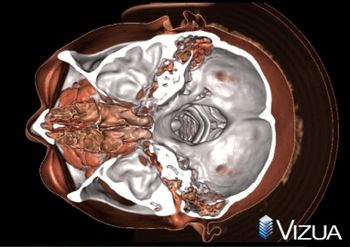
Vizua will debut their cloud-based 3-D scan visualization platform at RSNA 2011.
Given concerns about radiation dose and a call for more comfortable machines, officials at Philips saw an opportunity for a new product in the North American mammography market. Last week Philips introduced their MicroDose Mammography system, which officials said provides a lower dose, less stressful scan.
As FDA officials consider the more than 130 industry comments on draft regulations for mobile medical apps, they are trying to strike a balance between encouraging development and ensuring safety.
Radiologists and imaging groups should discuss with their IT vendors the plans and strategies for certifying their technology under the federal meaningful use program, said Keith Dreyer, DO, PhD, vice chair of radiology informatics at Massachusetts General Hospital, speaking Thursday at the American College of Radiology’s inaugural Imaging Informatics Summit in Washington, D.C.
Despite some of the proven benefits of voice recognition software, some radiologists still struggle to fit the software into their workflow. Here are some tips from some top VR developers.
Voice recognition software has been shown to reduce report turnaround time and holds promise for populating and mining structured reports - but not all radiologists are convinced.
Prior authorization programs to control medical imaging utilization could wind up costing the government money and increase administrative burden, according to a review by The Moran Company released this week by the Access to Medical Imaging Coalition.
Wouldn’t it be great if, when you were reading an imaging study, you had all the relevant patient history and medical data available to you - without having to switch systems or even take your eyes off the study?
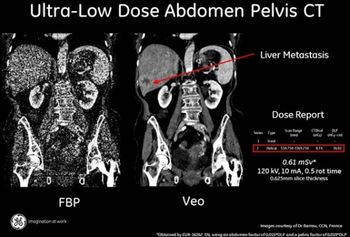
GE Healthcare this week announced the FDA 510(k) clearance of its computed tomography (CT) technology that uses a new reconstruction method to improve image clarity at a lower dose. GE’s Veo represents the CT industry’s first Model-based Iterative Reconstruction Technique (MBIR), according to company officials.
GRAPEVINE, TX - Imaging professionals should prepare for the new health care model by assessing the current state of the practice, from the IT infrastructure to the work flow, according to consultants at Ascendian Healthcare Consulting who spoke at AHRA this week.
As the radiology community focuses on lowering the dose of medical imaging scans, some researchers are eyeing a pill that would protect against radiation damage.
Aycan Medical Systems has announced that the company has received European clearance to market its mobile imaging app - optimized for use on the iPad 2 - and is awaiting FDA clearance.