


Molecular Imaging
Latest News
Advertisement
Latest Videos








Advertisement
More News
Catch up on the top radiology content of the past week.
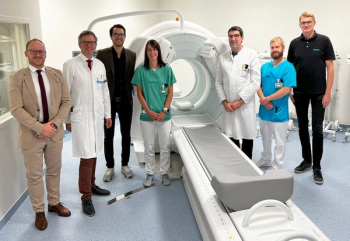
Designed for theranostic imaging applications, the AnyScan Trio SPECT/CT TheraMax scanner was recently unveiled at the annual meeting of the European Association of Nuclear Medicine (EANM).
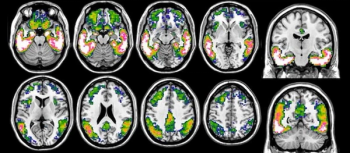
Offering standardized assessment of amyloid plaque and insights on tau protein tangles, the newly clearly FDA features of Centiloid scoring and tau PET quantification with syngo.PET Cortical Analysis software may facilitate diagnosis of Alzheimer’s disease.
Catch up on the top radiology content of the past week.
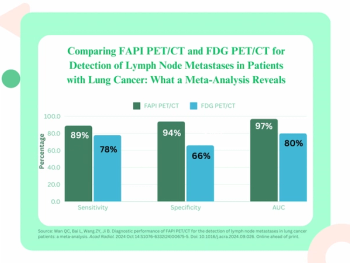
Examining six comparative studies within a new meta-analysis, researchers found that FAPI PET/CT offered 11 percent higher pooled sensitivity and 28 percent higher pooled specificity than FDG PET/CT for diagnosing lymph node metastases in patients with lung cancer.
Catch up on the top radiology content of the past week.
Catch up on the top radiology content of the past week.

The clearance may facilitate improved standardization and efficiency of dosimetry-guided, theranostic applications of radiopharmaceutical therapy.
Catch up on the top radiology content of the past week.
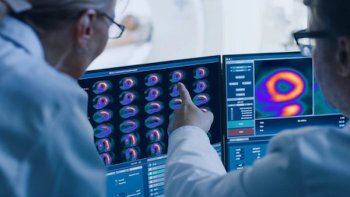
Offering higher diagnostic efficacy than SPECT imaging for coronary artery disease (CAD) detection, the PET myocardial perfusion imaging agent Flyrcado™ (flurpiridaz F 18, GE HealthCare) provides unit dose availability and effectiveness in imaging patients with high BMI.
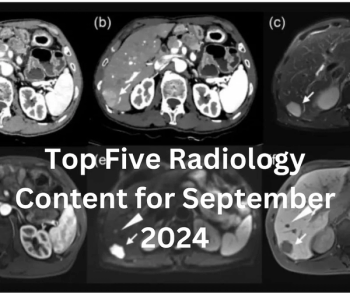
Catch up on the most-well viewed radiology content in September 2024.
Catch up on the most-well viewed prostate imaging content in September 2024.
Catch up on the top radiology content of the past week.

Now available with MIMneuro, the Centiloid scaling software provides automated quantitative assessment of amyloid plaque density, a key component of Alzheimer’s disease.
Catch up on the top radiology content of the past week.
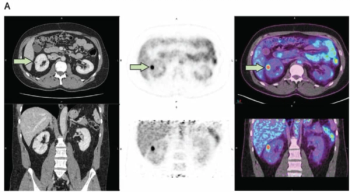
Study for Emerging PET/CT Agent Reveals ‘New Standard’ for Detecting Clear Cell Renal Cell Carcinoma
Results from a multicenter phase 3 trial showed that the PET/CT imaging agent (89Zr)Zr-girentuximab had an 85.5 percent mean sensitivity rate for the diagnosis of clear cell renal cell carcinoma.
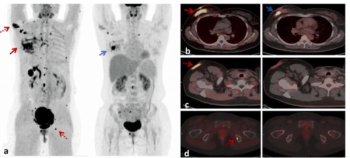
The imaging agent 18F-FAPI PET/CT demonstrated greater than a 45 percent higher sensitivity rate in comparison to 18F-FDG PET/CT for the detection of axillary and extraaxillary regional lymph node metastases, according to a lesion-based analysis from a recent study.
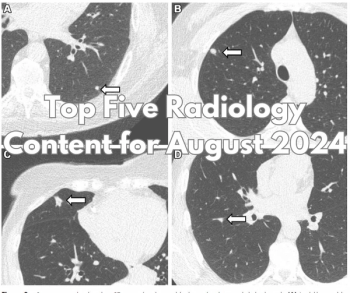
Catch up on the most-well viewed radiology content in August 2024.
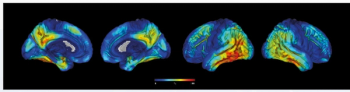
Targeting tau neurofibrillary tangles, the (18F)PI-2620 agent reportedly provides promising insight into the development of three neurodegenerative conditions including Alzheimer’s disease.
Catch up on the top radiology content of the past week.
Catch up on the top radiology content of the past week.
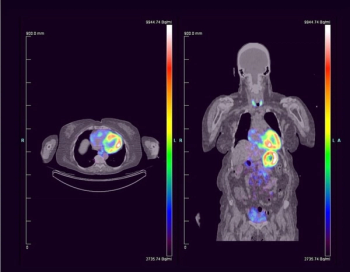
Reportedly the only imaging agent to garner a breakthrough therapy designation for cardiac amyloidosis, 124I-evuzamitide has demonstrated robust sensitivity for the condition as well as a favorable safety profile.
Catch up on the top radiology content of the past week.
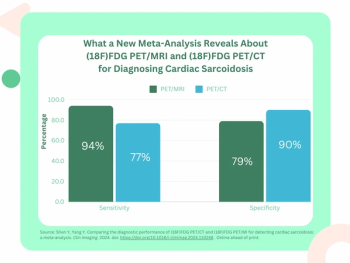
The researchers found that (18F)FDG PET/MRI had a 17 percent higher pooled sensitivity rate for cardiac sarcoidosis in contrast to (18F)FDG PET/CT.
Catch up on the most-well viewed radiology content in July 2024.
Advertisement
Advertisement
Trending on Diagnostic Imaging
1
MRI Research Reveals Strong Link Between Vascular Hyperintensity and Cerebral Edema in Patients with Acute Ischemic Stroke
2
The Biggest Mistake with AI in Radiology
3
Molecular Imaging in Focus: Can the Newly FDA-Approved PET Agent Floretyrosine F18 Have an Impact for Glioma Imaging?
4
The Shifting Power Dynamic in Radiology: Respect and Equal Footing with Referring Clinicians
5