










Catch up on the top AI-related news and research in radiology over the past month.
Catch up on the top AI-related news and research in radiology over the past month.
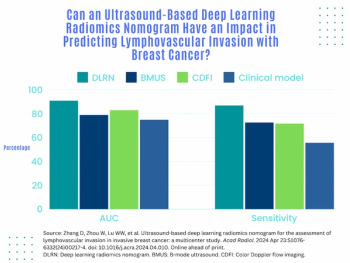
An emerging deep learning radiomics model, based on B-mode ultrasound and color Doppler flow imaging, demonstrated a 91 percent AUC for predicting lymphovascular invasion in a multicenter study of women with invasive breast cancer.
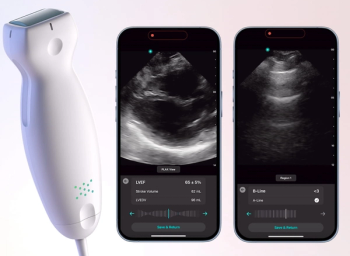
The artificial intelligence (AI)-powered applications reportedly allow clinicians to diagnose pulmonary edema and measure left ventricle ejection fraction within seconds.
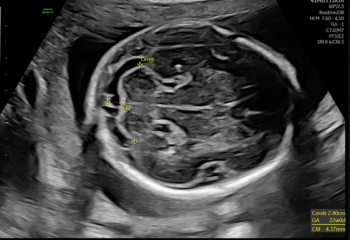
One of the features on the new Voluson Signature 20 and 18 ultrasound devices reportedly uses automated AI tools to facilitate a 40 percent reduction in the time it takes to perform second trimester exams.
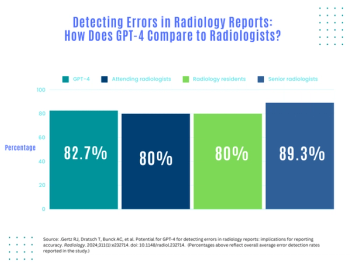
A new study shows that GPT-4 may offer comparable error detection rates to those of attendings and radiology residents in reviewing radiology reports, but researchers noted key caveats as well.
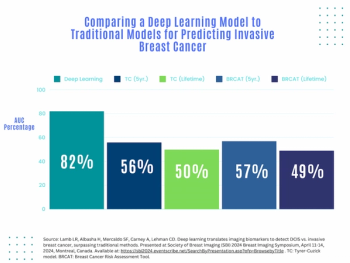
Artificial intelligence (AI) assessment of mammography images may significantly enhance the prediction of invasive breast cancer and ductal carcinoma in situ (DCIS) in women with breast cancer, according to new research presented at the Society for Breast Imaging (SBI) conference.
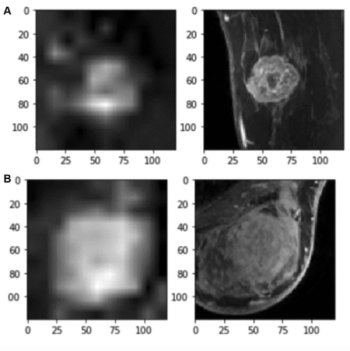
For the prediction of axillary lymph node metastasis in patients with breast cancer, an MRI-based, 4D convolutional neural network model demonstrated an AUC of 87 percent and sensitivity of 89 percent, according to new research.
Catch up on the top radiology content of the past week.
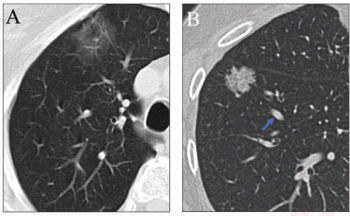
The inclusion of simulated adjudication for resolving discordant nodule classifications in a deep learning model for assessing lung adenocarcinoma on chest CT resulted in a 12 percent increase in sensitivity rate.
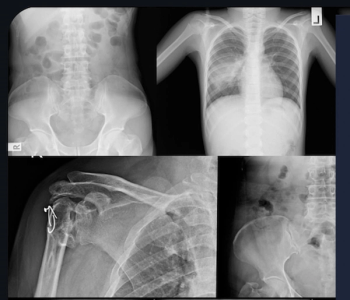
Leveraging artificial intelligence, the Rho software assessment of X-rays may allow earlier detection of bone loss.
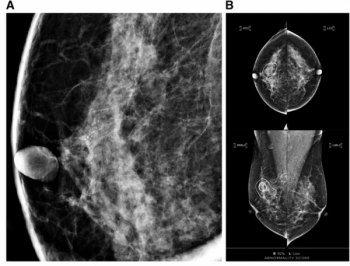
Emerging research suggests that an artificial intelligence (AI) score of 75 or greater for mammography abnormalities more than doubles the likelihood of invasive upgrade of ductal carcinoma in situ (DCIS) diagnosed with percutaneous biopsy.
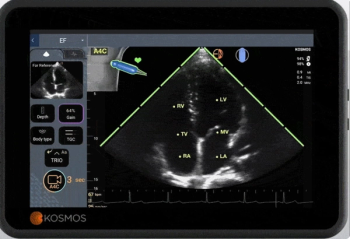
Strain imaging analysis is one of the automated parameters included in the newly FDA-cleared Us2.v2 software for adjunctive review of echocardiographic images.
Catch up on the top radiology content of the past week.
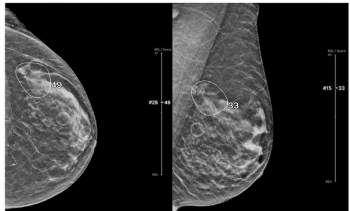
An emerging artificial intelligence (AI) model demonstrated more than 12 percent higher specificity and reduced image reading time by nearly six seconds in comparison to unassisted radiologist interpretation of digital breast tomosynthesis (DBT) images.
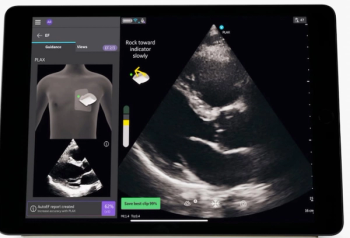
The addition of Caption AI to the handheld ultrasound device Vscan Air SL may facilitate optimal imaging for point-of-care cardiac evaluation.
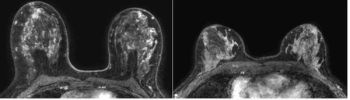
An MRI-based machine learning model demonstrated a comparable background parenchymal enhancement (BPE) hazard ratio to that of manual BPE assessment for breast cancer, according to a study of over 4,500 women with dense breasts.
Catch up on the top radiology content of the past week.
Catch up on the most-well viewed radiology content in March 2024.
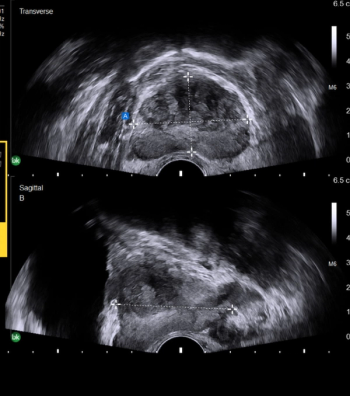
Featuring automated one-click functionality for capturing prostate volume, the AI-enabled software may help shorten workflows for prostate imaging, biopsies, and ultrasound-guided procedures.
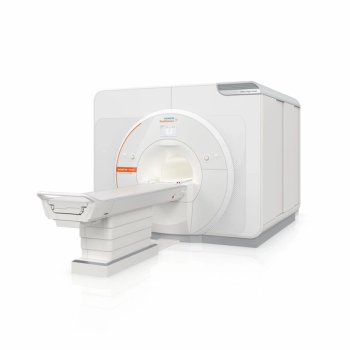
Offering improved image clarity capable of capturing details of subtle pathology, the Magnetom Terra.X 7T MRI system reportedly features the first eight-channel parallel transmit architecture for clinical use.
The artificial intelligence (AI) modalities CINA-iPE and CINA-ASPECTS may facilitate improved detection of incidental pulmonary embolism and stroke evaluation, respectively, based on computed tomography (CT) scans.
Catch up on the top AI-related news and research in radiology over the past month.
Catch up on the top radiology content of the past week.
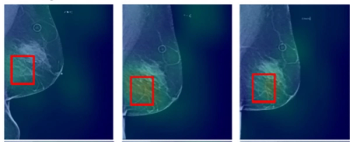
A proposed alternative to a previously validated deep learning neural network for assessing short-term breast cancer risk, the emerging AsymMirai deep learning mammography-based model showed comparable breast cancer risk prediction with an emphasis on bilateral dissimilarity, according to new research.
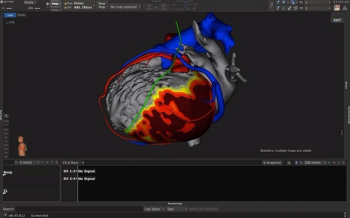
Three-dimensional interactive heart models created with AI-enabled segmentation of CT scans may reduce ventricular tachycardia ablation procedure times by 60 percent.