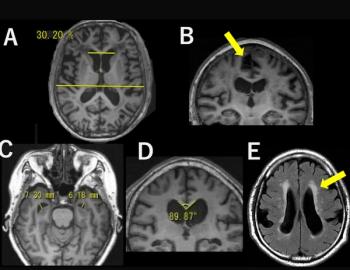
The NEXT-Cue AI software, which incorporates analysis of brain MRI scans, reportedly facilitates prognostic assessments of potential progression from mild cognitive impairment (MCI) to Alzheimer’s disease within five years.
In a recent interview, Yulin Ge, M.D., discussed emerging research showing correlations between brain MRI findings in patients with Long Covid and established blood biomarkers for Alzheimer’s disease.
Emerging magnetic resonance imaging (MRI) research suggests that choroid plexus changes in people with Long Covid may be linked to the development of Alzheimer’s disease.
For the study, recently published in
The study authors found that choroid plexus (ChP) volume was significantly higher in patients with Long Covid (2025.72 mm3) in comparison to those who recovered from COVID (1844 mm3) and healthy controls (1468.67 mm3). Patients with Long Covid also had reduced cerebral blood flow (CBF) (31.16 mL/100 g/min) in contrast to people who had recovered from COVID (33.42 mL/100 g/min) and healthy controls (41.96 mL/100 g/min), according to the researchers.
In a recent interview with Diagnostic Imaging, Yulin Ge, M.D., a co-author of the study, noted that these findings in patients with Long Covid also correlated with key markers for the development of Alzheimer’s disease.
“We found that there is kind of enlargement of the choroid plexus (and) reduced blood flow in this structure in the cohort of Long Covid compared with the COVID recovered group. Not only that, we also found the enlargement of this structure correlated with p-tau217, which is a recognized blood biomarker for … Alzheimer’s disease and also found a correlation with GFAP (glial fibrillary acidic protein), another blood protein that is an indicator of neuronal cell injury,” pointed out Dr. Ge, a professor of radiology at the New York University School of Medicine.
While an enlarged choroid plexus can be associated with normal aging, Dr. Ge noted that the Long Covid cohort was approximately 10 years younger (median age of 61.5) than the COVID recovery cohort and the healthy controls (median age of 72 for both cohorts).
Two- to three-year longitudinal data may offer greater clarity on the potential link between larger choroid plexus volume and Alzheimer’s disease, according to Dr. Ge.
“We are analyzing those data right now to see if there is recovery or there is a worsening of this structure damage,” added Dr. Ge.
(Editor’s note: For related content, see “