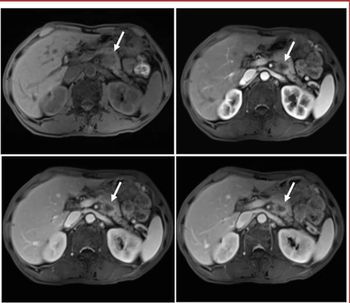
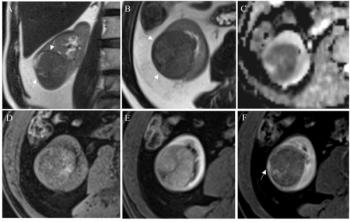
However, the combination model offered the highest specificity (86 percent vs. 83 percent for either imaging modality alone) and AUC (93 percent vs. 89 percent and 87 percent for MRI alone and ultrasound alone respectively.
How the Complementary Attributes of MRI and Ultrasound May Enhance Prediction of Microvascular Invasion with HCC
“(Ultrasound) enables real-time assessment of tumor vascular dynamics, whereas MRI provides superior soft-tissue contrast and multiparametric functional information. The integration of these features may enhance the detection of subtle vascular alterations and peritumoral changes associated with MVI,” noted lead meta-analysis author Jujun Shi, MD, who is affiliated with the School of Medicine and the Second Affiliated Hospital of the South China University of Technology in Guangzhou, China, and colleagues.
Raising Questions About Inadequate Validation in the Meta-Analysis of MRI and Ultrasound for MVI in HCC
However, findings from a meta-regression analysis showed significantly higher MRI sensitivity in the four retrospective studies (92 percent) versus the lone prospective study (33 percent). Additionally, researchers found a 10 percent higher MRI sensitivity in the three studies without independent validation (87 percent) in contrast to two studies with an independent validation cohort (77 percent).
“These findings support the notion that inadequate validation can lead to model overfitting and overestimation of diagnostic performance, underscoring the critical importance of independent validation for enhancing the reliability and generalizability of diagnostic models,” added Shi and colleagues.
Three Key Takeaways
• Combined MRI + ultrasound offers the best overall diagnostic performance for predicting MVI. While MRI alone had the highest sensitivity (90 percent), the combined approach yielded the best specificity (86 percent) and AUC (93 percent), suggesting the two modalities' complementary strengths (real-time vascular dynamics from ultrasound, soft-tissue/functional detail from MRI) may be most useful for accuracy.
• Reported sensitivity may be inflated by study design limitations. MRI sensitivity dropped sharply in the single prospective study (33 percent) compared to retrospective studies (92 percent), and was notably lower in studies with independent validation cohorts (77 percent) versus those without (87 percent). These findings suggest potential overfitting and bias in the pooled estimates.
• Generalizability is limited. All cohorts were from Chinese patient populations, the evidence base is small (5 studies, 771 patients), and most studies were retrospective and single-center. Accordingly, these findings should be viewed as preliminary until validated in larger, prospective, multicenter, and more demographically diverse studies.
(Editor’s note: For related content, see “Can Gadoxetic Acid-Enhanced MRI Improve Detection of Sub-Centimeter HCC Recurrence?,” “Emerging MRI Scoring System May Bolster Risk Stratification for Early Recurrence of HCC” and “Could Contrast-Enhanced Ultrasound Offer Equivalency to MRI for Detecting Small HCC Nodules?”)
In regard to limitations of the meta-analysis, the authors acknowledged the limited number of reviewed studies and noted that the cohorts, entirely comprised of Chinese patients, may thwart extrapolation of the findings to broader populations. The researchers also conceded that most of the reviewed studies were retrospective with heterogeneity in the protocols utilized in the studies.