

Commentary|Videos|March 13, 2026
Breast Imaging in Focus: Key Insights from the GEMINI Study on Integrating AI into Mammography Screening
Author(s)Manisha Bahl, MD
In the latest episode of her “Breast Imaging in Focus” series, Manisha Bahl, M.D., offers a closer look at pertinent findings from the GEMINI study, including one AI integration model that facilitated over a 10 percent increase in cancer detection and a 31 percent decrease in radiologist workload.
Advertisement
Recent studies, such as
The GEMINI study tackles the next critical question: If we are going to use AI in breast cancer screening programs, what is the best way to integrate it into the clinical workflow?2
The GEMINI study was designed specifically to evaluate how AI performs when integrated into different real-world screening workflows. It was a prospective evaluation conducted in a population-based breast cancer screening program in the United Kingdom and included 10,889 screening exams.2
Importantly, the investigators did not replace routine clinical care. All women still underwent standard double reading by two radiologists. This served as the clinical reference workflow. The AI system was applied to all exams, and the researchers then evaluated multiple possible AI integration strategies, ultimately modeling 17 different workflow scenarios. These strategies included scenarios such as AI used as an independent reader alongside radiologists, AI used to replace one of the human readers, and AI used to triage low-risk exams.
There was also an AI additional read workflow in which the AI system analyzed every mammogram in parallel. If the AI system recommends recall that the two human readers do not, those cases undergo an additional human review. This approach allowed the investigators to identify cancers that might otherwise have been missed during routine double reading.
The same AI outputs were also used to simulate alternative screening workflows, including strategies such as triage and triage negatives. In a triage negatives workflow, AI functions as the second reader only when both reader one and AI agree that the exam is negative, allowing those cases to bypass a second human reader.
In the primary workflow model evaluated in the study, the investigators combined AI additional read with simulated triage negatives in practical terms. This means that AI served two roles simultaneously. First, AI flagged cases that might have been missed by routine double reading with those cases subsequently having additional human review. Second, for exams that both reader one and AI agreed were negative, the exam could be considered negative without requiring a second human reader, thereby reducing workload.
In this model, cancer detection increased by about one per 1000 women, representing a 10.4 percent relative increase. Recall rates decreased slightly, and radiologist workload was reduced by up to 31 percent.2
The key takeaway from these results is that certain AI workflow strategies may allow screening programs to improve cancer detection while simultaneously reducing radiologist workload.
The GEMINI study provides important insights into how AI can be integrated into real world breast cancer screening programs, moving the conversation beyond AI accuracy to AI implementation. Future studies will be important to determine how these different AI workflow models perform when implemented at scale in routine clinical practice.
References
- Gommers J, Hernstrom V, Josefsson V, et al. Interval cancer, sensitivity, and specificity comparing AI-supported mammography screening with standard double reading without AI in the MASAI study: a randomised, controlled, non-inferiority, single-blinded, population-based, screening-accuracy trial. Lancet. 2026. Jan 31;407(10527):505-514. doi: 10.1016/S0140-6736(25)02464-X.
- de Vries CF, Lip G, Staff T, et al. Prospective evaluation of artificial intelligence integration into breast cancer screening in multiple workflow settings: the GEMINI study. Nature Cancer. 2026. Available at: https://doi.org/10.1038/s43018-026-01126-1 .
Advertisement
Related to this article

In the third of a three-part podcast episode, Wendie Berg, MD, PhD, FACR, FSBI, Manisha Bahl, MD, and Amy Patel, MD discuss recent developments with autonomous AI in breast imaging and share their perspective on the overall potential of AI to help mitigate the radiologist shortage.
In the second of a three-part podcast episode, Wendie Berg, MD, PhD, FACR, FSBI, Manisha Bahl, MD, and Amy Patel, MD discuss how to handle disagreements with adjunctive AI in breast imaging, whether to include AI assessments in PACS, and whether patients should pay for the use of adjunctive AI.
In the first of a three-part podcast episode, Wendie Berg, MD, PhD, FACR, FSBI, Manisha Bahl, MD, and Amy Patel, MD share insights on the utility of AI in breast imaging with respect to potential advantages, current concerns and future directions.
In a recent interview, Amir Iravani, MD, FRACP, discussed the radiotherapeutic agent 177Lu-edotreotide and new dosimetry data from the COMPETE trial that was recently presented at the ASTRO conference.
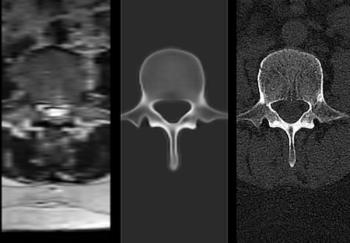
The cloud-based NextMR platform reportedly provides automated 3D bone images of conventional spine MRI images in less than 60 seconds.

In the latest episode of his “Interventional Radiology in Focus” series, Mina Makary, MD, discusses the utility of prostatic artery embolization for treating benign prostatic hyperplasia, key imaging considerations and pertinent technique pearls to help facilitate optimal outcomes.
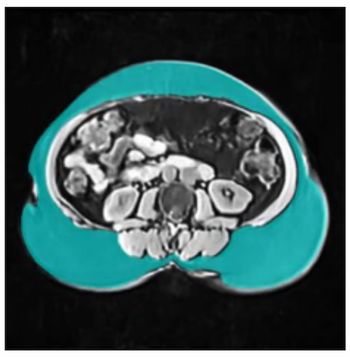
The AI-powered SwiftSight Body Composition software reportedly provides automated quantification of muscle and adipose tissue after a brief MRI scan.

Catch up on the top radiology content of the past week.
Advertisement
Advertisement
Trending on Diagnostic Imaging
1
The Reading Room Podcast: Current Perspectives, Challenges and Possibilities with AI in Breast Imaging, Part 3
2
What New Dosimetry Data Reveals About 177Lu-Edotreotide for GEP-NET Treatment
3
FDA Clears AI-Powered Platform for Converting Spine MRIs to 3D Visualizations
4
FDA Clears MRI-Based AI Software for Body Composition Analysis
5