News|Articles|August 4, 2026
Emerging Insights, Research and Trends in Computed Tomography
Author(s)Diagnostic Imaging Staff
New computed tomography (CT) research in July 2026 ranged from the ongoing impact of AI to significant declines in CT radiation dosing over the past decade to a growing recognition that coronary artery calcium (CAC) scoring alone may not be sufficient to convey a true picture of cardiovascular risk stratification.
Advertisement
Advertisement
There was a considerable wave of provocative research, significant FDA news and emerging trends in the computed tomography (CT) arena in July 2026. With this in mind, we take a look back at key developments in photon-counting CT, CT radiation dosing, AI-related research, the role of coronary inflammation in cardiovascular risk stratification and much more.
Related to this article

Catch up on the top radiology content of the past week.

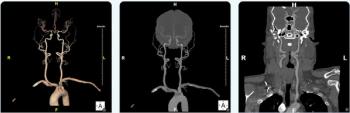
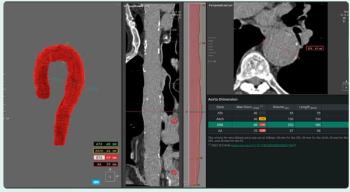
The newly cleared Aview Aorta Metrics software reportedly offers automated segmentation of aortic regions and classification of aortic zones based on chest CT images.

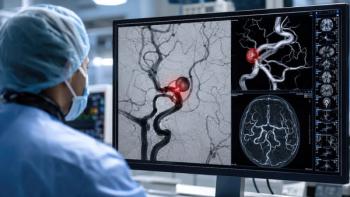
Uptunity | Aneurysm reportedly identifies suspected saccular brain aneurysms larger than 3 mm on head CTA and provides quantitative comparison between exams to assess changes in known aneurysms over time.

Artificial intelligence plaque analysis of CCTA scans showed that 27 percent of former NFL players had severe or extensive total plaque volume, according to a new study to be presented at the American Heart Association Scientific Sessions 2026 this week.

In the second of a two-part podcast episode, Kalpana Kanal, PhD, and Mahadevappa Mahesh, PhD, discussed the possible impact of new research showing significant declines in CT radiation dosing over the past decade, future research directions and the potential for indication-based diagnostic reference levels (DRLs) in the future.

In the first of a two-part podcast episode, Kalpana Kanal, PhD, and Mahadevappa Mahesh, PhD, reviewed key findings from a study examining CT radiation dosing over the past decade and shared insights from their experience for ensuring optimal radiation dosing for CT scans.
Advertisement
Advertisement