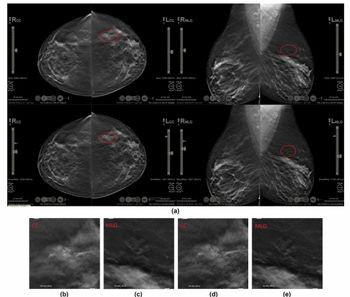
“Interpretation of screening DBT exams by dedicated breast radiologists with concurrent use of AI resulted in an increase in CDR, invasive and lobular cancer detection rates, an increase in cancers detected in dense breasts and a decrease in mean invasive size and stage,” noted lead study author Kathy J. Schilling, M.D., FACR, the medical director of the Christine E. Lynn Women’s Health and Wellness Institute in Boca Raton, Fla., and colleagues.
There was no significant difference in recall rates between the use of adjunctive AI with DBT (6.96 percent) and unaided interpretation of DBT screening exams (6.97 percent), according to the study authors.
Three Key Takeaways
- Adjunctive AI improves overall and invasive cancer detection without increasing recalls. AI-assisted DBT increased overall cancer detection by 22 percent (7.57 vs. 6.23 per 1000 exams) and invasive cancer detection by 26%, with no significant change in recall rates, suggesting improved diagnostic yield without added false positives.
- Enhanced detection in dense breasts and lobular cancers. AI use was associated with higher detection in women with dense breasts (44.99 percent vs. 37.17 percent) and more than doubled detection of lobular carcinoma (0.98 vs. 0.44 per 1000), addressing traditionally challenging diagnostic subgroups.
- Earlier-stage and smaller invasive cancers detected, without increased DCIS diagnosis. AI-assisted DBT identified smaller invasive tumors (mean 10.74 mm vs. 12.16 mm) and more T1-stage cancers (70.7 percent vs. 63.1 percent), without increasing DCIS detection, suggesting improved early detection without evidence of over diagnosis.
The researchers also noted that use of adjunctive AI also led to a reduced mean size of detected invasive cancers (10.74 mm vs. 12.16 mm as well as increased detection of T1 stage cancers (70.7 percent vs. 63.1 percent) without a significant change in ductal carcinoma in situ (DCIS) detection (23 percent vs. 25.7 percent).
“With no change in the rate of DCIS diagnosis, it suggests that the use of AI can improve radiologists’ performance without over diagnosing. Detection of smaller cancers with the use of AI may change treatment options and overall outcomes for women with screen-detected cancers,” pointed out Schilling and colleagues. “Localized tumor burden has the potential for breast conserving surgery options without lymph node surgery and with improved radiation or endocrine therapy options.
(Editor’s note: For related content, see “Mammography Study: Can Slab Reconstruction Technology Reinvent Efficiency with DBT?,” “Mammography Study Shows Advantages of DBT Guidance for Breast Biopsies” and “FDA Clears AI-Powered Triage Platform for Digital Breast Tomosynthesis.”)
Beyond the inherent limitations of a retrospective study, the authors acknowledged the use of one mammography vendor and one AI software. The researchers also conceded that the study findings, drawn from a largely White, non-Hispanic cohort, may not be applicable to broader populations.