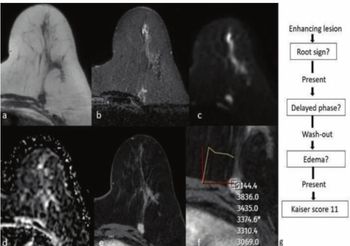
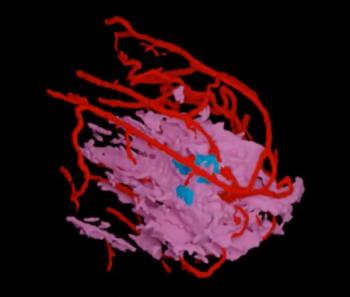
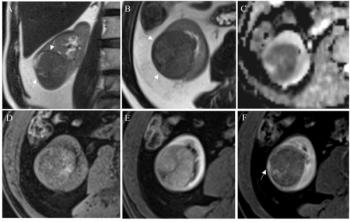
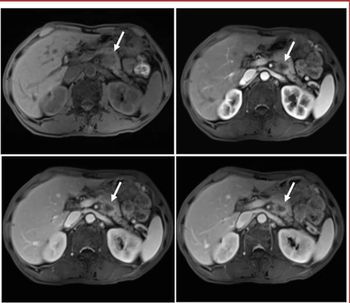
“Our study demonstrates that BPE did not affect the diagnostic accuracy of DCE-MRI in detecting breast lesions. DCE-MRI can be used with confidence to diagnose breast cancer in different patient populations (e.g., with moderate and marked BPE) without a significant impact on diagnostic accuracy,” maintained lead study author Ambra Santonocito, MD, who is affiliated with the Department of Biomedical Imaging and Imaging-Guided Therapy at the Medical University of Vienna in Vienna, Austria, and colleagues.
Three Key Takeaways
• BPE may not compromise diagnostic performance of DCE-MRI. Despite prior concerns, moderate or marked background parenchymal enhancement (BPE) did not significantly affect AUC, sensitivity, or specificity, supporting consistent diagnostic accuracy across varying BPE levels.
• High sensitivity and specificity maintained even with higher BPE. DCE-MRI demonstrated near-perfect sensitivity (up to 100 percent) and high specificity (>92 percent) in patients with moderate/marked BPE, reinforcing its reliability for lesion detection in more challenging imaging backgrounds.
• Standardized interpretation methods can mitigate BPE-related variability. Use of structured tools (e.g., Kaiser score) and ROI-based assessment approaches may help reduce false positives/negatives and improve diagnostic confidence, particularly in patients with higher BPE.
While a recent meta-analysis found greater than 10 percent reductions in sensitivity and specificity with moderate or marked BPE on breast MRI, the authors of the current study noted substantial heterogeneity and no region-based assessment in any of the eight reviewed studies in the meta-analysis.
“The use of standardized tools, such as the Kaiser score, combined with a systematic assessment of the breast using an ROI-based approach, can improve diagnosis in breast lesions, even in cases of high BPE, thereby reducing the risk of both false-negative and false-positive results,” added Santonocito and colleagues.
(Editor’s note: For related content, see “Breast MRI and High-Risk Lesions: What a New Meta-Analysis Reveals,” “Breast MRI Study Suggests Black Women Are 31 Percent More Likely to Have High BPE” and “Breast MRI and Background Parenchymal Enhancement: What a Meta-Analysis Reveals.”)
Beyond the inherent limitations of a retrospective, single-center study, the authors acknowledged the relatively small prevalence of high BPE in the cohort (22 percent) and lack of assessment for short-term recall rates.