Catch up on the top radiology content of the past week.
Artificial intelligence plaque analysis of CCTA scans showed that 27 percent of former NFL players had severe or extensive total plaque volume, according to a new study to be presented at the American Heart Association Scientific Sessions 2026 this week.
New coronary computed tomography angiography (CCTA) research demonstrates that coronary artery disease (CAD) is a significant issue among retired National Football League (NFL) players even though the vast majority of players have not reported symptoms such as chest pain or shortness of breath.
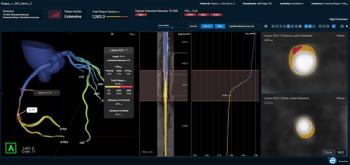
For a new study, researchers assessed CCTA scans and findings from accompanying AI software for coronary plaque assessment (AI-CPA, Heartflow) in 169 former NFL players (median age of 57 and median body mass index of 31). Thirty-two percent of the cohort had hyperlipidemia, 31 percent had hypertension and 14 percent were current or previous smokers, according to the study.
Preliminary findings from the research will be presented at the American Heart Association Scientific Sessions 2026 later this week. The striking findings include:
• While only 13 percent of the former players had known CAD prior to the study, the AI analysis of CCTA scans revealed coronary plaque in 87 percent of the cohort.
• The researchers noted at least one lesion of functional significance (FFRCT < 80 percent) in 18 percent of the cohort.
• Twenty-seven percent of the former NFL players had severe or extensive total plaque volume (TPV).
• Obstructive disease was present in 41 percent of the cohort and 17 percent had multivessel obstructive disease.
• Only 2 percent of the study participants reported exertional chest pain or dyspnea.
“We expected to find plaque, but we did not expect to find such a striking gap between how much significant disease these former football players had and how few of them had any symptoms,” noted study co-author Campbell Rogers, MD, the chief medical officer at Heartflow. “It is a reminder of how poorly symptoms can track with what is actually happening inside a coronary artery.”
For the 119 men who weren’t on lipid-lowering therapy (LLT) prior to the study, the researchers said 105 men indicated their willingness to receive LLT after seeing the CCTA and AI results.
“The good news is that when CAD is found early, it is very treatable, often with medication and lifestyle changes rather than a medical procedure,” added David J. Maron, MD, chief of the Stanford Prevention Research Center at Stanford University.
Reference