News|Videos|November 8, 2026

Diagnostic Imaging’s Weekly Scan: November 1 — November 7

Author(s)Jeff Hall

Catch up on the top radiology content of the past week.

Welcome to Diagnostic Imaging’s Weekly Scan, which offers an opportunity to catch up on the most well-viewed radiology content of the past week.

New research, published in the European Journal of Radiology, found that the late arterial phase, which accounts for approximately 40 percent of CT radiation dosing in cases involving undifferentiated acute abdominal pain, offered no exclusive findings that had an impact on clinical care.

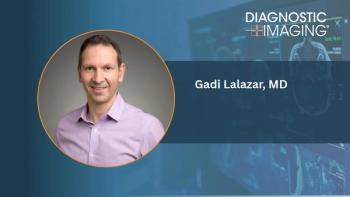
In a recent interview with Diagnostic Imaging, Gadi Lalazar, MD, discussed new research demonstrating the capability of natural language processing (NLP) to enhance recognition of incidental hepatic steatosis in ultrasound reports.

While contrast-enhanced mammography (CEM) offered the highest agreement with histopathology on the extent of malignancy in a new study, researchers found the use of pre-op CEM had no impact on mastectomy or reoperation rates.

In the latest episode of his “Interventional Radiology in Focus” series, Mina Makary, MD, discusses the evolution, research and pearls for ablation procedures, and emerging considerations for histotripsy in the realm of interventional oncology.

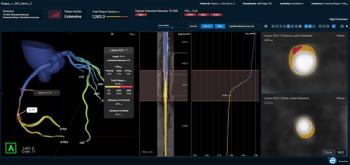
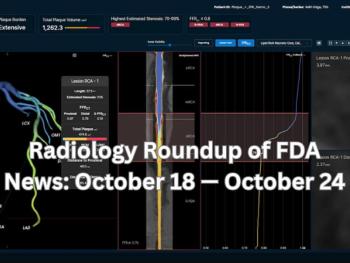
Artificial intelligence plaque analysis of CCTA scans showed that 27 percent of former NFL players had severe or extensive total plaque volume, according to a new study presented at the American Heart Association Scientific Sessions 2026 this week.

Related to this article