

News|Articles|July 3, 2026
Can Contrast-Enhanced Mammography Improve Breast Cancer Staging?: Nine Takeaways from a New Literature Review
Author(s)Jeff Hall
While acknowledging key limitations, the authors of a new literature review noted that contrast-enhanced mammography offers a viable alternative to conventional imaging and breast MRI for preoperative tumor evaluation and may have a significant impact on surgical management.
Advertisement
In a newly published literature review on contrast-enhanced mammography (CEM), researchers cite several studies demonstrating comparable utility to that of breast MRI in preoperative staging of women with breast cancer and discuss pertinent limitations as well.
Here are nine key takeaways from the literature review, which was recently published in
- Contrast-enhanced mammography offers highly reproducible results in ascertaining preoperative tumor size and improved accuracy in comparison to conventional mammography and ultrasound. A 2025 prospective study involving 205 patients and 267 breast lesions revealed a 93 percent inter-reader agreement with CEM and a significantly lower mean absolute error in tumor sizing (0.46 mm) in comparison to conventional mammography (4.06 mm) and ultrasound (3.52 mm).2
2. Contrast-enhanced mammography offers comparable results to breast MRI in assessing breast lesion size. Researchers found no statistically significant differences in pre-op and post-op lesion measurements evaluated with contrast-enhanced spectral mammography and MRI, according to a 2022 study involving 189 patients with a total of 233 non-benign breast lesions.3
3. The review authors cautioned that CEM may provide weak or questionable enhancement of breast lesions in cases involving invasive lobular carcinoma (ILC) and ductal carcinoma in situ (DCIS).
4. However, a multicenter study in 2024 involving evaluation of 115 ILC lesions demonstrated similar overestimations of tumor size between CEM and breast MRI.4 A 2024 retrospective study examining pre-op detection of DCIS found equivalent sensitivity for CEM and MRI for non-calcified DCIS (93.8 percent) and comparable sensitivity for calcified DCIS (92.4 percent vs. 93.9 percent).5
5. In a 2025 retrospective study involving 991 women and a total of 1,005 malignant breast lesions, researchers found that CEM provided 91.5 percent sensitivity and 96.8 percent specificity. Additiially, the study authors pointed out that CEM facilitated additional imaging in 36.7 percent of the cohort and changes to the initial surgical plan based on conventional imaging in 22.8 percent of the patients.6
6. Noting the lack of complete visualization for axillary, supraclavicular and internal mammary lymph nodes, the review authors maintained that CEM is insufficient for clinical nodal and metastatic staging evaluation.
7. For detection of secondary ipsilateral breast cancer and occult cancer in the contralateral breast, a 2018 prospective study of 84 women revealed no statistically significant differences between CEM and contrast-enhanced MRI, and comparable changes in surgical management (30.9 percent vs. 29.7 percent).7
8. The review authors maintained that breast MRI is preferred over CEM for assessment of tumor extension to the chest wall or pectoralis muscles.
9. While a 2025 multicenter retrospective study involving 530 women demonstrated a threefold or higher likelihood of pathologic nipple involvement with CEM findings of periareolar skin thickening or disrupted superficial linear enhancement, the review authors cautioned that MRI is more effective than CEM for detecting subtle or early involvement of the nipple-areolar complex.8
References
- Bellini C, BIcchierai G, de Benedetto, et al. How to optimise breast cancer staging with contrast-enhanced mammography: current evidence and clinical implications. Insights Imaging. 2026 Jun 29:17(1):178. doi: 10.1186/s13244-025-02331-3.
- Di Grezia G, Mercogliano S, Marinelli M, et al. Contrast-enhanced mammography in breast lesion assessment: accuracy and surgical impact. Tomography. 2025 Aug 20:11(8):93. doi: 10.3390/tomography11080093.
- Nicosia L, Bozzini AC, Palma S, et al. Contrast-enhanced mammography and tumor size assessment: a valuable tool for appropriate surgical management of breast lesions. Radiol Med. 2022;127(11):1228-1234.
- Giannotti E, Nijnatten TJAV, Chen Y, et al. The role of contrast-enhanced mammography in the preoperative evaluation of invasive lobular carcinoma of the breast. Clin Radiol. 2024;79(6):e799-e806.
- Wang L, Wang P, Shao H, Li J, Yang Q. Role of contrast-enhanced mammography in the preoperative detection of ductal carcinoma in situ of the breasts: a comparison with low-energy image and magnetic resonance imaging. Eur Radiol. 2024;34(5):3342-3351.
- Bicchierai G, Migliaro G, Pugliese F, et al. Evaluation of contrast-enhanced mammography (CEM) in the preoperative staging of breast cancer: large-scale single center experience, update to 1005 cases. Radiol Med. 2025;130(6):830-843.
- Kim EY, Youn I, Lee KH, et al. Diagnostic value of contrast-enhanced digital mammography versus contrast-enhanced magnetic resonance imaging for the preoperative evaluation of breast cancer. J Breast Cancer. 2018;21(4):453-462.
- Cozzi A, Bellini C, Girometti R, et al. Tumor involvement of the nipple at preoperative contrast-enhanced mammography: a multicenter diagnostic accuracy study. Radiology. 2025;317(2):e251350.
Advertisement
Related to this article
In the third of a three-part podcast episode, Wendie Berg, MD, PhD, FACR, FSBI, Manisha Bahl, MD, and Amy Patel, MD discuss recent developments with autonomous AI in breast imaging and share their perspective on the overall potential of AI to help mitigate the radiologist shortage.
In the second of a three-part podcast episode, Wendie Berg, MD, PhD, FACR, FSBI, Manisha Bahl, MD, and Amy Patel, MD discuss how to handle disagreements with adjunctive AI in breast imaging, whether to include AI assessments in PACS, and whether patients should pay for the use of adjunctive AI.
In the first of a three-part podcast episode, Wendie Berg, MD, PhD, FACR, FSBI, Manisha Bahl, MD, and Amy Patel, MD share insights on the utility of AI in breast imaging with respect to potential advantages, current concerns and future directions.

Catch up on the top radiology content of the past week.
Catch up on the top radiology content of the past week.
Catch up on the most well-viewed video interviews from Diagnostic Imaging in September 2026.
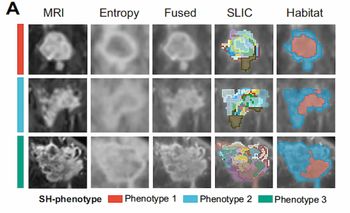
In multivariable external testing, tumor structure habitat phenotypes from pre-treatment MRI revealed more than a doubling of recurrence risk for women with stage 2 and stage 3 breast cancer.

How will generative AI software be evaluated by the FDA in the future? What’s next for point-of-care ultrasound? What steps have been successful in facilitating adoption of AI applications across enterprise systems? Leaders in radiology and health care will be discussing these topics and more at the upcoming HLTH USA conference.
Advertisement
Advertisement
Trending on Diagnostic Imaging
1
Key Sessions of Interest for Radiologists at the Upcoming HLTH USA Conference
2
The Reading Room Podcast: Current Perspectives, Challenges and Possibilities with AI in Breast Imaging, Part 3
3
Why Dutifully Waiting in Line is No Longer an Option for Advancement in Radiology
4
What New Dosimetry Data Reveals About 177Lu-Edotreotide for GEP-NET Treatment
5