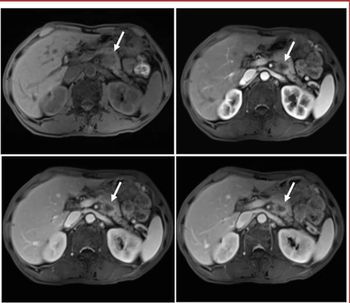
In comparison to LI-RADS version 2018 for MRI assessment, the use of perfluorobutane-enhanced ultrasound incorporating Kupffer-phase findings yielded comparable sensitivity and specificity for detecting hepatocellular carcinoma (HCC) nodules < 20 mm in high-risk patients, according to new research.
In a recent lecture at the European Congress of Radiology (ECR), Tugba Akinci D’Antonoli, M.D., cautioned that the potential promise of large language models (LLMs) also carries elevated cybersecurity risks beyond traditional artificial intelligence (AI) models.
In a recent interview, Ashesh Jani, M.D., discussed pertinent findings in two post-hoc studies from the SPOTLIGHT trial that examined the efficacy of 18F-flotufolastat PET/CT for detecting biochemical recurrence and bone metastases in patients with prostate cancer.
In addition to a 38 percent reduction in thyroid ultrasound interpretation time, the authors of a study presented at the ECR conference found that adjunctive AI resulted in accuracy improvements of greater than 7 percent for nodule echogenicity and 16 percent for nodule margin assessments.