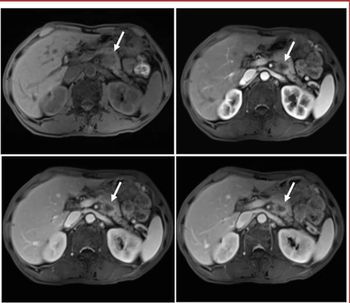
The study authors said the MERIS model included three MRI-derived imaging features including tumor size, non-smooth tumor margin and peritumoral hepatobiliary phase hypointensity.
During the development of the MERIS model, the researchers determined that peritumoral hepatobiliary phase hypointensity was associated with a nearly threefold higher risk of early HCC recurrence. A non-smooth tumor margin was associated with more than double the HCC recurrence risk and tumor size was linked to a 51 percent higher recurrence risk of HCC, according to the study authors.
“The superior performance of MERIS likely stems from its integration of size with biologically informative imaging features, thereby providing more refined prognostic discrimination in small, solitary HCC,” emphasized Choi and colleagues.
Three Key Takeaways
- The MERIS system improves prediction of early HCC recurrence.
The MRI-based Early Recurrence Individualized Score (MERIS) demonstrated better predictive performance (C-index 75 percent) for early recurrence after resection of solitary ≤5 cm hepatocellular carcinoma compared with the Pathology-based Early Recurrence Individualized Risk Score (PERIS) (67 percent) and Barcelona Clinic Liver Cancer staging system (57 percent).
- Three MRI features help drive recurrence risk stratification.
MERIS incorporates MRI-derived tumor size, non-smooth tumor margin, and peritumoral hepatobiliary phase hypointensity. Peritumoral hypointensity was the strongest predictor, associated with a nearly threefold higher risk of early recurrence.
- Preoperative MRI risk stratification may guide treatment strategy.
Identifying aggressive imaging features preoperatively could help select patients with small solitary HCC who might benefit from liver transplantation instead of resection, which is currently recommended by the American Association for the Study of Liver Diseases guidelines.
Acknowledging that the current American Association for the Study of Liver Diseases (AASLD) guideline recommends resection for single 2-5 cm HCC tumors, the study authors suggested that current prognostic models have a broader focus and may not provide sufficient assessment of smaller HCC tumors.
“MERIS addresses this gap by preoperatively identifying small tumors with aggressive features, thereby recognizing patients who might benefit from upfront transplant rather than resection,” added Choi and colleagues.
(Editor’s note: For related content, see “Could Contrast-Enhanced Ultrasound Offer Equivalency to MRI for Detecting Small HCC Nodules?,” “Multicenter Study Affirms Value of Updated AASLD Criteria for Surveillance of Hepatocellular Carcinoma” and “Study Suggests Merits of PSMA PET/MRI for Detecting HCC in LI-RADS 3 Cases.”)
In regard to study limitations, the authors acknowledged that gadoxetic acid, utilized for MRI contrast in MERIS, may have limited availability at other facilities. The researchers also noted that MERIS was not evaluated in patients who underwent transarterial chemoembolization.